Physical Address
23,24,25 & 26, 2nd Floor, Software Technology Park India, Opp: Garware Stadium,MIDC, Chikalthana, Aurangabad, Maharashtra – 431001 India
Physical Address
23,24,25 & 26, 2nd Floor, Software Technology Park India, Opp: Garware Stadium,MIDC, Chikalthana, Aurangabad, Maharashtra – 431001 India


As heatwaves become harsher across India, electricity demand is rising at a pace that is reshaping the country’s energy future. Coal-fired power plants continue to supply most of India’s electricity during peak summer months because they are considered dependable during periods of extreme demand. Yet a growing number of energy economists and researchers now argue that this dependence could become financially unsustainable in the years ahead.
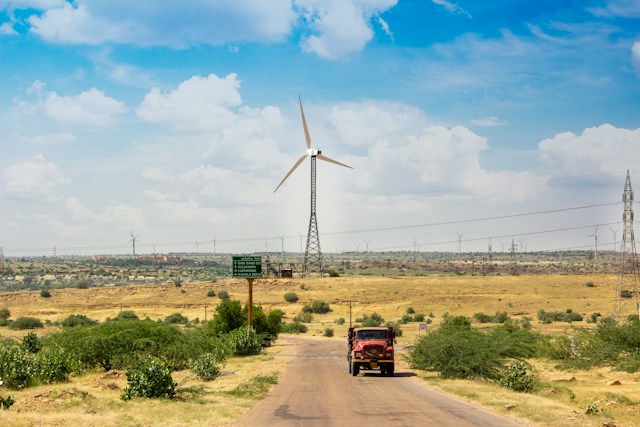
A recent report by Climate Risk Horizons estimates that Rajasthan could save nearly ₹57,000 crore over the next decade by avoiding new coal-based power projects and instead investing in solar power paired with battery storage systems. The findings arrive at a critical moment for India’s power sector as states attempt to balance rising cooling demand, energy security concerns and climate commitments. Rajasthan, one of India’s largest renewable energy producers, has now become a key example in a larger national debate over whether India’s future electricity system will continue depending on expensive coal infrastructure or move toward cheaper renewable alternatives.
Heatwaves, Rising Demand and India’s Dependence on Coal
India’s electricity demand patterns are changing rapidly because of rising temperatures and longer heatwave seasons. Several parts of the country witnessed temperatures crossing 45°C during recent summers, driving a major increase in cooling demand from homes, offices and industries. According to the International Energy Agency, India is expected to record one of the fastest growth rates in electricity demand globally over the coming years, with air conditioning emerging as a major contributor.
Coal remains central to India’s electricity system during periods of high demand. More than 70% of India’s electricity generation still comes from thermal power plants. Policymakers often argue that coal remains necessary because renewable energy alone cannot yet provide a round-the-clock supply at the scale required for a rapidly growing economy.
But the economics of coal generation are beginning to shift. The Climate Risk Horizons report notes that capital costs for new coal plants have risen by more than 36% while operational expenses increased by around 31% between 2020 and 2025. The report projects that electricity from new coal-based power generation in Rajasthan could cost nearly ₹10.27/kWh by 2031. Analysts say these rising costs could eventually place a heavy financial burden on consumers if states continue investing in new thermal infrastructure.
Why Solar Plus Battery Storage Is Beginning to Outcompete Coal
For decades, coal’s biggest advantage over renewable energy was reliability. Solar and wind power depend on weather conditions, while thermal plants can generate electricity throughout the day. However, improvements in battery energy storage systems are beginning to challenge that assumption. Battery storage systems can store solar electricity generated during daytime hours and supply it later during evening demand peaks when solar generation falls.
According to the Climate Risk Horizons report, solar power paired with eight-hour battery storage systems in Rajasthan can deliver electricity at between ₹5.48 and ₹5.87 per kilowatt-hour, almost half the projected cost of new coal generation. The report estimates that Rajasthan could meet its future electricity requirements by deploying around 7.1 gigawatts of solar power paired with 2.1 gigawatts of battery storage, rather than building additional coal capacity. Harshit Sharma, lead author of the report and researcher in the Energy team at Climate Risk Horizons, told CFC India that the economics of renewable energy and storage are shifting rapidly in India.
“Our analysis clearly shows that longer duration solar plus battery storage systems are not just economically viable but come with significant financial benefits over new coal-based power. Solar PV with 8-hour BESS can deliver up to 18 hours of renewable power at INR 5.48/kWh – INR 5.87/kWh, which is roughly half the cost of new coal-based power, which is projected at INR 10.27/kWh by 2031. Until recently, utility-scale BESS in India was mostly seen as an ancillary service provider, such as grid stability or for the fulfilment of peak load demand. Round-the-clock clean energy, either through longer 8-hour storage with solar or with any other configuration, is still at a nascent stage. To support higher shares of variable renewable energy, India needs the deployment of storage and the scaling of battery manufacturing,” Sharma said.
“Finally, thermal power continues to benefit from institutional familiarity that is entrenched in planning assumptions around baseload generation, despite the superior economics of solar and storage. The pace of cost declines in batteries means that the economics have now strongly tilted in favour of renewable energy plus storage as the preferred pathway for meeting India’s growing electricity demand reliably and affordably. The biggest challenge is now institutional inertia,” he added.
International studies also point toward the same trend. The International Renewable Energy Agency has repeatedly reported major declines in solar power costs over the last decade, while energy think tank Ember has found that renewable energy is increasingly becoming the cheapest source of new electricity generation globally. Experts caution that battery storage deployment at scale will still require major investments in grid infrastructure and transmission systems, but the financial gap between coal and renewable energy is narrowing rapidly.
Rajasthan’s Renewable Paradox: Abundant Solar, Persistent Curtailment
Rajasthan has the highest installed solar capacity in India, accounting for 27.3% of national capacity, and ranks second in total renewable energy (RE) capacity. According to the Climate Risk Horizons report, renewables already account for nearly 49% of electricity generated within Rajasthan. Despite this, renewable energy curtailment continues to remain a serious challenge. Curtailment occurs when renewable electricity generation is deliberately reduced or shut down, even when solar or wind power is available.
The report states that curtailment levels in Rajasthan have reached as high as 51% at times, with nearly 4 gigawatts of renewable capacity reportedly shut down during peak hours. Energy analysts say this reflects one of the biggest contradictions within India’s clean energy transition. While renewable capacity is increasing rapidly, grid infrastructure and storage systems have not expanded at the same pace. Transmission bottlenecks, limited storage capacity and long-term agreements linked to thermal power plants often prevent renewable electricity from being fully utilised.
Researchers say improving grid flexibility and battery storage integration could help reduce renewable energy wastage significantly. Ashish Fernandes, Director at Climate Risk Horizons and co-author of the report, told CFC India that inadequate transmission systems and the absence of battery storage remain among the biggest obstacles preventing Rajasthan from fully utilising its renewable potential.
“We believe Rajasthan’s renewable energy curtailment is primarily the consequence of inadequate transmission infrastructure and the lack of battery energy storage systems. Both these factors play a role in restricting renewable absorption. Thermal power plants must operate at minimum technical levels to maintain grid stability, limiting the system’s ability to accommodate surplus daytime solar generation beyond a point. In our assessment, the absence of sufficient Battery Energy Storage Systems (BESS) remains one of the most critical infrastructural and policy barriers, as it prevents excess solar energy, which is cheaper than thermal, from being shifted to evening peak demand periods. Delays in power purchase agreements for solar, slow transmission readiness have further constrained Rajasthan from fully utilising its vast solar potential,” Fernandes said.
The Rajasthan Electricity Regulatory Commission’s recent rejection of a proposal to build 3,200 MW of additional coal-based capacity has also intensified discussions about whether future investments should prioritise storage-backed renewable systems over expensive thermal infrastructure.
Is India Locking Itself Into Expensive Coal Infrastructure?
India has repeatedly stated that coal will continue playing an important role in its electricity system for the foreseeable future. Policymakers argue that thermal power remains necessary to support industrial growth, urbanisation and rising electricity demand. At the same time, India has committed to expanding non-fossil fuel electricity capacity significantly over the coming years.
Critics of continued coal expansion warn that building large thermal projects today could create long-term financial risks tomorrow. Coal plants are designed to operate for decades, which means consumers may continue paying higher electricity tariffs even if renewable energy and battery storage become much cheaper during that period. Coal also remains one of the largest contributors to greenhouse gas emissions and air pollution in India.
Still, the transition away from coal is unlikely to happen overnight. Millions of livelihoods remain connected to India’s coal economy, and several states continue depending heavily on thermal power revenues. Experts say the debate is no longer only about climate goals versus economic growth. Increasingly, it is becoming a question of long-term affordability. Rajasthan’s experience reflects a broader shift unfolding across the global energy sector, where falling renewable energy and battery storage costs are beginning to challenge the financial logic behind new coal infrastructure.
References:
https://climateriskhorizons.com/app/uploads/2026/05/Sunrise-State.pdf
https://www.iea.org/reports/electricity-2026/executive-summary
Solar power and battery storage can save Rajasthan INR 57,000 crore
https://businessindia.co/magazine/cover-feature/when-the-grid-chokes-the-green-surge
Banner image: AI Generated
Sections of this article may have been developed with the assistance of artificial intelligence tools to support research, drafting and language refinement. All information has been reviewed, edited and verified by the author/editor to ensure accuracy, context and editorial integrity. The responsibility for the final content, interpretations and conclusions rests solely with the publisher.