Physical Address
23,24,25 & 26, 2nd Floor, Software Technology Park India, Opp: Garware Stadium,MIDC, Chikalthana, Aurangabad, Maharashtra – 431001 India
Physical Address
23,24,25 & 26, 2nd Floor, Software Technology Park India, Opp: Garware Stadium,MIDC, Chikalthana, Aurangabad, Maharashtra – 431001 India


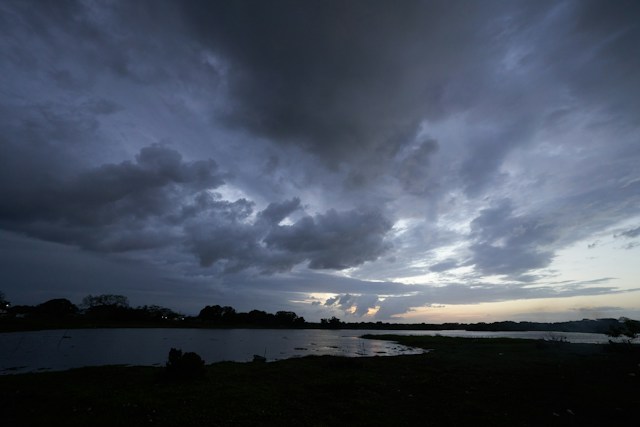
India’s dams were built to catch the monsoon. This year, there is not enough monsoon to catch. As reservoirs run low across the country, the electricity that falling water would normally generate is being replaced, unit for unit, largely by burning coal. The result is a feedback loop that climate scientists have long warned about: a warming-linked weather pattern is pushing one of the world’s largest power systems deeper into the fuel that drives warming in the first place.
What the numbers show
A report by S&P Global Commodity Insights, released on July 3, found that hydropower generation across seven key Asian markets (Japan, South Korea, India, Bangladesh, Vietnam, the Philippines and Malaysia) fell by roughly 13 average gigawatts in June 2026 compared with a year earlier. India accounted for the single largest share of that decline, at 6.3 average gigawatts, followed by Vietnam at 4.6. Together, the two countries contributed more than 80 percent of the regional drop, which the analysts read as a broad weather-driven trend rather than a set of local accidents.
The Indian numbers are stark. Data from the Central Electricity Authority show hydropower generation fell about 21 percent year-on-year in June, from 16,775 gigawatt-hours in June 2025 to 13,361 gigawatt-hours this year. Bloomberg reported that this was the steepest monthly drop since February 2024, and it came in the middle of peak summer demand. The slide has continued into July, with generation running about 19 percent below last year’s levels on average, and reservoir storage declining year-on-year.
Something had to fill the hole, and that something was overwhelmingly coal. According to the S&P analysis, India’s power demand rose by 24.3 average gigawatts year-on-year in June, while hydropower fell by 6.3 and gas-fired output by 0.8. Coal-fired generation rose by 20.7 average gigawatts to bridge most of the gap. Solar and wind together added 9.4 average gigawatts, meaningful but not nearly enough. Reporting by Argus Media on Central Electricity Authority data shows thermal plants generated 122.37 terawatt-hours in June, up 12.5 percent on the year, with the average plant load factor of the thermal fleet climbing from 66.6 percent to 72.3 percent.
Why hydropower matters more than its share suggests
Hydropower supplies a modest slice of India’s electricity: about 52 gigawatts of large hydro capacity in a system of over 543 gigawatts. But its value lies in flexibility. Unlike solar and wind, hydro plants can ramp up and down within minutes, balancing the grid when renewable output fluctuates and stepping in during evening demand peaks after solar generation fades. When reservoirs run low, the system loses not just energy but its most responsive balancing tool. As one expert quoted by Business Standard put it, the core challenge is not energy availability but system flexibility and reliability. In today’s grid, the fallback flexible source is coal.
The El Niño connection
Behind the empty reservoirs is a failing monsoon. June 2026 was India’s fifth driest June since records began in 1901, with the country receiving about 40 percent less rain than normal. The India Meteorological Department’s outlook for July, usually the wettest month of the season, projects below-normal rainfall for most of the country, at less than 94 percent of the long-period average. IMD officials expect weak to moderate El Niño conditions through July and August. El Niño, a periodic warming of the central and eastern equatorial Pacific, tends to suppress monsoon rainfall over South and Southeast Asia while intensifying heat, which is exactly the combination now hitting reservoirs and power demand at the same time.
That double squeeze is what makes this El Niño episode so costly for the power sector. Heat drives up cooling demand precisely when dry conditions cut hydro output. An analysis by the Centre for Research on Energy and Clean Air (CREA), published on July 6, estimates that El Niño-linked heat could add around 10 terawatt-hours of cooling demand between July 2026 and June 2027, while weaker winds and lower hydro output push the overall generation shortfall to 17.7 terawatt-hours, or as much as 24 terawatt-hours in a more severe scenario. If coal plants meet that gap, CREA estimates the power sector would emit roughly 17 million tonnes of additional carbon dioxide. CREA also concluded that India’s energy system is likely to face the strongest El Niño impact of any in the world.
A regional story, not just an Indian one
The same pattern is playing out across Asia. Vietnam saw hydropower fall by 4.6 average gigawatts in June even as demand rose, with coal output climbing by 7.1 average gigawatts in response. Japan, South Korea, Bangladesh, the Philippines and Malaysia all recorded lower hydro generation, and S&P expects the region’s increased reliance on thermal plants to lift demand for liquefied natural gas through the third quarter if El Niño persists. For countries that have pledged to cut coal use, a single dry season is proving how fragile those trajectories can be when the grid lacks alternative sources of flexibility.
What would break the loop
The lesson analysts draw is not that hydropower is unreliable, but that climate variability is now a grid-planning problem. CREA’s recommendations centre on faster deployment of battery energy storage, more flexible grid operations and continued solar expansion; India added a record 44.6 gigawatts of solar capacity in 2025. Storage can perform much of the rapid balancing role that hydro plays today, without depending on the rains. Until that capacity is built, however, every weak monsoon will keep translating directly into more coal burned, more emissions released, and a power system whose climate resilience is tested by the very phenomenon it contributes to.
References
As El Niño develops, India turns to coal to offset lower hydropower, Mongabay India
El Niño drives 6.3 GW decline in India’s June hydropower generation: S&P, Business Standard
El Niño impact keeps India’s hydropower generation weak through July, Business Standard
India’s Hydropower Output Drops 21% as El Niño Cuts Reservoir Levels, Bloomberg
El Niño to hit India hardest as power use surges: CREA, Argus Media
India likely to receive below-normal rainfall in July 2026, says IMD, Business Standard
Banner Image: Photo by Nikolay Kovalenko on Unsplash
Sections of this article may have been developed with the assistance of artificial intelligence tools to support research, drafting and language refinement. All information has been reviewed, edited and verified by the author/editor to ensure accuracy, context and editorial integrity. The responsibility for the final content, interpretations and conclusions rests solely with the publisher.