Physical Address
23,24,25 & 26, 2nd Floor, Software Technology Park India, Opp: Garware Stadium,MIDC, Chikalthana, Aurangabad, Maharashtra – 431001 India
Physical Address
23,24,25 & 26, 2nd Floor, Software Technology Park India, Opp: Garware Stadium,MIDC, Chikalthana, Aurangabad, Maharashtra – 431001 India
As climate change intensifies, access to safe drinking water is becoming one of the world’s most pressing challenges. More frequent floods, prolonged droughts, damaged water infrastructure and declining water quality are leaving millions vulnerable, particularly in low-income and rural communities. Sri Lanka is no exception. Climate-related disasters often contaminate drinking-water sources, increasing the risk of waterborne diseases and exposing communities to harmful pollutants.
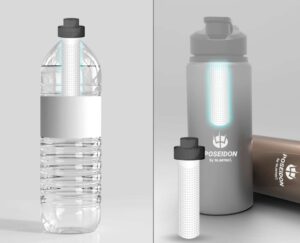
Against this backdrop, a team of researchers has developed an innovative portable water filter that could provide a practical solution during emergencies and in areas where access to treated drinking water is limited. The compact filtration system, designed to fit onto an ordinary plastic drinking-water bottle, combines advanced nanotechnology with modified activated carbon to remove bacteria, selected heavy metals, microplastics and several other contaminants—without requiring electricity.
The technology was developed through a collaboration between the Sri Lanka Institute of Nanotechnology (SLINTEC), Monash University-Malaysia, and Newcastle University-Singapore. One of its co-inventors, Professor Kheng Lim Goh of Newcastle University, explained that while the prototype has demonstrated promising laboratory results, it should be viewed as a point-of-use treatment technology designed for specific situations rather than a universal water purification solution.
The filter’s development addresses an increasingly urgent global need. Climate change not only reduces water availability through drought but also increases contamination risks during floods and extreme weather events. Affordable, portable treatment technologies can therefore play an important role in strengthening community resilience alongside conventional water infrastructure.
Unlike many household filtration systems, this prototype was specifically designed to remain compact, lightweight and inexpensive while still incorporating multiple treatment mechanisms. It combines an electrospun nanofibrous membrane- which physically blocks bacteria and suspended particles- with modified activated carbon that adsorbs selected dissolved contaminants and organic compounds.
Laboratory evaluations have shown encouraging performance. The filter achieved between 99% and 99.999% removal of coliform bacteria and E. coli under test conditions. It also demonstrated the ability to remove selected heavy metals including iron, lead, chromium, cadmium and arsenic, although performance varied depending on the contaminant and water chemistry. Additional tests showed removal of BPA, chlorine, microplastics and suspended dirt.
The prototype was designed to treat approximately 1,300 litres of water with a flow rate of around 100 millilitres per minute. However, Professor Lim emphasized that actual lifespan depends heavily on water quality, contaminant levels and usage conditions.
Although the technology has generated considerable interest, it has not yet reached full commercial production. According to Professor Lim, SLINTEC, the patent applicant, is leading commercialization efforts and has been exploring manufacturing partnerships and technology-transfer opportunities, including discussions with major supermarkets. Final pricing has not yet been determined because it will depend on production scale, packaging, certification and distribution arrangements.
Importantly, Professor Lim cautioned against overstating the filter’s capabilities. Current laboratory evidence does not establish that the unit removes every virus, pesticide or chemical contaminant. Instead, it should be regarded as one component of a broader safe-water strategy that also includes reliable public water infrastructure, water-quality monitoring and appropriate treatment technologies depending on local conditions.
Below is the full interview with Professor Kheng Lim Goh of Newcastle University with Climate Fact Checks, presented in question-and-answer format.
Interview: Professor Kheng Lim Goh
Q: How does the technology work?
A: The filter is designed as a small cartridge that can be fitted to a standard plastic drinking-water bottle. Water passes through electrospun nanofibrous membranes containing very small interconnected pores. These membranes act as physical barriers to suspended particles and bacteria.
The cartridge also contains modified activated carbon. This provides an additional treatment stage by adsorbing certain dissolved contaminants and organic compounds. In simple terms, the system combines very fine physical filtration with adsorption by a specially modified carbon material.
Q: What contaminants can it remove?
A: Laboratory testing of the prototype indicated removal of:
The reported bacterial removal ranged from 99% to 99.999% in the tests conducted. The results for heavy metals depended on the particular ion, its concentration and the composition of the water.
We have not established, based on the available results, that the present unit removes all viruses, pesticides or every type of chemical contaminant. It would therefore be inaccurate to describe it as a universal water-purification system. Its suitability depends on the contaminants present in the source water.
Q: What is its expected lifespan and treatment capacity?
A:
The prototype was designed for a treatment capacity of up to approximately 1,300 litres, with an effective flow rate of around 100 ml per minute.
However, the actual usable life would depend on the quality and turbidity of the incoming water, the concentration of contaminants, how frequently the filter is used and how it is stored. The 1,300-litre figure should therefore be regarded as a prototype test value rather than a guaranteed lifespan under every field condition.
Q: Has it undergone laboratory or field testing?
A: The prototype underwent laboratory testing for bacterial removal, selected heavy metals, BPA and other contaminants. The reported results included:
These findings are encouraging, but they relate to the particular laboratory conditions used. They should not be interpreted as identical performance for every water source.
Q: Is the product commercially available?
A: To the best of my knowledge, the technology is not yet available as an established mass-market consumer product. SLINTEC has been pursuing technology-transfer and manufacturing discussions, including discussions with big supermarkets.
Q: What is the approximate cost?
A: The original design objective was to produce a low-cost and compact filter suitable for communities with limited access to centralised water treatment. However, I would prefer not to quote a retail price because final pricing will depend on manufacturing scale, packaging, distribution, testing and replacement arrangements.
Q: Have there been community pilot projects?
A: The work arose from research concerned with drinking-water challenges in Sri Lanka, particularly in rural and climate-stressed areas. There were outreach activities in the past. (Gathering more details now…)
It is important to distinguish between the intended application of the technology and a completed, independently evaluated community deployment.
Q: How could it contribute to climate adaptation?
A: Climate change can place additional pressure on drinking-water systems through drought, flooding, saltwater intrusion, damage to infrastructure and changes in water quality. A compact filter that does not require electricity and can be attached to a commonly available bottle could provide a useful point-of-use option where centralised treatment or distribution systems are temporarily unavailable.
Potential applications include emergency response, remote communities and short-term disruption following floods or other disasters. Nevertheless, the filter should be matched to the actual contamination risk. For example, heavily polluted, saline or chemically contaminated water may require additional treatment.
The technology should therefore be regarded as one possible component of a wider safe-water strategy, rather than a replacement for reliable public water infrastructure and systematic water-quality monitoring.
Q: Are there plans to scale up or collaborate with other organisations?
A: SLINTEC has been exploring routes towards manufacturing and commercial deployment. Potential partnerships with companies, government agencies, NGOs and humanitarian organisations would be valuable for larger-scale production, field evaluation and distribution.
SLINTEC would be the appropriate organisation to provide the latest information on confirmed partnerships and future deployment plans.
Q: What were the main challenges?
A: One technical challenge was combining several treatment functions within a very small and lightweight unit while maintaining an acceptable water-flow rate. The membrane needed pores small enough to restrict bacterial passage without making the filter impractically slow.
A second challenge was incorporating materials capable of adsorbing dissolved contaminants, including selected heavy metals and organic compounds, while keeping the unit affordable.
Beyond the laboratory, the larger challenges include repeatable mass manufacture, quality control, filter-life indication, regulatory approval, independent performance certification, pricing and the establishment of a reliable replacement and distribution system. These steps are essential before a laboratory prototype can become a dependable consumer or humanitarian product.
Looking Ahead
As climate change places increasing pressure on water security, innovations such as this portable nanotechnology-based filter demonstrate how research can contribute practical solutions for vulnerable communities. While further field validation, regulatory approval and commercialization remain necessary, the technology highlights Sri Lanka’s growing capacity to develop climate-adaptation innovations with potential relevance beyond its borders.
For now, the device represents a promising example of how scientific collaboration between universities and research institutions can address one of humanity’s most fundamental needs: access to safe drinking water.
References
Banner Image: https://archive.org/details/poseidon-document-c-6
Sections of this article may have been developed with the assistance of artificial intelligence tools to support research, drafting and language refinement. All information has been reviewed, edited and verified by the author/editor to ensure accuracy, context and editorial integrity. The responsibility for the final content, interpretations and conclusions rests solely with the publisher.