Physical Address
23,24,25 & 26, 2nd Floor, Software Technology Park India, Opp: Garware Stadium,MIDC, Chikalthana, Aurangabad, Maharashtra – 431001 India
Physical Address
23,24,25 & 26, 2nd Floor, Software Technology Park India, Opp: Garware Stadium,MIDC, Chikalthana, Aurangabad, Maharashtra – 431001 India

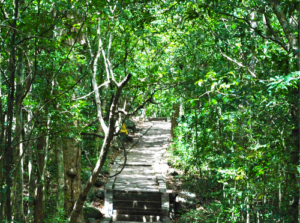
On World Environment Day 2026, Sri Lanka quietly made one of its most important conservation decisions in recent years. While global attention often focuses on disappearing rainforests and endangered wildlife elsewhere, the country took a significant step toward safeguarding its own natural heritage by declaring five forest areas in the Anuradhapura District as protected reserves under the Government’s “Vanaspathi” conservation programme.
Together covering more than 2,169 hectares, the newly protected forests, Ritigala, Aliyawetunu Wewa, Bulagala, Konketiyawa and Kallanchiya, represent far more than patches of woodland on a map. They are living ecosystems that sustain biodiversity, protect water resources, support wildlife movement, preserve cultural history and strengthen resilience against climate change.
Among them, Ritigala stands apart. Rising abruptly from the dry plains of Sri Lanka’s North Central Province, Ritigala is a mountain wrapped in mystery, science and history. Its cool, mist-covered slopes shelter species rarely found in the surrounding landscape, earning it recognition as one of the country’s most unique ecological refuges. For generations, the mountain has served as a sanctuary for wildlife, a source of water for nearby communities and an enduring symbol in local folklore and Buddhist heritage.
Although 1,528 hectares of Ritigala have long been protected as a Strict Natural Reserve, the recent decision to upgrade the surrounding 2,013-hectare forest into a Conservation Forest marks a major expansion of protection for this extraordinary landscape. At a time when forests across the world are facing increasing pressure from development, climate change and habitat fragmentation, the declaration reflects a growing recognition that safeguarding ecosystems like Ritigala is essential not only for nature, but for the long-term wellbeing of people as well.
A Unique Mountain Ecosystem
Ritigala is located between Anuradhapura and Habarana and its height is about 768 meters above sea level. The Department of Wildlife Conservation (DWC) said the mountain’s unusual height has created a unique microclimate that is distinctly different from the dry-zone environment.
Unlike the rest of the North Central Province, which is hot and dry for most of the year, the upper slopes of Ritigala receive more rain and remain cooler. It allows species normally associated with the wetter parts of the country to persist in an otherwise dry landscape.
A part of the Ritigala is one of the three Strict Natural Reserves in Sri Lanka identified by the DWC. Strict Natural Reserves are meant for ecosystems of outstanding ecological value. For a long time, scientists have called the mountain a “biological island” because the plant communities there evolved in relative isolation.
A Sanctuary for Rare Biodiversity
Ritigala has ecological significance due to its unique biodiversity. The Department of Wildlife Conservation says the forest is home to many rare and endemic species of both plants and animals and many of them are dependent on the unique environmental conditions of the mountain.
Researchers have documented medicinal plants, rare orchids, ferns and other plants not common to the surrounding dry zone. Some of these species at Ritigala are thought to be remnants of ancient climatic conditions that prevailed thousands of years ago.
Environmental scientists often refer to isolated ecosystems such as the Ritigala as natural laboratories. They provide valuable opportunities to study species adaptation, ecological resilience and the effects of climate change. With global biodiversity loss accelerating, the conservation of such ecosystems has become ever more important.
Protecting Water Resources
The newly declared reserve status is not just about protecting biodiversity. One of the main objectives, according to Government statements, is the protection of watersheds that supply local communities and ancient irrigation systems.
Ritigala serves as a natural water tower to the surrounding landscape. Rainfall is caught by the forest and slowly released into streams and underground water. This process maintains the surrounding reservoirs, croplands and wildlife habitats all year round.
Sri Lanka’s ancient hydraulic civilization was heavily dependent on the forests surrounding watersheds and tank cascades. The protection of these forests provided a constant supply of water for irrigation and human consumption.
Officials said the protection of Ritigala and the other newly declared reserves will help preserve ancient tank cascade systems which continue to be important to agriculture in the North Central Province.More details can be read here
Supporting Elephant Conservation
The declaration of forest reserves has also important implications for the management of wildlife.
Human-elephant conflict remains one of the most serious environmental problems facing Sri Lanka. As habitat loss and fragmentation have brought elephants into contact with farming communities, there have been increasing economic losses and casualties on both sides.
The government announced the protection of forests such as Ritigala as part of a broader strategy of establishing wildlife corridors and maintaining routes of elephant movement.
The Ritigala landscape is known to support elephant populations moving between forest patches and water points across the region. They hope that by conserving these habitats, authorities will be able to reduce the pressures that contribute to human-elephant conflict, while ensuring the long-term survival of elephant populations.
A Living Cultural Landscape
Ritigala is of great cultural and historical significance besides its ecological importance.
Deep within the forest are the remnants of an ancient monastic complex that is over two thousand years old. Archaeological evidence suggests that Buddhist monks used the mountain as a place of meditation and seclusion.
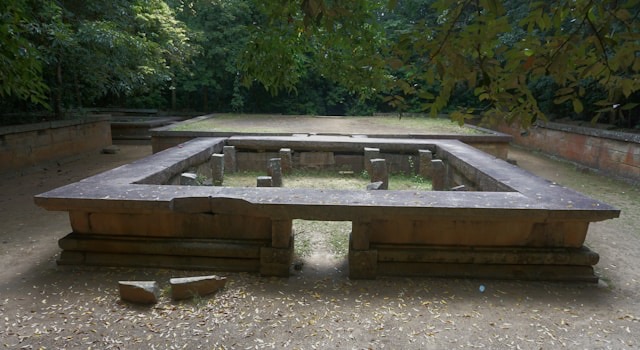
The site still draws visitors interested in history and spirituality. Amongst the forest vegetation are visible stone pathways as well as reservoirs, meditation platforms and other ancient structures, which give a glimpse of the rich monastic traditions of Sri Lanka.
Ritigala also figures in local folklore and legends. Some traditions associate the mountain with stories from the Ramayana, and others portray it as a place of healing herbs and mystical powers. Whether history or legend, these stories add to the mountain’s special identity.
A Climate Change Solution
There is increasing acknowledgment that forest conservation is an important tool in the fight against climate change.
The United Nations Environment Programme (UNEP) says that forests absorb large amounts of carbon dioxide from the atmosphere, helping to reduce concentrations of greenhouse gases. They also help increase resilience to climate impacts by regulating water cycles, reducing soil erosion and supporting biodiversity.
Forests like Ritigala in Sri Lanka bring multiple benefits related to climate. They store carbon, protect water supplies, cool local temperatures and make ecosystems more resilient.
As climate change worsens droughts, floods and other extreme weather events, protecting critical forest ecosystems will become ever more important for environmental and economic stability.
More details about Ritigala can be read here
A Positive Step Forward
Declaring Ritigala and four other forests as reserve forests is no longer merely a symbolic act on World Environment Day. It is a recognition of the growing importance of healthy ecosystems for the future of Sri Lanka.
Ritigala’s protection aims to conserve a singular biological refuge, protect water resources, help in the conservation of wildlife, preserve cultural heritage and promote climate resilience. These benefits are not confined to the boundaries of the reserve.
At a time when forests everywhere are under increasing pressure, Ritigala is a reminder that conservation is not just about saving trees. It’s about sustaining the natural systems that underpin biodiversity, livelihoods, history and human wellbeing.
So the declaration of Ritigala as a protected reserve is a win not only for conservationist. It is an investment on the ecological future of Sri Lanka and the wellbeing of generations to come.
References
https://www.dwc.gov.lk/?page_id=72
https://www.dailymirror.lk/breaking-news/Five-more-forests-to-be-declared-reserves/108-341678
https://www.ft.lk/news/Govt-to-gazette-five-forests-as-reserves/56-792778
https://whc.unesco.org/en/tentativelists/7008
https://www.unep.org/explore-topics/forests/about-forests
https://www.researchgate.net/publication/385087877_The_Heritage_of_Ritigala
https://en.wikipedia.org/wiki/Ritigala
Banner Image: Prof Ranga Sai, CC BY 4.0 <https://creativecommons.org/licenses/by/4.0>, via Wikimedia Commons
Insert: Photo by Gurth Bramall on Unsplash
Sections of this article may have been developed with the assistance of artificial intelligence tools to support research, drafting and language refinement. All information has been reviewed, edited and verified by the author/editor to ensure accuracy, context and editorial integrity. The responsibility for the final content, interpretations and conclusions rests solely with the publisher.