Physical Address
23,24,25 & 26, 2nd Floor, Software Technology Park India, Opp: Garware Stadium,MIDC, Chikalthana, Aurangabad, Maharashtra – 431001 India
Physical Address
23,24,25 & 26, 2nd Floor, Software Technology Park India, Opp: Garware Stadium,MIDC, Chikalthana, Aurangabad, Maharashtra – 431001 India

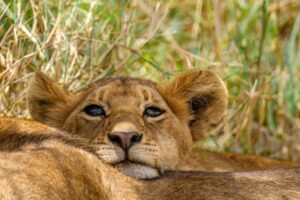
The deaths of eight Asiatic lion cubs in Gujarat’s Gir landscape were caused by extreme heat and heat-induced weakness rather than disease, according to the state government, raising fresh concerns about how rising temperatures are affecting wildlife in one of the world’s most important conservation areas. The clarification comes after initial fears that the cubs had succumbed to babesiosis, a tick-borne parasitic disease, or canine distemper virus (CDV). However, laboratory tests ruled out both infections, prompting authorities to attribute the deaths to heat stress, particularly among cubs with weaker immunity.
Heat stress, not disease, is behind cub deaths
The lion cub deaths, reported from parts of the Gir landscape in late May, had triggered concerns about a possible disease outbreak among the world’s only wild population of Asiatic lions. Forest officials initially suspected babesiosis, leading to quarantine measures and extensive testing. However, samples analysed by the Gujarat Biotechnology Research Centre found no evidence of either the Babesia parasite or canine distemper virus.
Speaking on the findings, Gujarat Forest Minister Arjun Modhwadia said the cubs died due to intense heat and the physical stress it caused. Eight lion cubs died due to heat and the weakness that heat causes. Those with low immunity died, he said, adding that the deaths were not linked to any viral outbreak.
The minister also said that 12 of the 17 lions that had been quarantined as a precautionary measure have recovered and been released back into the wild, while the remaining animals are reported to be healthy and expected to be released soon. As part of preventive efforts, forest officials carried out deticking and deworming treatment for approximately 600 lions in affected areas.
Rising temperatures are creating new challenges for wildlife
The incident has drawn attention to the growing threat of heat stress for wildlife as temperatures continue to rise across India. While heatwaves are often discussed in terms of their impacts on people, scientists warn that extreme heat can also affect animal behaviour, reproduction, immunity and survival, particularly among young animals.
Heat stress occurs when animals are unable to regulate their body temperature effectively. Prolonged exposure to high temperatures can lead to dehydration, reduced food intake, physiological stress and increased vulnerability to disease. Young cubs are often among the most vulnerable because they have lower heat tolerance and less developed immune systems.
The deaths come as Gujarat faces another hot summer. According to the India Meteorological Department’s latest outlook, above-normal heatwave days are expected across Gujarat during June, with temperatures likely to remain above seasonal averages in many parts of the state. The forecast also warns of above-normal minimum temperatures, which can reduce nighttime cooling and increase heat stress for both humans and wildlife.
Conservation concerns grow as heat risks increase
Gir and the surrounding landscape are home to the entire wild population of Asiatic lions, which has grown significantly over the past two decades due to successful conservation efforts. However, the concentration of the population in a single region leaves the species vulnerable to disease outbreaks, extreme weather events and other environmental stresses.
While officials have emphasised that there is currently no disease outbreak among Gir’s lions, the deaths have highlighted how climate-related risks are emerging as a growing conservation challenge. Researchers have increasingly linked rising temperatures to a range of impacts on wildlife, from altered habitats and water scarcity to heat-related mortality events.
The IMD has warned that heatwave conditions are likely to remain above normal across Gujarat through June, even as the southwest monsoon gradually advances across parts of the country. Scientists say such conditions could increase stress on wildlife populations already coping with habitat pressures and changing climatic conditions.
For conservationists, the deaths of the lion cubs serve as a reminder that climate change is no longer only a future threat to biodiversity. As temperatures continue to climb, managing heat stress and protecting vulnerable wildlife populations may become an increasingly important part of conservation planning in India’s protected areas.
References:
https://www.pib.gov.in/PressReleasePage.aspx?PRID=2266479®=3&lang=1
Indian Meteorological Department on X
Banner image: Photo by Audric Wonkam on Unsplash
Sections of this article may have been developed with the assistance of artificial intelligence tools to support research, drafting and language refinement. All information has been reviewed, edited and verified by the author/editor to ensure accuracy, context and editorial integrity. The responsibility for the final content, interpretations and conclusions rests solely with the publisher.