Physical Address
23,24,25 & 26, 2nd Floor, Software Technology Park India, Opp: Garware Stadium,MIDC, Chikalthana, Aurangabad, Maharashtra – 431001 India
Physical Address
23,24,25 & 26, 2nd Floor, Software Technology Park India, Opp: Garware Stadium,MIDC, Chikalthana, Aurangabad, Maharashtra – 431001 India

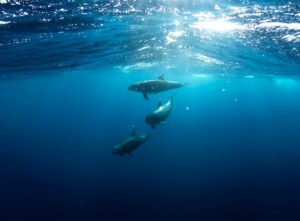
El Niño does more than shift rainfall and temperatures around the world. The periodic warming of the tropical Pacific can also disrupt marine ecosystems by cutting off the supply of nutrients that supports some of the ocean’s richest food webs. As warm surface water spreads eastward, it suppresses the natural upwelling of cold, nutrient-rich water along the Pacific coast of the Americas. The resulting decline in phytoplankton can ripple through the food chain, affecting fish, seabirds, sea lions and other marine animals. NASA observations show how these changes can alter the distribution of marine life across the Pacific during major El Niño events.
El Niño cuts off the nutrients that feed Pacific ecosystems
Under normal conditions, strong trade winds push warm surface water towards the western Pacific while allowing colder water from the depths to rise along the eastern Pacific. That deep water carries nutrients that fuel phytoplankton growth. When El Niño develops, the trade winds weaken, and warm water moves east, deepening the thermocline and suppressing this nutrient-rich upwelling. NASA satellite observations of ocean colour show the resulting decline in chlorophyll, a pigment used as an indicator of phytoplankton abundance.
The effects can quickly move through the marine food web. With fewer phytoplankton available, plankton-eating fish lose an important source of food, while larger fish that depend on those species also face reduced supplies. During some of the strongest El Niño events, declining fish stocks have been associated with severe population losses among Galápagos penguins, marine iguanas, sea lions and seals. Historic observations also show that major events have caused fish populations to crash, including the collapse of anchovy stocks during the 1972 to 1973 El Niño.
Fish and other marine animals move as food disappears
The disruption does not simply reduce marine populations. It can also change where animals are found as they search for more productive feeding grounds. NASA notes that tuna, sea turtles and seabirds can move to different parts of the Pacific when nutrient-poor surface waters spread eastward. Changes in ocean circulation can also carry tropical species into waters where they are not normally found. Along the California coast, for example, El Niño conditions have been associated with the appearance of species such as manta rays, red tuna crabs and yellow-bellied sea snakes.
The consequences can extend far beyond the equatorial Pacific. Changes in winds and currents along the Americas can alter the supply of nutrients available to coastal ecosystems, while shifting ocean conditions can influence fisheries and the distribution of commercially important species. NASA’s observations during the strong 1982 to 1983 and 1997 to 1998 El Niño events provided some of the clearest satellite evidence of large-scale changes in ocean colour and marine productivity.
A changing Pacific can ripple through the wider ocean
El Niño’s influence on marine life is part of a much larger reorganisation of heat, winds and currents across the Pacific. NASA describes the phenomenon as one of the Earth’s most important natural climate patterns, with effects that can extend far beyond the tropical Pacific. As warm water and atmospheric circulation shift, conditions can change for marine ecosystems around the Pacific and even the Caribbean. The 2015 to 2016 El Niño, for instance, was accompanied by major changes in phytoplankton distribution and marine conditions.
The issue is particularly relevant as another El Niño develops in 2026. NASA reported in June that satellite observations showed warmer-than-normal water and elevated sea surface heights across parts of the equatorial Pacific, indicating that the event was strengthening. While El Niño itself is a natural climate phenomenon and is not caused by climate change, NASA notes that it can contribute to some of the hottest years on record because large amounts of heat are released from the Pacific into the atmosphere. For marine ecosystems, each event can bring a different combination of warming, nutrient loss and shifting currents, making continued satellite monitoring important for understanding how fisheries and ocean life respond.
References:
https://doi.org/10.1029/2021GL096113
Banner image: Photo by Talia Cohen on Unsplash
Sections of this article may have been developed with the assistance of artificial intelligence tools to support research, drafting and language refinement. All information has been reviewed, edited and verified by the author/editor to ensure accuracy, context and editorial integrity. The responsibility for the final content, interpretations and conclusions rests solely with the publisher.