Physical Address
23,24,25 & 26, 2nd Floor, Software Technology Park India, Opp: Garware Stadium,MIDC, Chikalthana, Aurangabad, Maharashtra – 431001 India
Physical Address
23,24,25 & 26, 2nd Floor, Software Technology Park India, Opp: Garware Stadium,MIDC, Chikalthana, Aurangabad, Maharashtra – 431001 India


Wildfires are increasingly becoming more than a local environmental disaster. As fires grow larger and more intense across parts of the world, the smoke they produce can travel thousands of kilometres, affecting air quality far from where the flames began. Britain is now experiencing this growing impact, with wildfire smoke from other countries contributing to its levels of fine particulate pollution.
Research indicates that wildfires are responsible for around 10% of particle pollution in the UK. The finding underlines how climate-driven changes in wildfire activity can create consequences well beyond national borders. Pollution generated by fires in Europe, North America and other parts of the Northern Hemisphere can be carried by atmospheric currents towards Britain.
Smoke from Distant Fires Can Travel Thousands of Kilometres
Recent wildfires in southern and south-western Europe have demonstrated the scale of the problem. France and Spain have faced severe fires and periods of deteriorating air quality, while smoke from these events has spread across neighbouring regions. Under the right atmospheric conditions, smoke can continue travelling northwards and eventually reach the UK.
Scientists from the University of Edinburgh and the UK Centre for Ecology & Hydrology have investigated how wildfire emissions influence British air quality. Their modelling suggests that the contribution of wildfires varies from year to year depending on the location and scale of fires and the direction of atmospheric circulation.
The research also highlights that wildfire pollution can remain influential for much longer than might be expected. Pollution originating from major fires in 2018 continued to affect the UK’s particulate concentrations into the following year. It took more than three months for the influence of those emissions to become negligible.
The sources of this pollution can also change dramatically. In 2019, almost half of the wildfire-related pollution reaching Britain was associated with fires in Russia. In more recent years, Canada has emerged as a significant source. The researchers estimate that Canadian wildfires contributed more than twice as much wildfire-related pollution to the UK in 2024 and 2025 as they did in most years before 2023.
This illustrates the increasingly international nature of wildfire smoke. A major fire thousands of kilometres away can become an air-quality concern for another country when weather patterns transport its emissions across continents.
Climate Change Could Make the Problem Harder to Control
The growing influence of wildfire smoke creates a difficult challenge for Britain’s air-quality strategy. The country can reduce emissions from sources within its own borders, but it has little direct control over smoke produced by overseas wildfires. If global wildfire activity continues increasing, Britain could therefore find it harder to achieve some air-quality improvements even while domestic emissions decline.
There is also a chemical dimension to the problem. Wildfire smoke contains numerous gases and particles that can undergo reactions while travelling through the atmosphere. These reactions can generate additional fine particulate matter, potentially increasing the amount of pollution that ultimately reaches populated areas.
Reducing domestic pollution nevertheless remains important. Lower emissions from transport, industry, heating and other sources can reduce the pollutants available to interact with wildfire emissions in the atmosphere. Preventing unnecessary agricultural burning can also help limit additional smoke entering the air.
But these measures cannot fully address the underlying driver behind the growing wildfire threat. Climate change is contributing to hotter and, in many regions, drier conditions that can create favourable environments for fires to start and spread rapidly. As extreme heat and drought become more common, the likelihood of large wildfires is expected to rise in vulnerable regions.
The implications extend beyond Britain. Countries around the world are increasingly connected through atmospheric pollution, meaning that wildfire management and climate policy have consequences that cross borders. Reducing greenhouse-gas emissions, improving land and forest management, and strengthening systems for monitoring and forecasting smoke could all play a role in limiting future risks.
Britain’s experience is a reminder that air pollution cannot always be treated as a purely domestic problem. A fire burning in another continent can eventually affect the air people breathe thousands of kilometres away. As the climate changes and wildfires intensify, protecting air quality will increasingly require both stronger local emission controls and coordinated international action.
References:
https://www.sciencedirect.com/science/article/abs/pii/S0048969723034010
https://www.researchgate.net/publication/352569211_UK_Wildfires_and_their_Climate_Challenges
https://www.nature.com/articles/s41893-025-01533-9
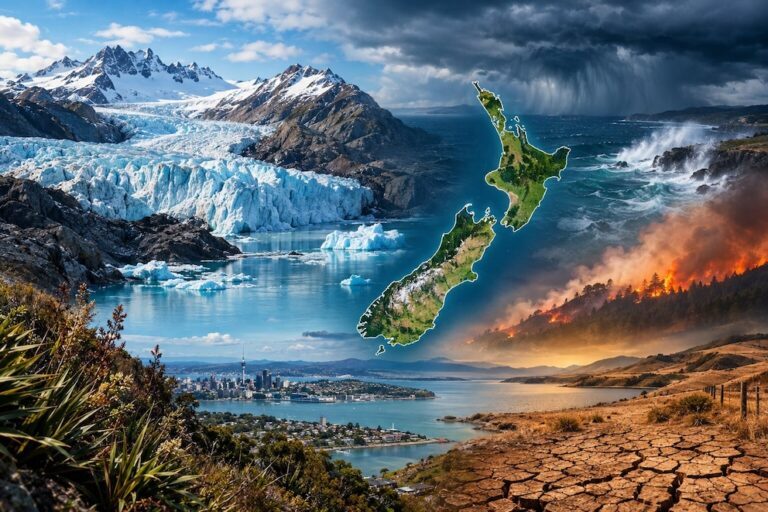
Banner Image: AI generated