Physical Address
23,24,25 & 26, 2nd Floor, Software Technology Park India, Opp: Garware Stadium,MIDC, Chikalthana, Aurangabad, Maharashtra – 431001 India
Physical Address
23,24,25 & 26, 2nd Floor, Software Technology Park India, Opp: Garware Stadium,MIDC, Chikalthana, Aurangabad, Maharashtra – 431001 India

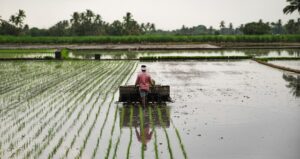
India’s push to expand ethanol blending in petrol is facing renewed scrutiny after fresh warnings about its impact on groundwater resources. The country has already achieved close to 15% blending and is aiming for 20% in the near term. While the policy is designed to cut crude oil imports and support farmers, recent reporting has pointed to a growing risk. The increasing use of rice for ethanol production could strain water resources in already stressed regions, a concern also flagged in discussions linked to NITI Aayog.
Rice for Fuel: A Costly Trade Off
Rice is one of the most water-intensive crops cultivated in India, particularly in the irrigated belts of northern India. Producing one kilogram of rice can require between 3000 and 4000 litres of water, a figure widely cited in policy discussions around crop sustainability. Much of this water comes from groundwater sources, especially in states where canal irrigation has limited reach.
The issue becomes sharper when rice is diverted toward ethanol production. About 2.5 to 3 kilograms of rice are needed to produce one litre of ethanol, effectively linking thousands of litres of water to each litre of fuel generated. While surplus rice stocks are being used in part, the scale of ethanol expansion means fresh production is increasingly part of the supply chain.
Experts have pointed out that this creates a resource trade-off that is not fully accounted for in current policy design. The water embedded in rice used for ethanol is rarely factored into cost calculations, even as the blending programme continues to expand.
Groundwater Stress in Key States
The pressure is most visible in Punjab, Haryana and parts of western Uttar Pradesh, regions that dominate rice procurement and are central to India’s ethanol supply chain. These areas have long depended on groundwater for irrigation, supported by widespread use of tube wells and subsidised electricity.
Several districts in these states are already categorised as over-exploited in terms of groundwater use, with extraction exceeding recharge rates. In Punjab, groundwater levels in many blocks continue to fall steadily each year, a pattern linked to decades of rice-wheat cropping cycles encouraged by procurement policies.
As ethanol demand rises, the incentive to continue or even expand paddy cultivation remains strong. Increasing diversion of rice toward fuel production could add to existing extraction pressures. Without changes in cropping patterns or water management, the risk is that groundwater levels may decline further and affect long-term agricultural sustainability.
Policy Goals and Farmer Incentives
India’s ethanol blending programme is driven by multiple objectives, including reducing oil import dependence, cutting emissions and improving farmer incomes. The policy has already led to a sharp increase in ethanol production, with both sugar and grain-based sources contributing to supply.
However, the growing role of rice in ethanol production has raised concerns among policy experts. The economic incentives are clear. Farmers benefit from assured procurement, and ethanol demand provides an additional market. This has reinforced the dominance of water-intensive crops in regions where diversification has been difficult.
At the same time, there is increasing discussion around shifting toward alternative feedstocks such as maize and millets. These crops require less water and are seen as more sustainable options for ethanol production. Agencies, including NITI Aayog, have suggested limiting the use of rice and encouraging diversification.
Any transition would require strong policy backing. Farmers would need price assurance, procurement support and access to supply chains for alternative crops. Until then, rice is likely to remain central to ethanol production, even as concerns over water use continue to grow.
References;
Banner image: Photo by Ayrus Hill on Unsplash
Sections of this article may have been developed with the assistance of artificial intelligence tools to support research, drafting and language refinement. All information has been reviewed, edited and verified by the author/editor to ensure accuracy, context and editorial integrity. The responsibility for the final content, interpretations and conclusions rests solely with the publisher.