Physical Address
23,24,25 & 26, 2nd Floor, Software Technology Park India, Opp: Garware Stadium,MIDC, Chikalthana, Aurangabad, Maharashtra – 431001 India
Physical Address
23,24,25 & 26, 2nd Floor, Software Technology Park India, Opp: Garware Stadium,MIDC, Chikalthana, Aurangabad, Maharashtra – 431001 India

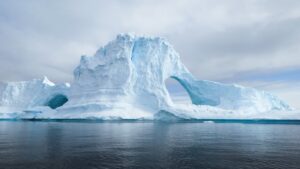
Antarctica’s dramatic sea ice decline may be doing more than reshaping the frozen continent. Scientists now warn it could also accelerate global warming itself. A new international study led by researchers from the University of Southampton found that a combination of warming oceans, changing wind patterns, and trapped heat in the Southern Ocean pushed Antarctic sea ice into a sudden decline after 2015.
Researchers say the changes are significant because Antarctic sea ice acts like a giant reflective shield, bouncing solar energy back into space. As more ice disappears, darker ocean waters absorb more heat, increasing the risk of further warming and destabilising parts of the global climate system.
Scientists say a “triple whammy” pushed Antarctic ice into decline
For years, Antarctica appeared to resist the dramatic sea ice losses seen in the Arctic. In fact, Antarctic sea ice slightly expanded during parts of the late 2000s even as global temperatures continued rising. But that pattern changed abruptly after 2015, when sea ice levels plunged to record lows and failed to recover. According to the new study published in Science Advances, the collapse was driven by what researchers described as a “triple whammy” of interacting climate processes.
The researchers found that unusually warm and salty deep ocean water was pulled closer to the surface in the Southern Ocean, bringing hidden heat into contact with sea ice from below. At the same time, stronger winds and changing atmospheric conditions helped intensify the process. In West Antarctica, thick cloud cover trapped additional heat over the ocean during the summers of 2016 and 2019, worsening ice melt. Scientists say these combined factors effectively pushed the Southern Ocean into a new state where sea ice became far less stable than before.
Why Antarctic sea ice matters far beyond the poles
Researchers say the consequences extend well beyond Antarctica itself. Sea ice plays a major role in regulating Earth’s temperature because its bright surface reflects solar radiation into space. When sea ice shrinks, darker ocean water absorbs more heat, reinforcing warming through a feedback loop. The study warns that this process could eventually transform the Southern Ocean from a climate stabiliser into a driver of additional warming.
The loss of sea ice also threatens the stability of Antarctic ice shelves, which help slow the movement of glaciers into the ocean. Scientists warn that weakening ice shelves could accelerate sea level rise globally. Earlier research cited by researchers suggests that collapse risks are already increasing in parts of West Antarctica, where ice loss could eventually contribute more than three metres of sea level rise if major ice sheets destabilise.
Beyond sea levels, Antarctic changes are beginning to affect ocean circulation and ecosystems. Scientists say reduced sea ice can disrupt the movement of heat, carbon and nutrients through the Southern Ocean, while species such as emperor penguins and krill are already facing habitat loss linked to changing ice conditions.
Scientists warn that low ice conditions may persist
One of the study’s biggest concerns is that Antarctica may now be entering a prolonged period of unusually low sea ice coverage. Researchers say if current conditions continue into the 2030s, the Southern Ocean could undergo long lasting changes that become increasingly difficult to reverse.
The study also raises concerns about how climate models account for Antarctic processes. Some researchers believe existing models may still underestimate how quickly changes in ocean heat and sea ice loss can reinforce each other. That uncertainty matters because Antarctica plays a critical role in regulating global climate systems and sea levels.
Scientists involved in the research say the findings strengthen the case for rapid emissions cuts. They warn that every additional fraction of a degree of warming increases the likelihood of abrupt Antarctic changes that could reshape weather systems, oceans and coastlines worldwide for generations to come.
References:
https://www.science.org/doi/10.1126/sciadv.aeb0166
https://phys.org/news/2026-05-antarctica-sea-ice-collapse-driven.html
Banner image: Photo by Derek Oyen on Unsplash
Sections of this article may have been developed with the assistance of artificial intelligence tools to support research, drafting and language refinement. All information has been reviewed, edited and verified by the author/editor to ensure accuracy, context and editorial integrity. The responsibility for the final content, interpretations and conclusions rests solely with the publisher.