Physical Address
23,24,25 & 26, 2nd Floor, Software Technology Park India, Opp: Garware Stadium,MIDC, Chikalthana, Aurangabad, Maharashtra – 431001 India
Physical Address
23,24,25 & 26, 2nd Floor, Software Technology Park India, Opp: Garware Stadium,MIDC, Chikalthana, Aurangabad, Maharashtra – 431001 India
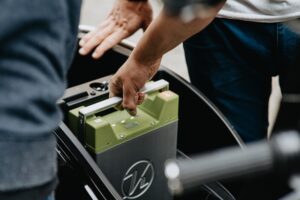
Increasingly, research suggests that the shift to clean energy globally could have outsized environmental trade-offs through increased demand for nickel, a critical metal used in electric vehicle (EV) batteries and renewable energy technologies. The world’s rush for nickel is increasingly focused on some of Earth’s most biodiverse ecosystems, especially tropical rainforests and coastal regions in Southeast Asia, a recent study in Nature Ecology & Evolution warns.
What Did Scientists Find?
The study led by researchers from the University of Queensland examined global nickel deposits, scenarios for future demand, and possible routes for mining expansion. Researchers found that almost half of future nickel production could occur in areas that are among the top 10% in terms of biodiversity importance worldwide by 2050. Much of this expansion is expected to be in tropical laterite deposits under rainforests, especially in Indonesia and the Philippines. More details can be read here
Nickel: Key Ingredient of Lithium-Ion Battery
Many of the lithium-ion battery chemistries used in EVs rely on nickel as a key ingredient. Nickel-heavy batteries such as nickel-manganese-cobalt (NMC) and nickel-cobalt-aluminum (NCA) have a greater energy density than lithium-iron-phosphate (LFP) batteries, enabling vehicles to cover longer distances on one charge. This makes nickel strategically critical for long-range EVs and energy storage systems. Demand is expected to skyrocket as countries aim for decarbonisation and net-zero emissions targets.More details can be read here
Environmental Cost
The environmental cost of expanding nickel mining may be under-appreciated, the new research says. Up to 83% of future nickel supply may come from laterite deposits often located beneath tropical forests. Reaching these deposits usually involves large-scale deforestation, road building and open-pit mining. Research shows mining is speeding up in sensitive areas such as Indonesia’s rainforest and coast, which is linked to the Coral Triangle, one of the world’s most important biodiversity hotspots.
The study also modeled alternative scenarios in which mining would be limited in highly sensitive conservation areas. Such protections could dramatically reduce the loss of biodiversity, but researchers found they could also lead to nickel supply shortages of up to 18% by 2050, if alternative sources, recycling systems, or new technologies are not developed.
Indonesia—Prominent Source for Nickel Extraction
Indonesia has become the dominant player in global nickel production. The country now produces more than half of the world’s nickel supply and has aggressively expanded its domestic refining and processing industries. A lot of this expansion has been driven by Chinese investment and demand. Indonesia wants to be a hub for the world’s battery supply chains, by restricting exports of raw ore to encourage local processing.
Environmental and Social Harmful Impacts
At the same time, the environmental and social impacts of nickel mining are becoming increasingly visible. Tropical mining has been linked to deforestation, water pollution, sediment runoff, and habitat destruction. Coastal mining activities impacted fisheries and coral ecosystems, and local communities reported poor water quality and environmental degradation. Critics warn that the clean-energy transition could replicate patterns of environmental exploitation historically associated with fossil fuel industries.
Nickel processing itself also poses serious environmental challenges. Laterite ores are often processed by energy intensive methods such as High Pressure Acid Leach (HPAL) which use large amounts of energy and generate acidic waste tailings. And in Indonesia, where many processing plants rely on coal-fired power, the carbon footprint of supposedly “green” battery materials is even worse. A few studies estimate that nickel from laterite ores may produce significantly higher greenhouse gas emissions than nickel from sulfide deposits in countries such as Canada or Russia.
The analysis underscores that recycling and alternative battery technologies could cut future reliance on newly mined nickel but such measures are unlikely to eliminate the need for mining in the near future. Although it is expected that recycling rates will improve, the current recycling capacity is limited relative to the projected EV demand. Likewise, lower-nickel battery chemistries such as LFP and new sodium-ion batteries may suppress demand growth, but nickel-rich batteries are expected to remain the dominant battery technology for long-range EV markets for years to come.
Researchers are therefore calling for stricter sustainability standards and more transparent supply chains. They say governments and industries should prioritize environmentally responsible mining practices, protect ecologically critical areas and ensure that local communities are not disproportionately harmed by mineral extraction. The study also highlights the need for international cooperation to align climate goals with biodiversity conservation.
Ultimately, the research illustrates a fundamental dilemma of the global energy transition: the technologies required to reduce dependence on fossil fuels also require enormous quantities of minerals that can impose new environmental pressures. Nickel has come to stand for this challenge. While still essential for clean-energy technologies, ramping up supply without stronger safeguards could threaten biodiversity, ecosystems and the well-being of communities in some of the world’s most environmentally important places.
References
https://phys.org/news/2026-05-energy-nickel-straight-earth-richest.html
https://nickelinstitute.org/en/nickel-applications/nickel-in-batteries
Environmental and Social Impacts of Nickel Mining in Indonesia
Banner Image: Photo by Kumpan Electric on Unsplash
Sections of this article may have been developed with the assistance of artificial intelligence tools to support research, drafting and language refinement. All information has been reviewed, edited and verified by the author/editor to ensure accuracy, context and editorial integrity. The responsibility for the final content, interpretations and conclusions rests solely with the publisher.