Physical Address
23,24,25 & 26, 2nd Floor, Software Technology Park India, Opp: Garware Stadium,MIDC, Chikalthana, Aurangabad, Maharashtra – 431001 India
Physical Address
23,24,25 & 26, 2nd Floor, Software Technology Park India, Opp: Garware Stadium,MIDC, Chikalthana, Aurangabad, Maharashtra – 431001 India

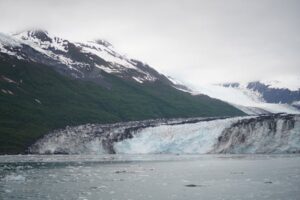
A gigantic wave nearly 500 metres high crashed through a remote Alaskan fjord last summer after a huge section of mountain collapsed into the sea, making it the second-tallest megatsunami ever recorded. Scientists now say the dramatic event is also a warning sign of how climate change and melting glaciers are increasing the risk of catastrophic landslides in fragile mountain regions.
The incident took place in Tracy Arm Fjord in southeast Alaska, a scenic destination known for its glaciers and frequent visits by tourist cruises. Though the event happened months ago, a recent scientific analysis has revealed the staggering scale of the disaster. Researchers found that around 64 million cubic metres of rock suddenly broke away from a mountain and plunged into the water below in less than a minute. The impact generated an enormous wall of water that rose almost 500 metres into the air, stripping vegetation, flattening trees and scarring the surrounding mountainsides.
Experts say the timing of the collapse likely prevented a major tragedy. The landslide occurred during the early hours of the morning, when tourist vessels were not passing through the fjord. Dr. Bretwood Higman, an Alaskan geologist who later visited the site, described the event as a “close call”. He said there were clear signs that people could easily have been caught in the destruction had the timing been slightly different.
When Dr. R Higman arrived at Tracy Arm a few weeks after the disaster, he found massive environmental damage. Trees had been snapped apart and tossed into the water, while huge stretches of bare rock had been left exposed where the force of the wave had ripped away soil and vegetation.
Scientists classify such giant waves as “megatsunamis”. Unlike the better-known tsunamis that travel across oceans after earthquakes, megatsunamis are usually caused by massive landslides or collapsing rock falling directly into enclosed bodies of water such as fjords or lakes.
Climate Change May Increase Future Risks
Because they are created by sudden displacement of water in a confined area, megatsunamis can rise to extraordinary heights near the source. However, they typically lose energy more quickly and remain localized compared to traditional tsunamis.
The 2011 Japan tsunami, for example, was caused by a powerful undersea earthquake and travelled thousands of kilometres across the Pacific Ocean, leading to widespread devastation and loss of life. Megatsunamis behave differently, but their immediate impact can be even more violent. The largest megatsunami ever recorded occurred in Alaska’s Lituya Bay in 1958, when a massive landslide triggered a wave estimated to be more than 500 metres tall. The latest Alaska event now ranks as the second-highest ever documented.
Researchers believe climate change may be making such disasters more likely in regions dominated by glaciers and steep mountain terrain. As glaciers melt and retreat, they remove the icy support that has long stabilized mountain slopes. This can leave weakened rock faces vulnerable to collapse. In Alaska and other polar regions, warming temperatures are already reshaping landscapes that remained frozen and stable for centuries. Scientists warn that more hidden dangers may emerge as the climate continues to heat up.
The concern is especially serious for popular tourist routes and coastal communities located near steep fjords. Alaska’s scenic waterways attract thousands of visitors every year aboard cruise ships and smaller tour vessels. A landslide-triggered megatsunami in a busier location or during peak tourist activity could have devastating consequences.
Experts say improved monitoring systems, satellite observations and geological surveys will be crucial in identifying unstable mountain slopes before disaster strikes. However, predicting exactly when and where a collapse may happen remains extremely difficult.
The Alaska megatsunami serves as both a scientific marvel and a stark reminder of nature’s destructive power. While the remote location prevented a human catastrophe this time, researchers fear future events may not end so fortunately. As glaciers continue to melt under rising global temperatures, scientists say the world could witness more extreme geological events in vulnerable mountain regions. For now, the scarred cliffs and shattered forests of Tracy Arm stand as evidence of a disaster that narrowly avoided becoming far worse.
References:
https://www.bbc.com/news/articles/c1m253033m4o
Japan earthquake and tsunami of 2011 | Facts & Death Toll | Britannica
Banner Image: Photo on Pexels by Ben Jackson
Sections of this article may have been developed with the assistance of artificial intelligence tools to support research, drafting, and language refinement. All information has been reviewed, edited, and verified by the author/editor to ensure accuracy, context, and editorial integrity. The responsibility for the final content, interpretations, and conclusions rests solely with the publisher.