Physical Address
23,24,25 & 26, 2nd Floor, Software Technology Park India, Opp: Garware Stadium,MIDC, Chikalthana, Aurangabad, Maharashtra – 431001 India
Physical Address
23,24,25 & 26, 2nd Floor, Software Technology Park India, Opp: Garware Stadium,MIDC, Chikalthana, Aurangabad, Maharashtra – 431001 India


India’s forests have long been seen as a quiet ally in the fight against climate change. Spread across diverse landscapes, from the Western Ghats to the Himalayan belt, they absorb carbon dioxide from the atmosphere and store it in trees, soil, and vegetation. This ability to act as a carbon sink has become central to climate strategies, both in India and globally.
While forests may be storing more carbon in some regions, scientists are increasingly warning that this does not necessarily mean they are becoming stronger or more resilient. In fact, the signals emerging from recent studies suggest that forests may be under mounting stress, raising questions about how reliable they will remain in a warming world.
Forests are now at the centre of climate action
Forests play a critical role in regulating the climate. They absorb carbon dioxide through photosynthesis and store it in living biomass such as trunks, leaves, and roots. This makes them one of the largest natural carbon sinks on land, second only to the oceans.
India’s climate commitments also place significant emphasis on forests. The country has pledged to create an additional carbon sink of 3.5 to 4.0 billion tonnes of CO2 equivalent through forest and tree cover by 2035, compared to 2005 levels. This target makes forests a central part of India’s strategy to balance rising emissions, increasing the pressure on these ecosystems to deliver consistent and long term carbon storage.
However, this dependence also brings a risk. If forests begin to lose their ability to absorb or retain carbon, the gap between climate targets and reality could widen quickly.
What the IITM study tells us about India’s forests
A recent study led by the Indian Institute of Tropical Meteorology in Pune offers one of the most detailed projections yet of how India’s forest carbon may change over time. The research, published in Environmental Research: Climate, suggests that carbon stored in India’s forests could rise sharply by the end of the century.
According to the study, average forest carbon could increase by about 35% under low-emissions, 62% under moderate-emissions, and up to 97% under high-emissions scenarios by 2100. At first glance, this appears encouraging. More carbon stored in forests could mean a stronger natural buffer against climate change. But the study also points to a more uneven and complex reality.
The gains are not spread equally. Semi-arid and desert regions are expected to see the largest increases. In contrast, biodiversity-rich regions such as the Western Ghats, the Northeast, and parts of the Himalayas show only modest growth.
The study also finds that rainfall plays a stronger role than temperature in shaping carbon storage across India, with its effects often unfolding over several years. More importantly, researchers caution that rising carbon levels do not necessarily indicate healthier forests. Even where carbon increases, it may be masking deeper ecological stress and instability within forest ecosystems.
The gap between rising carbon and forest health
This gap between carbon storage and ecological health is becoming clearer as more studies examine how forests are responding to climate stress. Research from IIT Kharagpur has shown that warming and drying conditions have already reduced carbon sequestration in Indian forests by 5% to 12% in recent years.
The study has linked declining photosynthetic efficiency across forests to heat stress and soil dryness, suggesting that forests are becoming less effective at converting atmospheric carbon into biomass. These findings point to an important shift. Forests may appear greener or denser in some regions, but that does not always translate into stronger or more stable ecosystems. Scientists have repeatedly noted that greening alone is not a reliable indicator of forest health.
There are also signs of structural changes within ecosystems. Regions known for dense and stable vegetation are beginning to show stress, with shifts in species composition and productivity. The IITM study itself highlights concerns about the stability of dense forests and the risk that stored carbon could be released back into the atmosphere under stress conditions.
Earlier work by IITM researchers in northeast India had also suggested that the carbon removal capacity of forests could decline over time as climate conditions change. Taken together, these studies suggest that the story is not just about how much carbon forests store, but how securely they can hold it in the face of rising temperatures, shifting rainfall patterns, and ecological disruption.
Climate stress, ecological change and policy risks
The emerging concern is that forests are entering a more fragile phase under climate pressure. Rising temperatures, changing rainfall patterns, and increasing frequency of extreme events such as droughts and wildfires are all expected to affect forest ecosystems in the coming decades.
These stresses can weaken forests in ways that are not immediately visible. Reduced soil moisture, delayed rainfall effects, and nutrient limitations can all influence how trees grow and how much carbon they can store. Over time, this can reduce the stability of forests and increase the likelihood of carbon being released back into the atmosphere.
The implications extend beyond ecology. India’s climate strategy depends significantly on forests to offset emissions. If forests become less reliable as carbon sinks, it could affect the country’s ability to meet long-term climate goals.
Global evidence also points in a similar direction. Studies from different parts of the world have shown that forest carbon sinks can weaken under prolonged heat and drought, and in some cases even shift towards becoming carbon sources. These patterns suggest that the challenges observed in India are part of a broader global trend.
For policymakers, this raises an urgent question. Protecting forests is no longer just about increasing tree cover or boosting carbon storage. It is about ensuring that forest ecosystems remain stable, diverse, and resilient under changing climate conditions. India’s forests may well store more carbon in the decades ahead. But the larger question is whether they will be able to hold on to that carbon when it matters most. The answer will depend not just on how forests grow, but on how they cope with a climate that is becoming more unpredictable with each passing year.
References:
https://www.pib.gov.in/PressReleasePage.aspx?PRID=2245209®=3&lang=1
https://iopscience.iop.org/article/10.1088/2752-5295/ae4f15
https://www.sciencedirect.com/science/article/abs/pii/S0921344925003568?via%3Dihub
https://www.sciencedirect.com/science/article/abs/pii/S0921344925003568?via%3Dihub
https://www.pib.gov.in/PressReleasePage.aspx?PRID=1797579
https://www.wri.org/insights/forest-carbon-sink-shrinking-fires-deforestation
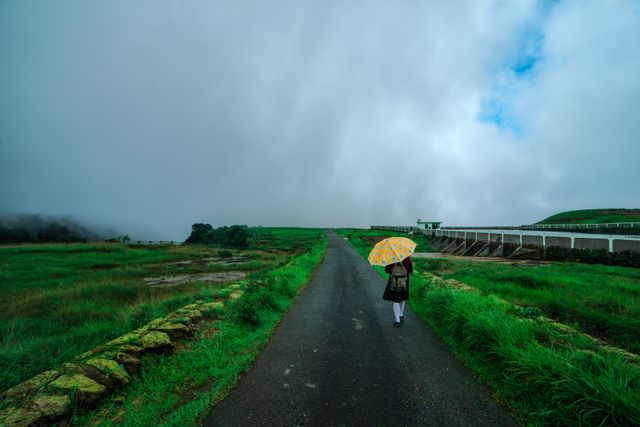
Banner image: Photo by Shikhar Bhatnagar on Unsplash
Sections of this article may have been developed with the assistance of artificial intelligence tools to support research, drafting and language refinement. All information has been reviewed, edited and verified by the author/editor to ensure accuracy, context and editorial integrity. The responsibility for the final content, interpretations and conclusions rests solely with the publisher.