Physical Address
23,24,25 & 26, 2nd Floor, Software Technology Park India, Opp: Garware Stadium,MIDC, Chikalthana, Aurangabad, Maharashtra – 431001 India
Physical Address
23,24,25 & 26, 2nd Floor, Software Technology Park India, Opp: Garware Stadium,MIDC, Chikalthana, Aurangabad, Maharashtra – 431001 India


The Indian Ocean is heating up in ways that are becoming harder to ignore. Scientists tracking ocean conditions say temperatures across large parts of the basin have now crossed levels that marine life can no longer comfortably tolerate. What might sound like a gradual change is already showing up in very real ways, from stressed coral reefs to falling fish catches. For millions of people living along the coasts, especially in countries like India, this is not just about the ocean getting warmer. It is about livelihoods, food security and daily survival becoming more uncertain as the water around them continues to change.
Marine heat is spreading across key parts of the ocean
Recent observations from the Indian National Centre for Ocean Information Services (INCOIS) show that marine heatwaves are becoming more frequent and longer lasting across the Indian Ocean, including the Arabian Sea and the Bay of Bengal. These are not isolated spikes. Large stretches of ocean have remained hotter than normal for extended periods, creating conditions that scientists say are no longer sustainable for many forms of marine life.
What makes this worrying is that the warming is not expected to ease on its own. Researchers describe it as part of a broader, long-term shift driven by global climate change. This warming is not new or sudden. Long-term data show that the Indian Ocean has already warmed by about 1°C between 1951 and 2015, which is faster than the global ocean average. That steady rise has slowly changed the baseline, meaning what counts as “normal” today is already much warmer than it used to be. As a result, even small additional increases now push marine systems closer to their limits, making heatwaves more frequent and harder to recover from.
Coral reefs are under growing stress
One of the clearest signs of this warming is the pressure it is putting on coral reefs. These ecosystems depend on narrow temperature ranges to survive, and even small changes can push them into distress. When waters stay too warm for too long, corals lose the algae that give them both colour and nutrients, leading to bleaching.
If such conditions continue, reefs struggle to recover and can begin to die off altogether. This has already been observed in several parts of the Indo-Pacific. The loss of coral reefs not only affects marine biodiversity. It also removes a natural barrier that protects coastlines from waves and storms, increasing the vulnerability of coastal communities.
Fisheries and coastal livelihoods are at risk
For communities who depend on the ocean, the changes are becoming harder to manage. Fish are highly sensitive to temperature shifts and tend to move towards cooler or deeper waters when conditions become uncomfortable. This means traditional fishing zones are no longer as reliable as they once were.
As a result, fishermen are often forced to travel farther out to sea, spending more time and money for smaller catches. This adds both financial strain and physical risk. For many coastal communities, especially those already living close to economic margins, these changes can disrupt income, food supply and long-standing ways of life.
A wider imbalance is beginning to take shape
Beyond reefs and fisheries, the warming ocean is also affecting the smallest building blocks of marine ecosystems. Higher temperatures reduce the mixing of nutrients between surface and deeper waters, which in turn lowers the growth of phytoplankton. These microscopic organisms form the base of the marine food chain, so any disruption at this level can ripple through the entire system.
Scientists say the Indian Ocean is now reflecting a broader global pattern, where oceans are absorbing more heat than ever before due to rising greenhouse gas emissions. Monitoring systems are already issuing warnings about marine heat stress and possible coral bleaching events. But researchers caution that tracking the problem is only one part of the response. Without reducing emissions and protecting marine ecosystems, the ocean will continue to warm, and the risks to both nature and people will keep growing.
References:
https://journalijecc.com/index.php/IJECC/article/view/4019/7913
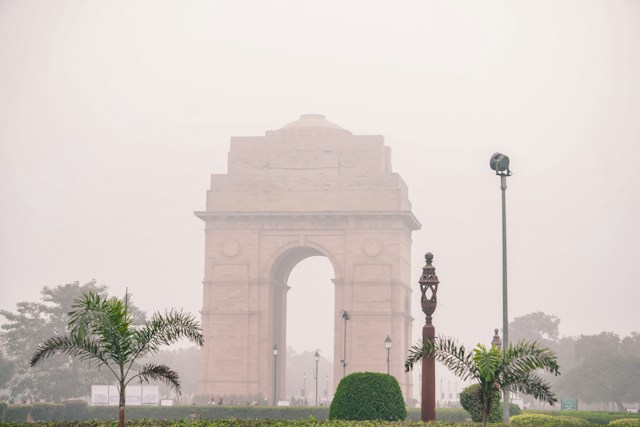
Banner image: Photo by Jeremy Ducray on Unsplash
Sections of this article may have been developed with the assistance of artificial intelligence tools to support research, drafting and language refinement. All information has been reviewed, edited and verified by the author/editor to ensure accuracy, context and editorial integrity. The responsibility for the final content, interpretations and conclusions rests solely with the publisher.