Physical Address
23,24,25 & 26, 2nd Floor, Software Technology Park India, Opp: Garware Stadium,MIDC, Chikalthana, Aurangabad, Maharashtra – 431001 India
Physical Address
23,24,25 & 26, 2nd Floor, Software Technology Park India, Opp: Garware Stadium,MIDC, Chikalthana, Aurangabad, Maharashtra – 431001 India

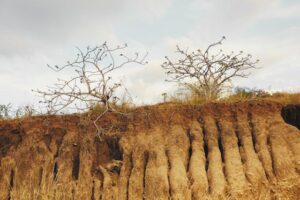
In a significant shift in global environmental priorities, the Group of Seven (G7) nations has placed desertification, land degradation and drought at the heart of its agenda, warning that the escalating land crisis now poses a serious threat to global security.
The emphasis came during the G7 Environment Ministers’ meeting held in Paris on April 23–24, where member countries acknowledged that degrading land systems are affecting billions of people and could destabilise societies if left unchecked. In a first, the grouping described these challenges as “security risk multipliers”, signalling a broader understanding of how environmental stress can fuel instability.
A Growing Crisis Affecting Billions
Nearly 40 per cent of the world’s land is already degraded, impacting around 3.2 billion people globally. This widespread deterioration is reducing agricultural productivity, weakening food systems and threatening livelihoods, particularly in regions heavily dependent on land-based economies.
The consequences are becoming increasingly visible. Declining soil fertility, water scarcity and ecosystem loss are making it difficult for communities to sustain themselves. As economic pressures mount and food insecurity deepens, vulnerable populations are pushed closer to crisis conditions.
Link Between Environment and Conflict
The G7 ministers underscored a critical link between environmental degradation and rising instability. Competition over shrinking natural resources such as land and water is intensifying, often leading to displacement and conflict.
Over the past several decades, a significant proportion of internal conflicts worldwide has been associated with disputes over natural resources. With worsening droughts and land degradation, these risks are expected to increase, particularly in already fragile regions. By framing desertification as more than just an environmental concern, the G7 has signalled a shift towards recognising its broader geopolitical implications. Environmental degradation is increasingly seen as a factor that can strain governance systems, disrupt economies and threaten peace.
Climate Politics in the Background
Interestingly, climate change itself was not formally included in the meeting agenda. The move was seen as an effort to avoid disagreements among member countries and maintain consensus on issues like land degradation, biodiversity and water management.
This highlights the complex political dynamics that continue to shape international environmental negotiations, where consensus often determines the scope of action.
In addition to land-related concerns, the G7 also adopted declarations on biodiversity conservation, ocean protection, circular economy and pollution reduction. These commitments reflect a broader environmental approach, even as land restoration remains a central focus.
Looking Ahead to COP17
Global attention is now turning to the upcoming Conference of the Parties under the United Nations Convention to Combat Desertification (UNCCD), scheduled to be held in Mongolia in 2026. The conference is expected to play a crucial role in translating political commitments into concrete action.
Experts emphasise that future efforts must focus on measurable outcomes, including restoring degraded land, improving water management and supporting communities most affected by environmental stress.
Implications for Developing Countries
For developing countries such as India, the renewed global focus on land degradation could open new avenues for financial and technical support. With a large population dependent on agriculture and natural resources, such assistance could be vital in strengthening resilience and securing livelihoods.
References:
https://news.un.org/en/story/2024/12/1157651
https://moef.gov.in/uploads/2023/07/NAP%20final-2023.pdf
Banner Image: Photo on Pexels by Fandy Much
Sections of this article may have been developed with the assistance of artificial intelligence tools to support research, drafting and language refinement. All information has been reviewed, edited and verified by the author/editor to ensure accuracy, context and editorial integrity. The responsibility for the final content, interpretations and conclusions rests solely with the publisher.