Physical Address
23,24,25 & 26, 2nd Floor, Software Technology Park India, Opp: Garware Stadium,MIDC, Chikalthana, Aurangabad, Maharashtra – 431001 India
Physical Address
23,24,25 & 26, 2nd Floor, Software Technology Park India, Opp: Garware Stadium,MIDC, Chikalthana, Aurangabad, Maharashtra – 431001 India

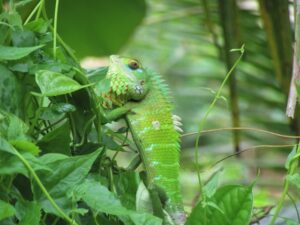
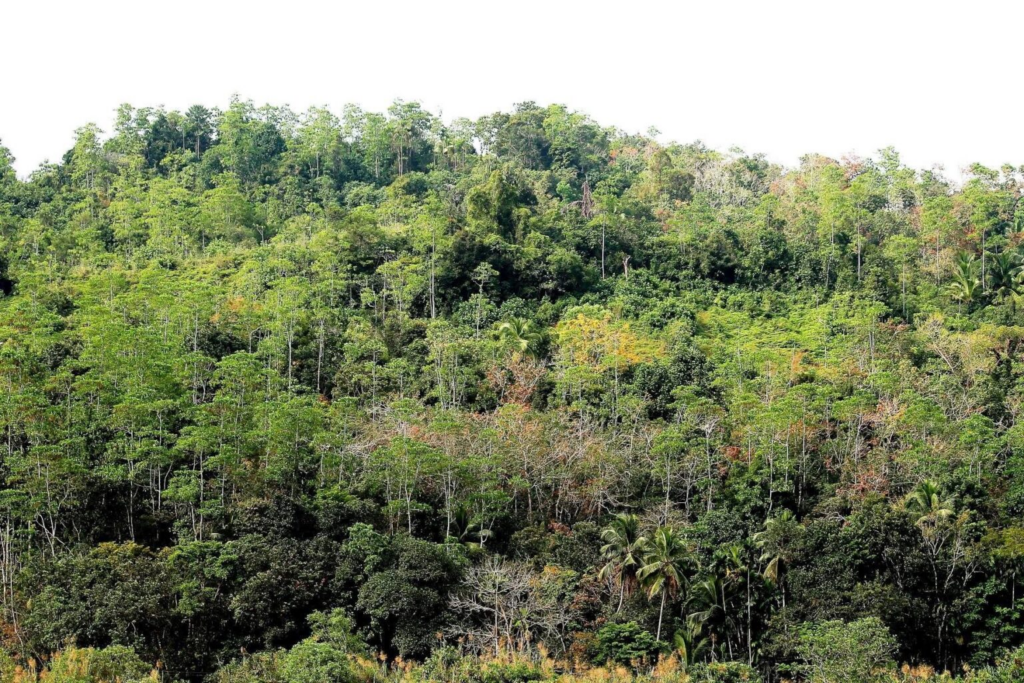
Sri Lanka’s famous biodiversity is in danger. Forests like the Kanneliya rainforest, a once-rich haven for endemic frogs such as the whistling shrub frog (Pseudophilautus nemus), are now choked by fast-growing invasive plants. Hard milkwood (Alstonia macrophylla), introduced in the 1950s, has spread rapidly, displacing native trees and altering habitats. In wetlands and reservoirs, alien fish like the giant snakehead (Channa micropeltes), likely released from aquariums, are devouring native fish and upsetting whole food webs. Read here
This alarming trend appears widespread, not isolated.
In Kanneliya, part of the larger Sinharaja forest complex, selective logging in the 1970s–80s left gaps that invaders like Alstonia and mahogany quickly filled. Locals and scientists warn these exotic species compete with endemic plants for sunlight and pollinators. Read here and here. At the same time, ornamental plants such as the Velvet Tree (Miconia calvescens) and Sikkim knotweed have taken over montane zones like Nuwara Eliya, forming dense thickets that block native growth. Similar stories play out across Sri Lanka: Lantana, Clidemia, Tradescantia and many others are pervasive, choking understoreys and wrecking soil stability.
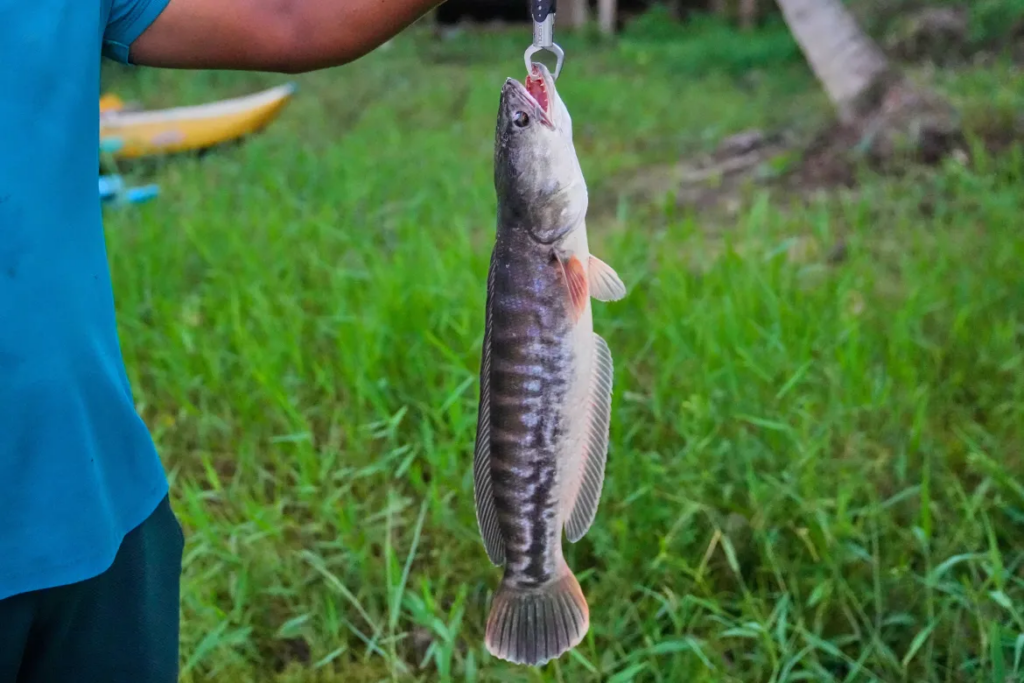
In freshwater ecosystems, invasive species are equally disruptive. Fishermen around Deduru Oya reported a boom in giant snakehead numbers after the fish were released from ornamental tanks. Snakeheads are top predators with no natural enemies in Sri Lankan waters, and they “eat small fish and the babies of other fish”, leaving native species such as the endemic Labeo heladiva dangerously depleted. Villagers and the government have launched a programme to kill snakeheads, and in late 2025, Sri Lanka banned the import, possession and sale of several invasive fish species in an attempt to prevent further introductions. Read here
Management Gaps and Policy Shortcomings
Sri Lanka adopted a National Invasive Species Policy and Action Plan in 2016, but in practice coordination is poor. A government analysis noted that institutions have not harmonised policies, leaving risk reduction “under-developed” and uncoordinated. In other words, although rules exist, implementation lags. There are insufficient inspections of plant and fish imports and little early warning when new invasives appear. For example, snakeheads slipped in through the ornamental fish trade before anyone knew it. Similarly, many invasive plants arrived decades ago and spread unchecked, indicating decades of underappreciated risk.
Enforcement also struggles. The fishing angling event to trap snakeheads caught only 22 fish among 1,000 participants, showing that once an invasive species is established, eradication is nearly impossible. Forest guards may lack resources to remove invasives in large reserves like Sinharaja or Horton Plains. A study found most alien trees in Sri Lanka only thrive where forests were already disturbed, implying that stopping logging and disturbance is a key missed step. Read here. Conservationists warn that by the time a species is recognised as invasive, it’s often too late to prevent irreversible damage.
On the positive side, Sri Lanka has launched targeted projects. The Kanneliya Restoration Life Project (2018) under the Forest Conservation Department and IUCN, for example, restored a degraded area of Kanneliya by removing invasive Old World forked fern and replanting native saplings. After just a few years, even sensitive forest snails have returned, showing ecosystem recovery. Elsewhere, NGOs and universities monitor invasives: National research institutes document new incursions and alert authorities.
But these efforts are piecemeal. Experts say more is needed: systematic early detection, stringent import controls, and funding for eradication. Sri Lankan anglers’ recent competition to remove snakeheads shows the public is ready to help, but scientists warn that beyond random fixes, a national programme should fund research, rapid response teams, and habitat restoration. Several countries offer models such as India’s lake system programmes. Meanwhile, communities are getting creative; some villages now harvest snakeheads for salted dried fish (කරවල), turning the invasion into an income source. Read here and here
Climate Change: Fueling the Invasion
Climate change is making the situation worse. Sri Lanka is warming and seeing more extreme weather, which can boost invasive spread. Studies show that warmer temperatures and shifting rain patterns help many alien plants extend their range. For instance, Miconia and Lantana flourish with less frost, and heavier rains can help their seeds wash into new areas. The government has begun to factor climate into invasive risk assessments, but on-the-ground adaptation is slow. Invasive species specialist Dr. Buddhi Marambe notes that as local climates change, weeds already present have “survived, expanded and impacted” new areas, while planning has not kept up. Read here
Conclusion: The Clock is Ticking
Invasive species pose a systemic threat to Sri Lanka’s conservation goals. The country lost large tracts of rainforest in past decades, and now what remains is increasingly alien-invaded. WWF and IUCN have warned that many endemic amphibians and reptiles, that over one-third of Sri Lanka’s vertebrates are endemic, and could decline if their habitat quality continues to degrade. International experts note that our island’s unique wildlife, evolved in isolation, often has no defences against aggressive newcomers.
The invasive problem spans forests and rivers alike. Reports from Kanneliya, Horton Plains, Sinharaja and elsewhere all describe similar patterns of rapid spread and native decline. Freshwaters from urban ponds to rural reservoirs are likewise at risk, not just from snakeheads but also from species like Amazon sailfin catfish and tilapia introduced long ago.
In short, Sri Lanka’s invasive species challenge is real, growing, and requires urgent action. While some localised control projects are under way, experts emphasise that without strong monitoring, enforcement of the 2016 policy, and public education, invasives will keep advancing. Climate change adds urgency, as new areas become hospitable. Thus, the window to protect Sri Lanka’s endemic wildlife is closing; proactive management (rather than emergency responses) will be key to preventing irreversible loss.
Reference:
Illegal Aliens: Seven Invasive Alien Plants Found In Sri Lanka
Invasive plants pose threat to endemic wildlife in Kanneliya forest
Illegal Aliens: Seven Invasive Alien Plants Found In Sri Lanka
https://www.frontiersin.org/journals/agronomy/articles/10.3389/fagro.2021.641006/full
http://www.forestdept.gov.lk/index.php/en/
Invasive plants pose threat to endemic wildlife in Kanneliya forest
Banner Image: Photo by K. P. D. Madhuka on Unsplash
Sections of this article may have been developed with the assistance of artificial intelligence tools to support research, drafting, and language refinement. All information has been reviewed, edited, and verified by the author/editor to ensure accuracy, context, and editorial integrity. The responsibility for the final content, interpretations, and conclusions rests solely with the publisher.