Physical Address
23,24,25 & 26, 2nd Floor, Software Technology Park India, Opp: Garware Stadium,MIDC, Chikalthana, Aurangabad, Maharashtra – 431001 India
Physical Address
23,24,25 & 26, 2nd Floor, Software Technology Park India, Opp: Garware Stadium,MIDC, Chikalthana, Aurangabad, Maharashtra – 431001 India

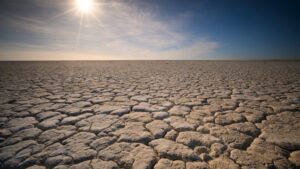
Climate change is no longer just about rising temperatures or isolated droughts. Scientists are increasingly warning that the real danger lies in what happens when these extremes occur together. A study published by the American Geophysical Union finds that extreme heat and drought are becoming more frequent together, creating conditions far more difficult to cope with. Under current climate policies, nearly one in three people worldwide could be exposed to these combined extremes by the end of the century, raising serious concerns about food, water, health, and survival.
When Heat and Drought Hit at the Same Time
Extreme heat and drought have long been studied as separate climate risks, but recent research shows that their combined impact is far more severe. These events, often referred to as compound hot dry extremes, occur when high temperatures coincide with low rainfall. Together, they intensify stress on ecosystems, agriculture, and human health. The study finds that these overlapping extremes are becoming much more common due to human-driven climate change. Between 2001 and 2020, global land areas experienced around four such events per year, roughly double the frequency seen in earlier periods. This rise is closely linked to increasing greenhouse gas emissions, which are driving both higher temperatures and changes in rainfall patterns.
Earlier research also supports this trend. Studies show that the frequency of compound dry and hot events has increased significantly over recent decades, with rare extreme events becoming more likely as the climate warms. What makes these events particularly dangerous is how they reinforce each other. Dry soils reduce evaporation, which in turn raises surface temperatures further. At the same time, heat accelerates moisture loss, deepening drought conditions. This feedback loop creates a situation in which both extremes intensify simultaneously, leading to crop failures, water shortages, and an increased risk of wildfires.
A Crisis Already Taking Shape
While projections for the future are alarming, the crisis is already visible today. Scientific evidence shows that compound heat and drought events have increased across many parts of the world over the past few decades. A separate research shows that around 52% of global land areas are already experiencing rising levels of heat stress intensity, while nearly 67% are seeing an increase in extreme heat stress days, pointing to how widespread and immediate the impact of warming has become.
Global studies indicate that the land area affected by such combined extremes has grown nearly two times over the last half century, especially during summer months when crops are most vulnerable. These changes are not limited to one region. Hotspots have been identified across Africa, South America, Australia, and parts of Asia.
The impact on food systems is already becoming clear. According to a joint report by the WMO and the Food and Agriculture Organisation, extreme heat is damaging crops, stressing livestock, and threatening the livelihoods of more than 1.2 billion people. In some cases, a single heatwave can reduce agricultural productivity by up to half.
The human cost is also rising. Agricultural workers, who are often exposed to both heat and dry conditions, face significantly higher risks. The same report notes that they are far more likely to suffer from heat-related health issues, highlighting how climate risks are increasingly affecting everyday work and survival. All of these facts point to a clear pattern. The combination of heat and drought is no longer a future possibility. It is already shaping the present climate reality.
The People Least Responsible May Suffer the Most
One of the most concerning findings of the study is how unevenly these risks are distributed. The regions expected to face the highest exposure are largely low-income tropical countries, many of which have contributed the least to global greenhouse gas emissions. These regions are already more vulnerable due to limited access to water infrastructure, cooling systems, healthcare, and financial resources. As climate extremes intensify, these existing challenges are likely to deepen.
For farmers, repeated exposure to heat and drought can lead to declining yields and loss of income. For outdoor workers, prolonged exposure to extreme temperatures can increase health risks and reduce productivity. For communities already dealing with water stress, the combination of heat and low rainfall can make basic needs harder to meet.
This raises important questions about climate fairness. The countries and communities that have historically contributed the least to climate change are likely to face some of its most severe impacts. The study highlights that even small increases in global emissions can translate into significant increases in exposure for vulnerable populations. This imbalance is not just a future concern. It is already visible in how climate impacts are being experienced across different parts of the world.
How Today’s Emissions Are Locking In Tomorrow’s Risk
The study makes it clear that the scale of future exposure depends heavily on the choices made today. Under current policies, around 28% of the global population could face heightened exposure to compound heat and drought by the end of the century. That translates to nearly 2.6 billion people.
However, stronger climate action could significantly reduce this risk. If countries move closer to their long-term climate commitments, the share of the population exposed could drop to around 18%. This difference represents hundreds of millions of people who could avoid facing these extreme conditions.
Recent modelling studies suggest that high intensity hot dry extremes could increase several-fold by mid-century, particularly in tropical and subtropical regions where many major agricultural areas are located. This makes the issue not just about understanding climate risks, but about acting on them. Reducing emissions can limit how severe these extremes become, while better planning and adaptation can help communities cope with the changes that are already underway.
In many ways, this is what makes the issue so urgent. The risks are already visible, the science is clear, and the consequences are far-reaching. What happens next will determine whether billions of people face a future defined by overlapping climate extremes or one where those risks are reduced before they fully take hold.
References:
https://agupubs.onlinelibrary.wiley.com/doi/10.1029/2025GL118822
https://phys.org/news/2026-04-hot-dry-extremes-humanity-century.html
https://www.science.org/doi/10.1126/sciadv.aaz4571
https://pmc.ncbi.nlm.nih.gov/articles/PMC12976231
https://doi.org/10.3389/feart.2022.914437
https://wmo.int/media/news/fao-and-wmo-report-highlights-extreme-heat-risks-agriculture
Much of humanity may face hot-dry extremes five times more often by end-century
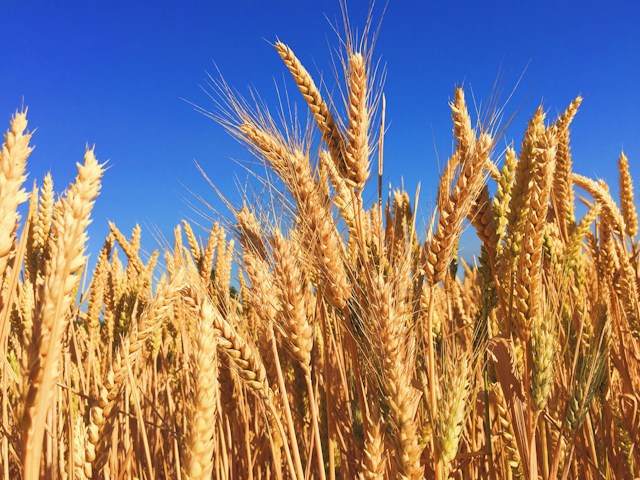
Banner image: Photo by Oleksandr Sushko on Unsplash
Sections of this article may have been developed with the assistance of artificial intelligence tools to support research, drafting and language refinement. All information has been reviewed, edited and verified by the author/editor to ensure accuracy, context and editorial integrity. The responsibility for the final content, interpretations and conclusions rests solely with the publisher.