Physical Address
23,24,25 & 26, 2nd Floor, Software Technology Park India, Opp: Garware Stadium,MIDC, Chikalthana, Aurangabad, Maharashtra – 431001 India
Physical Address
23,24,25 & 26, 2nd Floor, Software Technology Park India, Opp: Garware Stadium,MIDC, Chikalthana, Aurangabad, Maharashtra – 431001 India

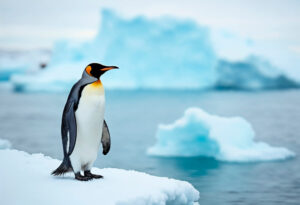
At the heart of the icy wilderness of Antarctica lives the emperor penguin, a species admired for its resilience and unique way of life. Braving brutal winds and sub-zero temperatures, these birds have long symbolized survival against the harshest odds. Yet today, even they are struggling to cope.
Emperor penguins have been officially classified as endangered, marking a significant shift in the conservation status of one of Antarctica’s most iconic species. The decision reflects growing concern about rapidly shrinking sea ice caused by climate change, which scientists say threatens the very foundation of penguins’ survival. The reclassification is being seen not just as a species-level crisis, but as a clear signal of accelerating environmental change in the polar regions.
For emperor penguins, sea ice is not just part of their environment; it is the foundation of their survival. They depend on stable ice platforms for breeding, raising their young, and resting during critical life stages. Every year, these birds follow a delicate cycle timed perfectly with the formation and melting of sea ice.
However, rising global temperatures are disrupting this natural rhythm. Sea ice is forming later and breaking apart earlier than it used to. This change may seem subtle, but its consequences are severe. When ice melts too soon, penguin chicks are often left vulnerable before they are ready to survive in the ocean. Without waterproof feathers, they cannot withstand the freezing waters, leading to widespread chick mortality.
Entire colonies have already been affected by such events, highlighting just how fragile this balance has become.
A Declining Population: More Than Just One Species
Although hundreds of thousands of emperor penguins still exist, their numbers are steadily declining. Scientists have observed noticeable drops in population across several regions, with some colonies experiencing significant losses.
What is particularly worrying is not just the current decline, but what lies ahead. If global temperatures continue to rise at the present rate, projections suggest that emperor penguin populations could shrink dramatically by the end of the century. In some scenarios, most colonies may not survive. This is not a distant or hypothetical threat; it is a trajectory that has already begun.
The plight of emperor penguins is part of a much larger story unfolding across Antarctica. Changes in sea ice are affecting the entire ecosystem, from tiny krill to large marine mammals. As ocean temperatures shift and food availability changes, species that depend on these delicate systems are being forced to adapt—or perish.
Emperor penguins are often seen as a “sentinel species,” meaning their decline signals bigger environmental changes. Their struggle offers a glimpse into the broader impacts of climate change, not only in polar regions but across the planet.
Anthropogenic Crisis
At its core, this crisis is the result of human actions. The continued use of fossil fuels, deforestation, and industrial emissions has led to an increase in greenhouse gases, warming the planet at an unprecedented rate.
Antarctica, once thought to be relatively stable, is now experiencing noticeable shifts in temperature and ice patterns. The changes happening there are not isolated—they are connected to global systems that influence weather, sea levels, and biodiversity worldwide. This makes the conservation of emperor penguins more than just a wildlife issue. It is part of a much larger challenge: addressing climate change itself.
A Narrow Window for Action
Despite the seriousness of the situation, there is still hope. The future of emperor penguins is not yet sealed. Scientists and conservationists agree that decisive action taken today can still make a difference.
Reducing carbon emissions is the most critical step. Transitioning to cleaner energy sources, improving environmental policies, and strengthening international cooperation can help slow the pace of warming. In addition, protecting key habitats and minimizing human disturbances in sensitive regions can provide these birds with a better chance of survival. Time, however, is limited. The longer the action is delayed, the harder it becomes to reverse the damage.
References:
https://www.nytimes.com/2026/04/09/climate/emperor-penguins-iucn-red-list.html
https://pmc.ncbi.nlm.nih.gov/articles/PMC9291047
https://www.wwf.org.uk/articles/endangered-emperor-penguins
Banner Image: Photo on Freepik
Sections of this article may have been developed with the assistance of artificial intelligence tools to support research, drafting, and language refinement. All information has been reviewed, edited, and verified by the author/editor to ensure accuracy, context, and editorial integrity. The responsibility for the final content, interpretations, and conclusions rests solely with the publisher.