Physical Address
23,24,25 & 26, 2nd Floor, Software Technology Park India, Opp: Garware Stadium,MIDC, Chikalthana, Aurangabad, Maharashtra – 431001 India
Physical Address
23,24,25 & 26, 2nd Floor, Software Technology Park India, Opp: Garware Stadium,MIDC, Chikalthana, Aurangabad, Maharashtra – 431001 India

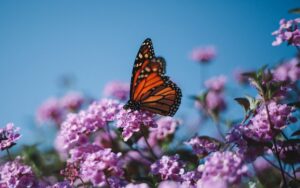
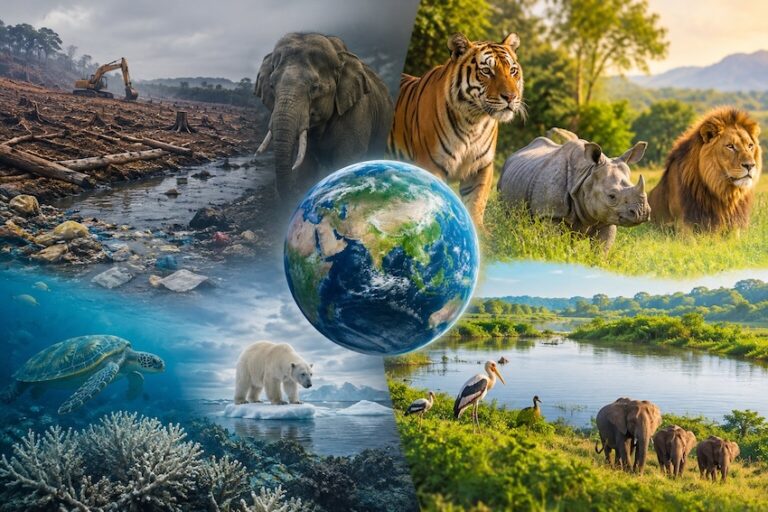
As the world marks the International Day for Biological Diversity 2026, scientists are warning that humanity is entering one of the most dangerous periods in the history of life on Earth. Forests continue to shrink across the tropics, freshwater ecosystems are under growing stress and wildlife populations are declining at a pace that has alarmed researchers worldwide. At the same time, countries across the Global South are trying to lift millions of people out of poverty while dealing with rising food demand, climate disasters and economic uncertainty.
For years, the biodiversity debate was framed as a battle between development and conservation. Economic growth was widely seen as one of the biggest threats to nature. Expanding industries, highways, mining projects and agricultural land often came at the cost of forests, wetlands and wildlife habitats. But new research is now adding greater complexity to that conversation.
A recent study published in PNAS suggests that faster economic development in lower-income countries could, under certain conditions, help reduce future biodiversity loss. Researchers from the University of Minnesota found that improving agricultural productivity, reducing food waste and supporting social and economic development may reduce pressure to convert natural ecosystems into farmland.
The findings arrive at a time when biodiversity loss is increasingly being linked not just to environmental damage but also to food security, climate resilience and public health. Scientists now argue that protecting ecosystems cannot happen in isolation from discussions about inequality, agriculture and economic systems. The challenge facing the world today is no longer simply about choosing between growth and conservation. It is about finding ways to ensure that human development does not come at the expense of the ecosystems that sustain life itself.
A Planet Losing Life at an Alarming Rate
The scale of biodiversity decline over the last few decades has become one of the clearest signs of planetary stress. According to the WWF Living Planet Report 2024, monitored wildlife populations around the world have declined by an average of 73% between 1970 and 2020. The report tracked more than 35,000 populations across over 5,000 vertebrate species. Freshwater species recorded the sharpest declines globally. The report identified habitat loss, climate change, pollution and overexploitation of natural resources as the primary drivers behind the decline. Land use change remains one of the most serious threats. Forests continue to be cleared for agriculture, infrastructure and resource extraction in several parts of the world.
Data from the Food and Agriculture Organisation’s Global Forest Resources Assessment shows that the world lost around 10 million hectares of forest annually between 2015 and 2020, although the pace of deforestation has slowed slightly compared to previous decades. Tropical regions continue to face the highest pressure from agricultural expansion.
Scientists warn that biodiversity loss is now directly affecting the stability of ecosystems that support human societies. Pollinators are declining in many regions, threatening food production. Wetlands that help absorb floods and filter water are disappearing. Coral reefs that sustain marine biodiversity and fisheries are facing mass bleaching events due to warming oceans. The Intergovernmental Science Policy Platform on Biodiversity and Ecosystem Services (IPBES) continues to warn that biodiversity decline is weakening nature’s ability to provide food, clean water, climate regulation and disease control.
Climate change is also increasing pressure on ecosystems already under stress. According to the European Union’s Copernicus Climate Change Service, 2025 was among the warmest years ever recorded globally, with repeated marine heatwaves and extreme weather events affecting ecosystems across continents. Researchers say the biodiversity crisis can no longer be treated as a separate environmental issue. It is becoming deeply connected to economic stability, food systems and climate resilience.
How Economic Growth Became Nature’s Biggest Threat
Modern economic development has improved living standards for billions of people, but it has also transformed landscapes at an unprecedented scale. Over the past century, forests, grasslands and wetlands have increasingly been converted into industrial zones, cities, highways and farmland.
Agriculture remains the single largest driver of terrestrial biodiversity loss worldwide. According to the University of Minnesota study, croplands already occupy around 12% of Earth’s ice-free land surface, while grazing lands cover nearly 25%.
As incomes rise and populations grow, demand for food, meat, housing and infrastructure also increases. In many regions, this has resulted in widespread deforestation and habitat fragmentation. Tropical forests in the Amazon, Congo Basin and Southeast Asia continue to face pressure from industrial agriculture, mining and commodity production.
The World Resources Institute reported that the world lost 6.7 million hectares of primary tropical forest in 2024 alone, releasing billions of tonnes of carbon dioxide into the atmosphere and threatening biodiversity hotspots. Economic growth has also intensified energy demand, industrial production and the extraction of natural resources. Roads and infrastructure projects are expanding into previously undisturbed ecosystems, increasing fragmentation and human pressure on wildlife habitats.
Scientists warn that climate change and biodiversity loss are reinforcing each other. Forest destruction weakens carbon storage while rising temperatures place further stress on ecosystems. According to the United Nations Environment Programme (UNEP), nature-based solutions could contribute significantly to climate mitigation, yet ecosystem destruction continues at a dangerous pace.
Because of this history, economic growth is often viewed as fundamentally incompatible with environmental protection. Yet the reality facing lower-income countries today is far more complicated. Many nations that still struggle with poverty and food insecurity are also home to some of the world’s richest biodiversity. Governments are under pressure to improve living standards, increase food production and expand economic opportunities while protecting ecosystems at the same time. That tension is becoming one of the defining environmental questions of this century.
What Poverty and Farming Pressures Are Doing to Biodiversity
While industrial expansion has historically damaged ecosystems, researchers now argue that poverty and weak agricultural systems can also become major drivers of biodiversity loss. The University of Minnesota study examined how future food demand and population growth could affect global land use over the coming decades. Researchers found that lower-income countries with low agricultural productivity are likely to face the highest pressure to expand cropland into forests and natural ecosystems.
In many developing regions, farmers often depend on expanding farmland because crop yields remain relatively low. Limited irrigation, weak infrastructure, lack of investment and restricted access to agricultural technology can force communities to clear forests and grasslands to meet food demand.
The researchers suggest that faster economic development could help reduce this pressure if it improves agricultural efficiency and slows population growth through better education, healthcare and income opportunities. According to the study, improving crop yields and reducing food waste globally could significantly reduce the need for future cropland expansion. Researchers also noted that dietary shifts and lower levels of overconsumption in wealthier nations could further ease pressure on ecosystems.
This challenges the common assumption that poverty automatically protects nature. In reality, economically vulnerable communities often depend directly on forests, land and natural resources for survival. When populations rise rapidly, and farming systems remain inefficient, ecosystems can face severe strain. At the same time, experts caution that economic growth alone cannot solve the biodiversity crisis. Development driven by fossil fuel extraction, large-scale mining, or poorly regulated industrialisation can still deeply damage ecosystems.
Researchers also point out that consumption patterns remain highly unequal globally. High-income countries continue to consume far more resources per person than most developing nations. The UNEP Global Resource Outlook 2024 warned that unsustainable consumption and production patterns continue to push planetary systems beyond safe ecological limits.
The biodiversity crisis, therefore, cannot be understood only through the lens of economic growth. It is equally tied to inequality, food systems, land use and global patterns of consumption.
Why Saving Biodiversity Needs More Than Conservation
Conservation alone may no longer be enough to protect the natural world. Scientists increasingly argue that biodiversity protection must become part of broader economic and social planning. Protected forests and wildlife reserves remain essential, but the drivers of biodiversity loss now extend far beyond conservation zones. Food systems, urban expansion, global trade, infrastructure development and climate change are all shaping the future of ecosystems.
Experts say sustainable agriculture will play a central role in reducing future biodiversity loss. Improving crop productivity while reducing environmental damage could help lower pressure on forests and natural habitats. Reducing food waste is another critical challenge. According to the UNEP’s Food Waste Index Report 2024, households worldwide wasted more than 1 billion meals every day in 2022, while millions of people faced hunger globally.
Indigenous communities are also becoming more central to biodiversity discussions. Studies continue to show that Indigenous-managed territories often contain some of the world’s healthiest ecosystems and highest levels of biodiversity. Conservation experts increasingly stress that local communities must be treated as partners in environmental protection rather than being excluded from it.
The conversation is also shifting toward climate resilience. Forests, mangroves, wetlands and oceans absorb carbon dioxide and help societies cope with floods, storms and heatwaves. Protecting ecosystems is now viewed as essential not only for wildlife survival but also for adapting to climate change.
Yet major financial and political challenges remain. Many biodiversity-rich countries continue to face debt burdens, development pressures and climate vulnerabilities. Conservation funding remains uneven despite global commitments made under the Kunming-Montreal Global Biodiversity Framework (GBF) adopted during COP15.
As Biodiversity Day 2026 draws attention to the growing ecological crisis, scientists say the world must move beyond simplistic debates that frame development and conservation as opposing forces. The future of biodiversity will depend not only on protecting forests and wildlife but also on how countries produce food, reduce inequality, manage resources and shape economic growth in the decades ahead.
References:
https://www.pnas.org/doi/10.1073/pnas.2506601123
https://livingplanet.panda.org/en-US
https://www.fao.org/forest-resources-assessment/en
https://pmc.ncbi.nlm.nih.gov/articles/PMC12212572
https://climate.copernicus.eu/copernicus-2025-was-third-hottest-year-record
https://phys.org/news/2026-05-economic-growth-income-countries-biodiversity.html
https://www.regnskog.no/uploads/documents/Tropical-Deforestation-Outlook-RFN-final-version.pdf
https://gfr.wri.org/global-tree-cover-loss-data-2024
https://www.unep.org/unep-and-nature-based-solutions
https://www.resourcepanel.org/reports/global-resources-outlook-2024
https://www.unep.org/resources/publication/food-waste-index-report-2024
https://www.sciencedirect.com/science/article/pii/S2590332223000416
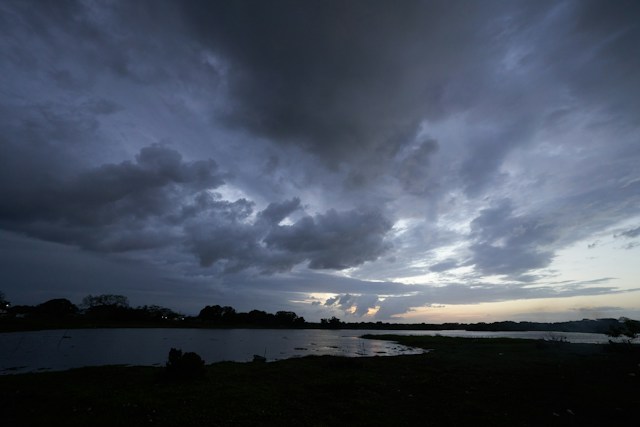
Banner image: Photo by Justin DoCanto on Unsplash
Sections of this article may have been developed with the assistance of artificial intelligence tools to support research, drafting and language refinement. All information has been reviewed, edited and verified by the author/editor to ensure accuracy, context and editorial integrity. The responsibility for the final content, interpretations and conclusions rests solely with the publisher.