Physical Address
23,24,25 & 26, 2nd Floor, Software Technology Park India, Opp: Garware Stadium,MIDC, Chikalthana, Aurangabad, Maharashtra – 431001 India
Physical Address
23,24,25 & 26, 2nd Floor, Software Technology Park India, Opp: Garware Stadium,MIDC, Chikalthana, Aurangabad, Maharashtra – 431001 India


As the world observes International Day for Biological Diversity 2026 under the theme “Acting locally for global impact”, the message is clear: protecting biodiversity begins with local action. Communities, governments, and individuals all have a role in conserving ecosystems that sustain life on Earth. In this context, Nature-Based Solutions (NbS) have emerged as effective approaches to address environmental challenges while supporting biodiversity and human well-being.
Nature-Based Solutions refer to actions that protect, restore, or sustainably manage ecosystems to address issues such as climate change, biodiversity loss, water scarcity, and disaster risk. In a country like India, known for its rich ecological diversity, several local initiatives demonstrate how nature itself can become a powerful solution to environmental problems.
Why Nature-Based Solutions Matter?
Biodiversity forms the foundation of healthy ecosystems. Forests regulate climate, wetlands purify water, mangroves protect coastlines, and pollinators support agriculture. However, rapid urbanisation, habitat destruction, pollution, and climate change continue to threaten these ecosystems.
Nature-Based Solutions offer a sustainable alternative by working with nature rather than against it. They provide multiple benefits simultaneously — conserving biodiversity, improving livelihoods, increasing climate resilience, and supporting sustainable development.
A. Mangrove Restoration: Protecting Coasts and Marine Biodiversity
Mangrove ecosystems along India’s coastlines play a crucial role in biodiversity conservation. Mangroves provide habitats for fish, birds, crustaceans, and numerous marine species while acting as natural barriers against storms and coastal erosion.
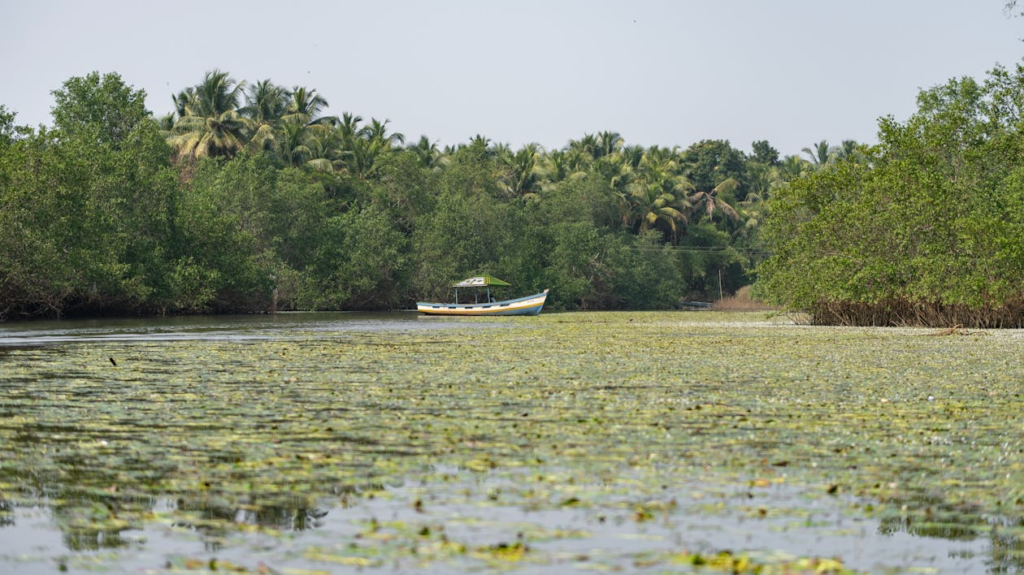
Restoration efforts in coastal regions have focused on regenerating degraded mangrove forests. These initiatives not only improve biodiversity but also help communities adapt to climate-related risks such as cyclones and rising sea levels.
Thus, a local effort to restore mangroves contributes to larger global goals of climate mitigation and ecosystem conservation.
B. Wetland Conservation: Reviving Ecosystems
Wetlands are among the most productive ecosystems and support a wide variety of species. Yet many wetlands face degradation due to pollution and encroachment.
Across India, efforts to restore lakes, ponds, and wetlands are helping revive habitats for migratory birds, fish, amphibians, and aquatic plants. Healthy wetlands also improve groundwater recharge, reduce flood risks, and strengthen water security.
Protecting wetlands demonstrates how local ecosystem restoration supports both biodiversity and human needs.
C. Agroforestry and Sustainable Agriculture
Agricultural landscapes can also become important spaces for biodiversity conservation. Agroforestry, which integrates trees with farming systems, improves soil fertility, provides habitat for wildlife, and enhances ecosystem resilience.
Similarly, preserving indigenous seeds and traditional crop varieties helps maintain agricultural biodiversity. Diverse cropping systems are often more resilient to pests, diseases, and changing climate conditions compared to monoculture farming.
Such practices show how sustainable agriculture can simultaneously support food security and biodiversity conservation.
D. Community Forest Management
Local participation has become increasingly important in forest conservation. Community-led forest management encourages sustainable resource use, reduces illegal exploitation, and supports habitat protection.
When communities become custodians of forests, conservation efforts often become more effective because local populations possess valuable ecological knowledge developed over generations.
E. Sacred Groves: Traditional Conservation Through Culture
India’s sacred groves represent one of the oldest examples of Nature-Based Solutions. Protected through cultural and religious beliefs, these forest patches preserve rare species and maintain ecological balance.
Although rooted in tradition, sacred groves continue to demonstrate how indigenous knowledge can contribute to modern biodiversity conservation strategies.
F. Urban Biodiversity Initiatives
Biodiversity conservation is no longer limited to forests and rural landscapes. Urban green spaces, restoration of city wetlands, planting native species, and biodiversity parks are helping improve ecological health within cities. These initiatives support pollinators, birds, and urban wildlife while enhancing environmental quality for residents. As urbanisation increases, integrating nature into cities will become essential for sustainable development.
India’s experience highlights that Nature-Based Solutions are not isolated environmental projects; they are investments in a resilient future. Mangrove restoration, wetland conservation, sustainable agriculture, forest stewardship, and traditional ecological practices all demonstrate how local actions can contribute to global biodiversity goals. The theme “Acting locally for global impact” reminds us that biodiversity conservation does not depend solely on international agreements. It also depends on everyday decisions taken by communities, institutions, and individuals.
References:
https://www.un.org/en/observances/biological-diversity-day
https://www.epa.gov/wetlands/why-are-wetlands-important
https://www.sciencedirect.com/science/article/pii/S2666719325000743
https://www.sciencedirect.com/science/article/pii/S1618866723001036
Photo by Sachin Shettigar on Pexels
Banner Image: Photo on Pexels by Quang Nguyen Vinh
Sections of this article may have been developed with the assistance of artificial intelligence tools to support research, drafting, and language refinement. All information has been reviewed, edited, and verified by the author/editor to ensure accuracy, context, and editorial integrity. The responsibility for the final content, interpretations, and conclusions rests solely with the publisher.