Physical Address
23,24,25 & 26, 2nd Floor, Software Technology Park India, Opp: Garware Stadium,MIDC, Chikalthana, Aurangabad, Maharashtra – 431001 India
Physical Address
23,24,25 & 26, 2nd Floor, Software Technology Park India, Opp: Garware Stadium,MIDC, Chikalthana, Aurangabad, Maharashtra – 431001 India

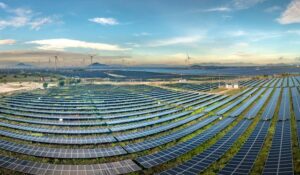
For years, renewable energy faced the same criticism across industries and governments: solar and wind power may help the environment, but they cannot reliably replace coal, oil, and gas. That belief shaped global energy policies for decades. Today, however, the economics of clean energy are changing so rapidly that the debate itself is beginning to shift.
A recent study on round-the-clock renewable electricity shows that solar and wind energy combined with battery storage can now compete directly with fossil fuels on both cost and reliability. In some regions, clean energy systems are already producing electricity at lower prices than new coal or gas plants. The findings represent a major turning point in the global transition toward cleaner power generation.
The change has been driven largely by dramatic declines in technology costs. Over the past decade, solar panel prices have fallen sharply, wind turbines have become more efficient, and battery storage costs have dropped at an extraordinary pace. What once seemed expensive and experimental is now becoming commercially practical for large-scale electricity supply.
The biggest breakthrough is not just cheaper renewable power during sunny or windy periods. It is the ability to provide electricity continuously. Modern battery systems can store excess solar and wind energy and release it when needed, including during nighttime or periods of low generation. This development weakens one of the strongest arguments long used in favour of fossil fuels: that they are the only dependable source of uninterrupted electricity.
Yet despite these advances, the global transition remains slower than climate experts believe is necessary. The reason is no longer simply about cost or technology. The barriers today are far more complex and deeply connected to infrastructure, politics, finance, and long-standing industrial systems.
Infrastructure Built Around Fossil Fuels
One of the largest challenges is that most power grids across the world were originally designed for fossil fuel-based generation. Coal and gas plants typically operate from centralized locations and provide predictable electricity output. Renewable energy systems function differently. Solar farms and wind projects are often spread across large areas and may be located far from cities or industrial centres.
This means countries need stronger transmission networks, modern grid management systems, and large-scale storage infrastructure to fully integrate renewable energy. In many regions, renewable projects are delayed not because of a lack of interest, but because transmission lines and grid connections are not ready.
Grid modernization is expensive and time-consuming. Approvals for transmission corridors often take years, while public resistance to large infrastructure projects can slow progress even further. Without significant investment in power infrastructure, renewable expansion may continue to face bottlenecks regardless of falling technology costs.
Policy inconsistency is another major obstacle. Many governments publicly support climate goals while continuing to provide subsidies and incentives to fossil fuel industries. Oil and gas exploration projects are still being approved in several countries even as renewable energy targets are announced. This creates uncertainty for investors and reduces confidence in long-term clean energy planning.
The influence of fossil fuel industries also remains significant. Coal, oil, and gas sectors support millions of jobs and contribute heavily to national economies. In some countries, energy exports form a major source of revenue. Moving away from fossil fuels therefore becomes more than an environmental issue. It becomes an economic and political challenge involving employment, industrial restructuring, and energy security.
Batteries Are Reshaping the Energy Market
Battery storage has emerged as the key technology transforming renewable energy from an intermittent source into a dependable one. The ability to store electricity generated during the day and use it later has changed how energy systems are designed and operated.
Large battery installations are now supporting grids in several countries by balancing fluctuations in renewable generation and reducing dependence on fossil fuel backup plants. Solar and wind power are also increasingly being combined in hybrid systems where one source complements the other. Wind energy may generate more power during evenings or different seasons, helping stabilize overall electricity supply.
Experts believe the cost of firm renewable electricity will continue to decline over the coming decade as battery manufacturing scales up and technology improves further. In some regions with strong sunlight and wind resources, renewable systems may become dramatically cheaper than fossil fuels even for industries requiring uninterrupted power supply.
This has important implications for sectors such as manufacturing, data centres, and green hydrogen production, all of which require reliable electricity around the clock. Industries that once depended entirely on coal or gas may increasingly shift toward renewable-based energy systems for both economic and environmental reasons.
Still, challenges remain. Renewable energy expansion depends heavily on mineral supply chains for batteries and clean technology manufacturing. Questions around battery recycling, land availability, and long-term storage capacity continue to be debated. Extreme weather conditions can also affect renewable generation, making diversified energy systems essential.
Despite these concerns, the overall direction of the global energy sector appears increasingly clear. Renewable energy is no longer only a climate solution. It is becoming an economic one as well.
For more than a century, fossil fuels dominated because they were considered affordable, reliable, and easy to scale. That advantage is gradually weakening. Clean energy technologies that were once viewed as alternatives are now becoming central to future electricity systems.
The global conversation is no longer focused mainly on whether renewable energy can replace fossil fuels. Instead, the real question is how quickly governments, industries, and infrastructure systems can adapt to a changing energy reality.
References:
https://www.irena.org/Publications/2026/May/24-7-renewables-The-economics-of-firm-solar-and-wind
https://www.imf.org/en/blogs/articles/2019/04/26/falling-costs-make-wind-solar-more-affordable
https://www.sciencedirect.com/science/article/pii/S2211467X20300924
https://www.sciencedirect.com/science/article/pii/S2211467X24001895
Banner Image: Photo on Pexels by Quang Nguyen Vinh
Sections of this article may have been developed with the assistance of artificial intelligence tools to support research, drafting and language refinement. All information has been reviewed, edited and verified by the author/editor to ensure accuracy, context and editorial integrity. The responsibility for the final content, interpretations and conclusions rests solely with the publisher.