Physical Address
23,24,25 & 26, 2nd Floor, Software Technology Park India, Opp: Garware Stadium,MIDC, Chikalthana, Aurangabad, Maharashtra – 431001 India
Physical Address
23,24,25 & 26, 2nd Floor, Software Technology Park India, Opp: Garware Stadium,MIDC, Chikalthana, Aurangabad, Maharashtra – 431001 India
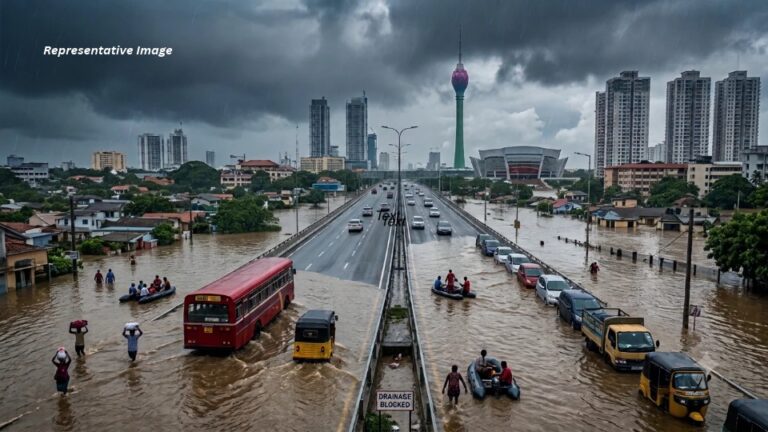
Sri Lanka’s air quality has worsened as Cyclone Akvan shifts wind patterns. Here’s how transboundary pollution works, which areas are hit and what to expect.
Sri Lanka has experienced a noticeable deterioration in air quality in several parts of the country during November 2026, with hazy conditions and elevated concentrations of airborne particulate matter reported across multiple provinces. The situation has raised concerns about the possible causes of the pollution episode, particularly the influence of weather systems developing over the Bay of Bengal.
Recent observations suggest that the phenomenon is not simply a result of local pollution. Instead, changing wind patterns associated with Cyclonic Storm Akvan, seasonal atmospheric circulation and transboundary movement of pollutants appear to be important contributing factors.
Understanding these connections is particularly important because air pollution does not respect national boundaries. Pollutants released in one country can travel hundreds or even thousands of kilometres under suitable atmospheric conditions, affecting the air quality of neighbouring countries.
What is happening to Sri Lanka’s air quality?
According to the Central Environmental Authority (CEA), elevated concentrations of particulate matter, particularly PM2.5 and PM10, were detected in several parts of Sri Lanka during November 2026.
In a media statement issued on 16 November, the CEA reported increased particulate matter concentrations in districts including Jaffna, Kilinochchi, Mullaitivu, Mannar, Anuradhapura, Puttalam, Trincomalee, Kurunegala and Colombo. The authority attributed the situation largely to wind currents arriving from outside the country.
On the morning of 18 November, several monitoring locations recorded air quality index (AQI-SL) readings in the unhealthy category. These included Jaffna (186), Kilinochchi (170), Battaramulla (166), Anuradhapura (165), Chilaw (164), Trincomalee (156) and Akkaraipattu (154).
The unusual haze observed in different parts of the country was also discussed by officials from the CEA and the Department of Meteorology.
According to contemporary media reports, meteorological officials linked the changing atmospheric conditions to Cyclonic Storm Akvan, which influenced wind patterns over the Bay of Bengal.
The public can monitor current air quality readings through the Central Environmental Authority’s National Air Quality Monitoring website.
How can a cyclone influence air pollution in another country?
Cyclones are generally associated with strong winds, heavy rainfall and severe weather. However, their influence on atmospheric circulation can also affect the movement and distribution of air pollutants.
Air pollution is not confined to the geographical location where it originates. Atmospheric circulation can transport particulate matter, smoke, dust and other pollutants across national boundaries.
When a low-pressure system or cyclone develops, it changes the surrounding wind field. Depending on the system’s location, intensity and movement, these changes can influence the direction and speed of air currents over a large geographical area.
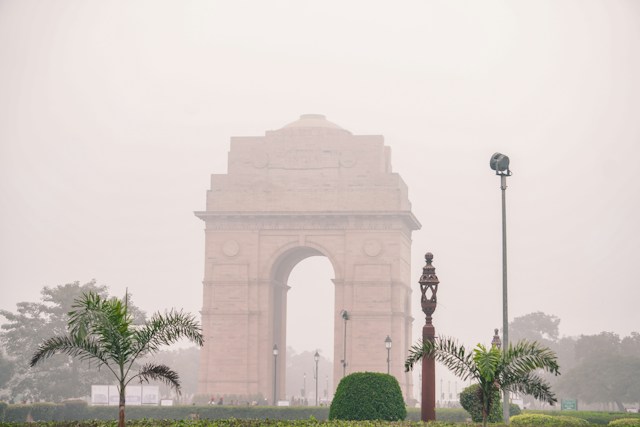
In the case of Cyclonic Storm Akvan, reports from Sri Lanka’s Department of Meteorology indicated that changes in wind patterns associated with the system were bringing air towards Sri Lanka from the direction of India.
This provides a possible meteorological explanation for the recent haze and deterioration in air quality.
However, the presence of a cyclone alone does not establish the precise origin or composition of the pollutants. Atmospheric trajectory analysis and measurements of particulate matter are necessary to identify their sources more conclusively.
Transboundary air pollution: A recurring problem for Sri Lanka
Transboundary air pollution occurs when pollutants generated in one geographical region are transported through the atmosphere into another country.
Sri Lanka’s geographical location, close to the Indian subcontinent, makes it vulnerable to this phenomenon, particularly during certain seasonal wind patterns.
Sources of particulate pollution in the wider South Asian region include:
During the agricultural harvesting season in northern India, the burning of crop residues can release substantial quantities of fine particulate matter into the atmosphere.
These particles can become suspended in the air and travel over considerable distances when atmospheric conditions favour long-range transport.
According to reporting by the media, Sri Lankan air-quality experts have previously highlighted the contribution of transboundary pollution, including agricultural burning in India and Bangladesh, to seasonal air-quality deterioration in Sri Lanka.
Nevertheless, it is important not to assume that all pollution observed in Sri Lanka during November originates from agricultural burning in India. Establishing the precise contribution of individual sources requires atmospheric modelling and source-apportionment studies.
Why does air pollution frequently increase during the northeast monsoon?
Sri Lanka experiences two major monsoon seasons, and the associated changes in atmospheric circulation influence the country’s weather and environmental conditions.
The northeast monsoon generally extends from December to February, although transitional conditions can develop during November and continue into March.
During this period, changes in regional wind patterns can facilitate the movement of polluted air masses from the Indian subcontinent towards Sri Lanka.
Previous episodes demonstrate that this is not an entirely new phenomenon.
Air-quality deterioration was reported during November 2019 and December 2022, with the latter episode coinciding with Cyclone Mandous. Similar seasonal pollution episodes were also observed during late 2025 and early 2026.
A scientific review by researchers at the University of Peradeniya, available through CORE, has discussed the relationship between transboundary air pollution and seasonal air-quality deterioration in Sri Lanka.
These recurring episodes demonstrate the importance of examining air pollution as a regional environmental issue rather than considering it exclusively a domestic problem.
Why are PM2.5 and PM10 particularly concerning?
The recent deterioration in Sri Lanka’s air quality has been associated with elevated concentrations of particulate matter, particularly PM2.5 and PM10.
PM10 refers to inhalable airborne particles with diameters of 10 micrometres or smaller. PM2.5 refers to finer particles measuring 2.5 micrometres or smaller.
The smaller size of PM2.5 allows these particles to penetrate deeper into the respiratory system, reaching the lungs and potentially entering the bloodstream.
Exposure to elevated concentrations of fine particulate matter is associated with respiratory and cardiovascular health problems. People with asthma, chronic respiratory conditions and cardiovascular diseases, as well as children and older adults, can be particularly vulnerable.
The World Health Organization’s Air Quality Guidelines identify particulate matter as an important environmental health risk and recommend substantially lower exposure levels to reduce associated health impacts.
The WHO recommends a 24-hour mean concentration of 15 µg/m³ for PM2.5 and 45 µg/m³ for PM10.
These guidelines help explain why even temporary increases in particulate pollution deserve attention, particularly when elevated concentrations persist.
Local pollution also contributes to the problem
Although transboundary pollution and changing atmospheric circulation are important factors, Sri Lanka’s domestic emission sources should not be overlooked.
Vehicle emissions, industrial activities, construction dust, open waste burning and other combustion sources contribute to the country’s overall particulate pollution burden.
During periods when polluted air is transported from neighbouring countries, these local emissions can add to the existing concentration of airborne pollutants.
Consequently, the deterioration in air quality may reflect the combined influence of external pollution and domestic emission sources.
This also means that improvements in local emission controls remain important, even when the immediate pollution episode is associated with regional atmospheric conditions.
What can people do during periods of poor air quality?
Public health precautions are particularly important when air-quality readings reach unhealthy levels.
According to the CEA’s air-quality guidelines, people with existing respiratory and cardiovascular conditions should avoid strenuous outdoor activities when air pollution is elevated. Other members of the public should consider reducing prolonged or physically demanding outdoor activities.
Some useful precautions include:
Public awareness and timely communication from environmental and health authorities are also essential for reducing exposure.
A regional environmental challenge requiring regional cooperation
The recent deterioration in Sri Lanka’s air quality highlights the close relationship between atmospheric circulation, weather systems and environmental pollution.
Cyclonic Storm Akvan and the associated changes in wind patterns have drawn attention to how atmospheric processes can influence the movement of pollutants across the Bay of Bengal.
However, the wider issue extends beyond one cyclone or one pollution episode. Seasonal transboundary pollution, agricultural burning, industrial emissions and domestic sources collectively contribute to South Asia’s air-quality challenges.
Addressing this problem requires stronger air-quality monitoring networks, improved atmospheric modelling, better regional data sharing and cooperation among countries to reduce emissions at their sources.
For Sri Lanka, strengthening domestic pollution controls while improving regional cooperation will be essential to protecting public health and maintaining healthier air quality throughout the year.
References
https://core.ac.uk/download/440358714.pdf
https://www.who.int/publications/i/item/9789240034228
https://adaderana.lk/news/251812
Banner Image: Photo by Manorie Kodithuwakku on Unsplash
Sections of this article may have been developed with the assistance of artificial intelligence tools to support research, drafting and language refinement. All information has been reviewed, edited and verified by the author/editor to ensure accuracy, context and editorial integrity. The responsibility for the final content, interpretations and conclusions rests solely with the publisher.