Physical Address
23,24,25 & 26, 2nd Floor, Software Technology Park India, Opp: Garware Stadium,MIDC, Chikalthana, Aurangabad, Maharashtra – 431001 India
Physical Address
23,24,25 & 26, 2nd Floor, Software Technology Park India, Opp: Garware Stadium,MIDC, Chikalthana, Aurangabad, Maharashtra – 431001 India

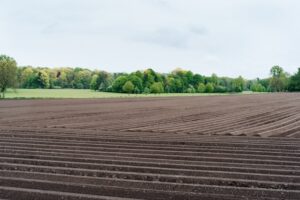
Biodiversity hotspots are often spoken about with a sense of urgency, but also with a sense of distance. They are described as faraway forests, islands, or mountain ranges where rare species cling to survival. In reality, many of these places are deeply connected to everyday human activity, especially food production. From tropical hillsides cleared for crops to lowland forests converted into farmland, the pressure on biodiversity hotspots has been building quietly for decades. A recent study published in Communications Earth & Environment adds new clarity to this trend, showing how agricultural expansion is increasingly overlapping with areas that host species found nowhere else on Earth. The findings do not stand alone. They fit into a much larger picture of how land use, food demand, and conservation priorities are colliding in ways that global policy has struggled to keep up with.
Why Biodiversity Hotspots Matter
The idea of biodiversity hotspots was first developed to help conservationists focus limited resources where they could make the biggest difference. These regions hold unusually high numbers of endemic species, plants and animals that evolved in isolation and exist only within narrow geographic ranges. Although hotspots cover a small fraction of the planet’s land surface, they support a disproportionate share of global biodiversity. Losing habitat in these areas does not just reduce numbers. It risks wiping out entire species with no backup populations elsewhere.
Over time, research has shown that many hotspots have already lost the majority of their original vegetation. Forests have been fragmented, wetlands drained, and grasslands transformed. What remains is often a patchwork of protected areas surrounded by farms, plantations, and settlements. This fragmented reality means that even small shifts in land use can have large consequences. Studies comparing intact habitats with human-altered landscapes consistently show steep declines in species richness and abundance once natural vegetation is replaced. In hotspots, where species’ ranges are already tight, that vulnerability is even greater.
Agriculture’s Expanding Footprint
Agriculture has long been recognised as one of the main drivers of habitat loss worldwide, but its role inside biodiversity hotspots is drawing renewed attention. The recent Nature study tracks cropland expansion across hotspots over nearly two decades and finds that farming has grown faster inside these regions than in many other parts of the world. This pattern reflects rising food demand, population growth, and economic pressures in countries where many hotspots are located.
Other global analyses reinforce this picture. Research using large biodiversity databases has linked increases in cropland coverage to consistent drops in species diversity, particularly in tropical regions. Farming not only replaces habitat. It reshapes landscapes through roads, irrigation, chemical inputs, and altered water flows. Even where some natural vegetation remains, the surrounding agricultural matrix can limit movement, disrupt breeding, and expose wildlife to new risks. For small-ranged species, these changes can be decisive, cutting off the last viable fragments of suitable habitat.
Where Species Face the Highest Risk
One of the most striking insights from recent research is where the greatest risks are concentrated. High-resolution mapping shows that many of the areas where agriculture overlaps most strongly with small-ranged vertebrates lie outside formal protected zones. Regions such as the Atlantic Forest in South America, Indo Burma, the Western Ghats, Sri Lanka, and parts of Southeast Asia emerge repeatedly as pressure points. These are places where biodiversity value is high, land is productive, and protection coverage is often uneven.
Longer-term studies of protected area networks reveal a persistent gap. While parks and reserves play a vital role, they do not always align with the distribution of threatened species. Many endemic animals live in landscapes shaped by people, not inside clearly bounded reserves. As agriculture expands into these spaces, species are pushed into ever smaller and more isolated pockets. The result is a form of risk that is easy to miss in national statistics but visible on the ground, where conservation boundaries fail to match ecological reality.
Beyond Protected Areas
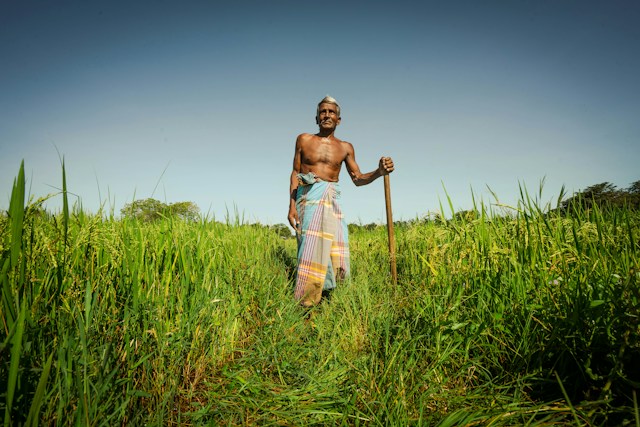
All of this raises a difficult question for conservation policy. Protected areas remain essential, but they cannot carry the burden alone. The science increasingly points to the need for approaches that work across entire landscapes, including farmland. This does not mean turning farms into reserves, but it does mean rethinking how food production and biodiversity protection coexist. Research on land sharing, agroforestry, and biodiversity-friendly farming shows that outcomes improve when conservation is woven into working landscapes rather than confined to isolated pockets.
Global policy discussions have begun to acknowledge this shift. Targets that focus only on the percentage of land protected risk overlooking what happens in the remaining majority of the landscape. The challenge is to align food systems, land use planning, and conservation goals in ways that reduce pressure on hotspots while supporting livelihoods. The study strengthens the case for this integrated view by showing exactly where current strategies fall short.
What the research points to is not a simple battle between farming and nature, but a shrinking window to act. As agriculture pushes further into biodiversity hotspots, the chances to protect small-ranged species grow fewer and more urgent, with impacts that stretch beyond local landscapes. The evidence is clear that hotspots matter, farming is expanding, and many vulnerable species live outside protected areas. The real question is whether land-use and conservation policies can adapt in time. With food demand rising, protecting these places will depend less on new boundaries and more on how land is actually used on the ground.
References:
https://www.nature.com/articles/s43247-025-03099-y
https://www.nature.com/articles/s41467-025-65769-x
https://conbio.onlinelibrary.wiley.com/doi/10.1111/cobi.70086
https://pmc.ncbi.nlm.nih.gov/articles/PMC10692042/
Banner image: Photo byKai Oberhäuser on Unsplash