Physical Address
23,24,25 & 26, 2nd Floor, Software Technology Park India, Opp: Garware Stadium,MIDC, Chikalthana, Aurangabad, Maharashtra – 431001 India
Physical Address
23,24,25 & 26, 2nd Floor, Software Technology Park India, Opp: Garware Stadium,MIDC, Chikalthana, Aurangabad, Maharashtra – 431001 India


The year 2025 has entered the climate record books as the third hottest year ever measured, reinforcing growing scientific concern that human influence is now the dominant force shaping global temperatures. According to climate scientists and European monitoring agencies, last year’s heat was not the result of chance weather patterns alone but the outcome of decades of rising greenhouse gas emissions. While natural climate variability played a minor role, the overall trend remained firmly driven by fossil fuel use and industrial activity. Data shows that global temperatures are moving closer to internationally agreed warming limits far sooner than expected. Scientists warn that this pattern reflects a long-term shift rather than a temporary spike, with wide-ranging consequences for ecosystems, weather extremes, and human societies.
A Near Record Year in a Rapidly Warming Era
Climate data compiled by the EU’s Copernicus Climate Change Service confirms that 2025 was the third warmest year since global records began. Only 2023 and 2024 recorded higher average temperatures, placing the last three years among the hottest periods ever observed. Scientists estimate that global surface air temperatures in 2025 were about 1.47 degrees Celsius above pre-industrial levels. When averaged with the two previous years, the warming reached roughly 1.52 degrees Celsius.
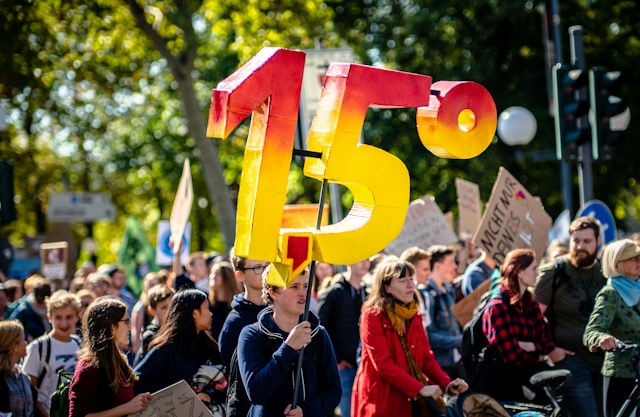
This clustering of record-breaking heat has alarmed climate researchers, who note that such sustained warmth was not expected until later in the century. The findings suggest that the planet is approaching the 1.5 degree Celsius threshold referenced in the Paris Agreement far sooner than projected in earlier models. While a single year above this level does not constitute a formal breach of the agreement, scientists say repeated near-record years signal a narrowing window to slow warming trends.
Human Influence Overtakes Natural Climate Cycles
Experts cited in the report stress that human activity played the central role in driving 2025’s extreme heat. Carbon dioxide and other greenhouse gases released from burning coal, oil, and gas continue to accumulate in the atmosphere, trapping heat and raising global temperatures. Although climate patterns such as El Niño can temporarily influence global warmth, researchers note that its effect in 2025 was weaker than in previous years.
Despite the fading influence of El Niño, temperatures remained exceptionally high, highlighting how background warming now outweighs short-term natural variability. Scientists say this marks a shift in the climate system, where human-driven warming has become the primary factor shaping yearly temperature outcomes. This trend reduces the likelihood that future years will bring significant cooling without major cuts in emissions.
Polar Heat and Shrinking Ice Raise Global Concerns
The impacts of 2025’s heat were evident in polar regions, where scientists recorded unusually high temperatures in both the Arctic and Antarctica. These regions are warming faster than the global average, contributing to accelerating ice loss. Data from satellite observations indicate that global sea ice levels are near historic lows, continuing a trend observed over recent years.
Researchers warn that declining ice cover has consequences beyond the poles. Reduced ice means less sunlight is reflected into space, allowing oceans to absorb more heat. This feedback loop increases the risk of further warming and disrupts global weather patterns. Scientists say the conditions observed in 2025 offer a glimpse of what may become more common unless emissions decline sharply, with rising heat stress, changing rainfall, and growing risks to food systems and coastal communities worldwide.
References:
https://climate.copernicus.eu/copernicus-2025-was-third-hottest-year-record
Banner image: Photo byJessica Dudski onUnsplash