Physical Address
23,24,25 & 26, 2nd Floor, Software Technology Park India, Opp: Garware Stadium,MIDC, Chikalthana, Aurangabad, Maharashtra – 431001 India
Physical Address
23,24,25 & 26, 2nd Floor, Software Technology Park India, Opp: Garware Stadium,MIDC, Chikalthana, Aurangabad, Maharashtra – 431001 India

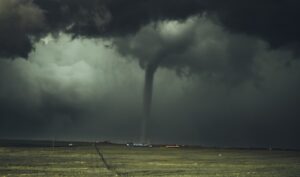
Sri Lanka lies at the southern rim of the Bay of Bengal, where warm ocean waters fuel powerful cyclones in the post-monsoon season. Historically the island saw relatively few direct hits: over 130 years only 16-20 cyclones are recorded to have significantly impacted Sri Lanka . Except for the very recent Ditwah cyclone, the deadliest of these were in 1964 and 1978 – each killing several hundred people. In recent decades climate trends have been shifting. A NASA-led study reports that, as the Bay of Bengal warms, overall cyclone frequency may decline but the strongest late-season storms are expected to become more common . In practice this means that even when Sri Lanka is spared a direct strike, extreme rains on the fringes of Bay cyclones can still wreak havoc – as the record-breaking storms of 2016–2025 have shown.
Major Storms Since 1985
November 2008 – Cyclone Nisha: A late-November depression over the Bay of Bengal brought torrential rain to northern and eastern districts of Sri Lanka. According to official reports, 140,853 people were affected and about 1,941 houses completely destroyed by flooding. The Disaster Management Centre later reported 11 deaths nationwide from the floods .
May 2016 – Cyclone Roanu: A more recent reminder came with Cyclone Roanu. Although relatively weak as a cyclone, Roanu’s heavy rainbands stalled over Sri Lanka, causing widespread floods and landslides. The United Nations reports that Roanu’s rains inundated homes across 22 of 25 districts, leaving thousands stranded and killing around 200 people . At its peak, nearly a quarter of a million people were sheltering from floodwater in Colombo and elsewhere. Roanu therefore stands as one of the deadliest flood disasters of recent decades, illustrating how any bay storm can trigger major destruction.
November/December 2020 – Cyclones Nivar and Burevi: In late 2020 Sri Lanka faced two back to back Bay storms. Cyclone Nivar skirted the east coast, and on Nov 30 Cyclone Burevi made landfall near Trincomalee with winds ≈90 km/h. Thanks to timely forecasting and pre-emptive evacuations, the impact was muted. Officials evacuated about 75,000 people ahead of Burevi’s arrival. Only 2 people died and a handful were injured in the resulting floods. 3 houses were reported fully destroyed and ~109 partially damaged . In short, the “Managed Disaster” of Cyclone Burevi cost fewer than five lives – a marked improvement over past disasters.
December 2022 – Cyclone Mandous: Another Bay storm, Mandous, approached Sri Lanka’s southern coast in early December 2022. It never made direct landfall but its outer bands generated heavy rains and gusty winds. Local media reported at least two deaths and two injuries as trees fell and roofs blew off houses. Dozens of dwellings were damaged by wind in southern and central provinces, forcing road closures. While Mandous was relatively minor, it highlights how even passing storms can spike health risks like poor air quality and interrupt daily life.
May 2023 – Cyclone Mocha: In mid-May 2023 Cyclone Mocha became one of the most intense Bay of Bengal storms on record before hitting Bangladesh/Myanmar. Mocha did not make landfall on Sri Lanka, but its region-wide effects were staggering. The World Meteorological Organization notes that Mocha drove some 1.7 million displacements across South Asia – from Sri Lanka to India, Bangladesh and Myanmar . In Sri Lanka Mocha’s surge of moist air helped intensify the early southwest monsoon. Heavy rains and floods in May 2023 prompted renewed evacuations, especially in southern and central areas, though casualties in Sri Lanka were fortunately very low. Nevertheless, Mocha’s scale was a sobering sign of how warming seas can amplify “secondary” impacts even far from the storm’s track.
November 2025 – Cyclone Ditwah: The latest catastrophe came with Ditwah (late Nov 2025). Unlike earlier cyclones, Ditwah stalled along Sri Lanka’s central hill country for two days, acting like a vast “pump” of Bay moisture onto the interior. The result was unimaginable rainfall – well over 500 mm in some highland areas in 24 hours – and devastating floods/landslides. More than 600 people were killed with another 200 missing in the worst floods the country has seen in decades . Entire villages were wiped out by landslides. In addition to the tragic death toll, some 1.2–1.4 million people were affected, and damage is estimated in the billions of dollars . Ditwah has therefore not only challenged Sri Lanka’s disaster-response but is now etched in history as the worst cyclonic event since the 1978 storm.
Storm Trends and Climate Signals
Modern climate science suggests why these extremes have appeared. Sea-surface temperatures in the Bay of Bengal are at record highs, providing more energy for storms’ rainfall. Paradoxically, models indicate fewer cyclones overall in a warmer climate, but stronger ones in the late-year season . In other words, we may see less frequent Bay storms, but when they form ,especially Nov–Dec, they are more intense. The WMO noted that the late-2023 and 2025 cyclones occurred amid the “hottest year on record” temperatures, and warned this is no coincidence . In practical terms, Sri Lanka – perched at the rim of the Bay – can expect that future cyclones will likely come more often to its vulnerable north and east coasts, and each storm may produce more rainfall and flooding. Monsoons have also become more volatile. For example, record-breaking monsoon floods in 2016 in part triggered by Roanu and in 2025, after Ditwah, have been linked in studies to warmer atmospheric patterns.
Impact on Communities and Economy
Each storm on record has inflicted heavy human and economic costs. The 1978 cyclone damaged over 250,000 buildings and wiped out 90% of the coconut crop in Batticaloa . More recently, rains from Roanu submerged thousands of homes and cut power/clean water supplies, with communities mobilizing to shelter 250,000 displaced people . After Burevi , tens of thousands lost power and crops, even if direct casualties were tiny. Ditwah’s floods in 2025 caused landslides that buried rail lines and collapsed bridges, crippling transport and isolating towns . Infrastructure damage runs in the hundreds of millions: highways and power grids have repeatedly been taken out by fallen trees and flood debris. The insurance industry and government note that the cost of these “slow-onset” disasters, flooding and landslides, is skyrocketing. In recent commentary, experts lament that Sri Lanka’s water, energy and road systems were built for a past climate – a “brittle skeleton” that Ditwah exposed.
Forecasting, Warnings and Preparedness
Sri Lanka’s ability to forecast storms has improved, but gaps remain. The national Meteorology Department now monitors Bay-of-Bengal cyclones in real time, often days in advance. For example, satellite data from NASA’s GPM sensor accurately tracked Roanu’s progress, giving authorities precious hours to warn coastal towns . In Ditwah’s case, experts praised that accurate “Red Alerts” were issued in late November 2025 – but noted a breakdown in local communication of those warnings . Disaster drills and community alarms have dwindled, so villagers sometimes heard nothing more than generic weather bulletins.
Some success stories highlight what coordinated planning can do. In 2020, as Cyclone Burevi approached, district authorities evacuated 75,000 people from vulnerable coastlines and prepared hundreds of shelters. Because of that “zero casualty” strategy, Burevi caused barely five deaths nationwide . By contrast, Ditwah in 2025 saw warnings, but too little evacuation: a neighborhood in Kandy was hit by a 4-meter-high flood with no prior notice, suggesting the final alert-to-action gap was fatal. Analysts point out that multiple agencies like Meteorology, Army, local councils, all had fragmented information during Ditwah . There was no single “disaster dashboard” feeding real-time river-levels, rain gauges and satellite data into unified alerts. In villages with recent landslide risk maps, officials still failed to order timely moves.
In short, Sri Lanka has learned advanced storm forecasting – but turning that science into community safety is still a challenge. The Space Charter was activated for Roanu in 2016 to supply remote-sensing data for relief planners . Today agencies agree: technology is there, but “last-mile” communications like loudspeakers, sirens, radio must be revived . Experts recommend more public drills, multi-channel SMS alerts in local languages, and strict checks on homes built in slides-prone hills. As one disaster magazine warned after Ditwah, “warnings existed, but preparedness did not”.
Lessons for the Future
Sri Lanka’s cyclone history is a stark reminder that the Bay of Bengal has become a more dangerous neighbor. The series of storms from 1985 to 2025 shows a clear trend: every decade sees a new record. From the once-in-a-generation floods of 2016 to the once-in-a-century deluge of 2025, the country is being tested. Climate research suggests this will continue: by 2040, the Bay’s giant cyclones may grow even wetter and slower-moving, dropping more rain on the island’s hills.
For the Sri Lankan public, the takeaway is to expect the unexpected. Areas that rarely flooded now must be on alert during big storms. Each major cyclone has eroded confidence in “old normal” assumptions. Recovery efforts are now focusing on resilience: rebuilding roads with higher culverts, stocking emergency supplies in flood zones, and improving weather literacy among rural communities. International agencies and local engineers are studying the 2025 floods to harden dams and redesign town drainage.
The pattern is clear: climate change is supercharging the edges of monsoons and cyclones. Sri Lanka’s cyclones over the last 40 years have taught a harsh lesson – that even “weak” storms can be deadly if the rains are intense enough. Science and satellites can give warnings , but only if society acts quickly on them. The islands’ cyclone history to date shows both improvements and failures. As one expert put it after Ditwah: “we must move from reactive rescue to proactive prevention” . With a year-round rainy season and warming oceans, the next chapter of Sri Lanka’s weather story will demand nothing less.
References
https://iesl.lk/SLEN/5//Cyclones%20and%20Storm%20Surges.php
https://www.nccs.nasa.gov/news-events/nccs-highlights/bay-of-bengal-cyclones
https://www.adrc.asia/publications/databook/ORG/databook_20th/LKA.pdf
https://www.theguardian.com/world/2016/may/21/sri-lanka-landslides-torrential-rains
https://www.reuters.com/world/india/cyclone-burevi-slams-into-eastern-sri-lanka-2020-12-02
https://www.ft.lk/columns/Beyond-the-rain–Systemic-lessons–from-the-Ditwah-catastrophe/4-785295
https://www.who.int/southeastasia/news/detail/02-12-2025-sri-lanka-ditwah25
https://en.wikipedia.org/wiki/1978_Sri_Lanka_cyclone
After Cyclone Ditwah: What Sri Lanka’s Disaster Readiness Really Reveals
Banner Image by Nikolas Noonan on Unsplash

Comments are closed.






Get a head start with mutual funds, annuities, academic financial savings and retirement
planning.
В клинике применяются современные медицинские технологии, которые обеспечивают стойкий результат. Используемые методики соответствуют международным стандартам и регулярно обновляются.
Детальнее – http://narcologicheskaya-klinika-omsk0.ru
Эти направления формируют основу лечения и обеспечивают комплексное воздействие на проблему зависимости.
Детальнее – https://narcologicheskaya-klinika-omsk0.ru/chastnaya-narkologicheskaya-klinika-omsk/
В клинике применяются современные медицинские технологии, которые обеспечивают стойкий результат. Используемые методики соответствуют международным стандартам и регулярно обновляются.
Подробнее тут – http://narcologicheskaya-klinika-omsk0.ru
Эти направления формируют основу лечения и обеспечивают комплексное воздействие на проблему зависимости.
Узнать больше – [url=https://narcologicheskaya-klinika-omsk0.ru/]вывод наркологическая клиника омск[/url]
Такая структура терапии делает процесс максимально эффективным и безопасным.
Изучить вопрос глубже – [url=https://narcologicheskaya-klinika-omsk0.ru/]наркологическая клиника нарколог в омске[/url]
Эти направления формируют основу лечения и обеспечивают комплексное воздействие на проблему зависимости.
Исследовать вопрос подробнее – [url=https://narcologicheskaya-klinika-omsk0.ru/]наркологическая клиника стационар омск[/url]
Врачи «СтаврМед Центра» работают круглосуточно, обеспечивая выезд нарколога на дом в течение короткого времени. Пациент может получить помощь в привычных условиях, не подвергаясь стрессу, связанному с госпитализацией. Все процедуры проводятся анонимно, с сохранением врачебной тайны. Благодаря такому подходу, лечение становится не только эффективным, но и максимально комфортным для человека, который решил прекратить запой и начать восстановление.
Получить дополнительные сведения – [url=https://vyvod-iz-zapoya-stavropol0.ru/]анонимный вывод из запоя[/url]
Вывод из запоя в Ставрополе проводится с использованием сертифицированных препаратов, которые действуют мягко, не вызывая резких перепадов давления или побочных эффектов. Перед началом лечения врач проводит диагностику — измеряет пульс, артериальное давление, уровень насыщения крови кислородом, оценивает состояние печени и почек. Только после этого подбирается схема терапии. Такой подход снижает риски осложнений и гарантирует безопасное восстановление.
Детальнее – https://vyvod-iz-zapoya-stavropol0.ru/vyvod-iz-zapoya-v-staczionare-stavropol/
Такая последовательность шагов позволяет врачу действовать точно и эффективно. Благодаря комплексному подходу пациент чувствует облегчение уже через 1–2 часа после начала терапии, а полное восстановление наступает в течение суток.
Подробнее – [url=https://vyvod-iz-zapoya-stavropol0.ru/]врач вывод из запоя ставрополь[/url]
Чтобы в полной мере насладиться всеми возможностями этой захватывающей игры, необходимо скачать покерок на свое устройство. Процесс установки прост и интуитивно понятен, а после завершения вы получите доступ ко всему функционалу платформы, включая возможность играть на реальные деньги, участвовать в турнирах и акциях. покерок регистрация
Такая последовательность шагов позволяет врачу действовать точно и эффективно. Благодаря комплексному подходу пациент чувствует облегчение уже через 1–2 часа после начала терапии, а полное восстановление наступает в течение суток.
Изучить вопрос глубже – https://vyvod-iz-zapoya-stavropol0.ru/vyvod-iz-zapoya-v-staczionare-stavropol/
В «СтаврМед Центре» используются только современные препараты, прошедшие клинические испытания и одобренные Минздравом. Каждая капельница подбирается индивидуально, в зависимости от длительности запоя, возраста пациента и состояния здоровья. В таблице приведены примеры основных видов растворов, применяемых при выезде нарколога.
Получить дополнительные сведения – [url=https://vyvod-iz-zapoya-stavropol0.ru/]наркологический вывод из запоя в ставрополе[/url]
Процедура проводится поэтапно, чтобы организм смог безопасно перейти из состояния алкогольной интоксикации к нормальному функционированию. Ниже приведена таблица с описанием этапов терапии и действий специалистов.
Подробнее тут – https://vyvod-iz-zapoya-stavropol0.ru/stavropol-lechenie-alkogolizma/
Эта информационная заметка содержит увлекательные сведения, которые могут вас удивить! Мы собрали интересные факты, которые сделают вашу жизнь ярче и полнее. Узнайте нечто новое о привычных аспектах повседневности и откройте для себя удивительный мир информации.
Это ещё не всё… – https://edmarmy.com/connecting-through-music-vinylly-the-new-dating-app
В этом обзорном материале представлены увлекательные детали, которые находят отражение в различных аспектах жизни. Мы исследуем непонятные и интересные моменты, позволяя читателю увидеть картину целиком. Погрузитесь в мир знаний и удивительных открытий!
Все материалы собраны здесь – http://burana.ac.th/web2563/2018/11/30/%E0%B8%81%E0%B8%B4%E0%B8%88%E0%B8%81%E0%B8%A3%E0%B8%A3%E0%B8%A1%E0%B9%80%E0%B8%94%E0%B9%88%E0%B8%99-2/47088118_280673199258945_1003507593903079424_o
Инфузионная терапия при запое основывается на принципе постепенной и контролируемой доставки лекарственных препаратов и питательных смесей непосредственно в кровеносное русло. Это позволяет:
Изучить вопрос глубже – [url=https://kapelnica-ot-zapoya-voronezh2.ru/]капельница от запоя[/url]
«ВоронежДоктор» сочетает в себе профессионализм, современное оборудование и заботу о приватности пациента. Ключевые преимущества:
Получить дополнительные сведения – https://kapelnica-ot-zapoya-voronezh2.ru/
Инфузионная терапия при запое основывается на принципе постепенной и контролируемой доставки лекарственных препаратов и питательных смесей непосредственно в кровеносное русло. Это позволяет:
Получить дополнительную информацию – [url=https://kapelnica-ot-zapoya-voronezh2.ru/]капельница от запоя недорого воронеж[/url]
Строго регламентированный алгоритм позволяет специалистам «ВоронежДоктор» добиваться устойчивых результатов при выводе из запоя.
Подробнее – http://kapelnica-ot-zapoya-voronezh2.ru/kapelnicza-ot-zapoya-czena-v-voronezhe/
«ВоронежДоктор» сочетает в себе профессионализм, современное оборудование и заботу о приватности пациента. Ключевые преимущества:
Получить больше информации – [url=https://kapelnica-ot-zapoya-voronezh2.ru/]www.domen.ru[/url]