Physical Address
23,24,25 & 26, 2nd Floor, Software Technology Park India, Opp: Garware Stadium,MIDC, Chikalthana, Aurangabad, Maharashtra – 431001 India
Physical Address
23,24,25 & 26, 2nd Floor, Software Technology Park India, Opp: Garware Stadium,MIDC, Chikalthana, Aurangabad, Maharashtra – 431001 India

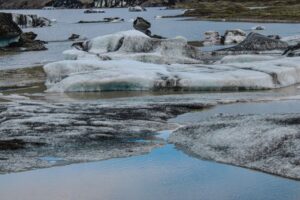
Climate change is leaving its mark on the planet in countless ways, from rising sea levels to more frequent heatwaves. However, one of its lesser-known impacts is now unfolding across the Arctic and sub-Arctic regions of North America. Scientists have found that rapidly thawing permafrost is causing streams to become increasingly acidic, transforming once-pristine freshwater ecosystems into rusty-orange waterways. This hidden consequence of global warming has raised concerns about water quality, biodiversity, and the health of communities that rely on these freshwater resources.
Permafrost refers to ground that has remained frozen for at least two consecutive years, with some layers staying frozen for thousands of years. It acts as a natural barrier, preventing water from penetrating deep into the soil and bedrock. But as global temperatures continue to rise, especially in the Arctic, this frozen ground is thawing at an unprecedented rate. While thawing permafrost is widely known for releasing greenhouse gases such as carbon dioxide and methane, researchers have now uncovered another alarming effect rapid acidification of streams and rivers.
How Permafrost Thaw Is Altering Stream Chemistry?
As the frozen ground melts, groundwater begins to seep deeper into the underlying rocks. In many parts of northwestern North America, these rocks contain naturally occurring sulphide minerals. Once exposed to oxygen and water, the minerals undergo chemical reactions that produce sulphuric acid along with sulphates and dissolved metals such as iron and aluminium.
This process changes both the chemistry and appearance of streams. Iron released from the rocks oxidises on contact with air, giving the water a distinctive rusty-orange colour, while fine mineral particles can turn it cloudy or milky white. Scientists studying streams in Canada’s Yukon region observed that some waterways became acidic within just a few years, highlighting the speed at which climate-driven environmental changes are taking place.
The acidic water often travels several kilometres downstream, affecting larger sections of river systems rather than isolated locations. Researchers believe similar processes are occurring in Alaska and could emerge in other mountainous regions around the world where glaciers are retreating and frozen ground is melting.
Ecological Impacts and the Road Ahead
The growing acidity of freshwater ecosystems could have far-reaching consequences for both nature and people. Many aquatic organisms, including fish, insects and microorganisms, are highly sensitive to changes in water chemistry. Increased acidity and higher concentrations of dissolved metals can damage aquatic habitats, reduce biodiversity and disrupt food chains that support larger species.
Communities living in northern regions may also face challenges as stream water quality deteriorates. Many Indigenous communities depend on these rivers for drinking water, fishing and cultural practices. Changes in water chemistry could therefore affect not only ecosystems but also livelihoods and traditional ways of life.
Scientists note that larger rivers currently appear less affected because their greater water volume helps dilute acidic inputs. However, if permafrost thaw continues to intensify, even these larger water bodies could experience long-term impacts. Researchers stress the need for continuous monitoring to understand how widespread and severe these changes may become.
Another concern is that the chemical reactions triggered by sulphide weathering can release additional carbon dioxide into the atmosphere. This creates a climate feedback loop in which rising temperatures thaw more permafrost, exposing more minerals that release greenhouse gases, further accelerating global warming.
Experts emphasise that collaboration with Indigenous communities is essential for tracking these rapid environmental changes. Their long-standing knowledge of local landscapes can complement scientific observations and help identify changes that might otherwise go unnoticed.
The acidification of North America’s streams is a stark reminder that climate change affects far more than rising temperatures and melting ice. Hidden beneath the surface, complex geological and chemical processes are reshaping freshwater ecosystems at an alarming pace. These changes threaten biodiversity, water security and the well-being of communities that depend on these fragile environments.
Addressing this emerging crisis will require sustained scientific research, stronger climate action to slow global warming and better conservation of vulnerable Arctic landscapes. As permafrost continues to thaw, protecting freshwater ecosystems must become an integral part of global climate adaptation efforts. The transformation of these northern streams serves as an early warning that the consequences of climate change are deeper, broader and more interconnected than previously understood.
References:
https://www.nature.com/articles/s43247-024-01446-z
https://www.sciencedirect.com/science/article/pii/S1687428524000074
https://scied.ucar.edu/learning-zone/earth-system/climate-system/feedback-loops-tipping-points
Banner Image: Photo by Hub Jacqu on Pexels
Sections of this article may have been developed with the assistance of artificial intelligence tools to support research, drafting, and language refinement. All information has been reviewed, edited, and verified by the author/editor to ensure accuracy, context, and editorial integrity. The responsibility for the final content, interpretations, and conclusions rests solely with the publisher.