Physical Address
23,24,25 & 26, 2nd Floor, Software Technology Park India, Opp: Garware Stadium,MIDC, Chikalthana, Aurangabad, Maharashtra – 431001 India
Physical Address
23,24,25 & 26, 2nd Floor, Software Technology Park India, Opp: Garware Stadium,MIDC, Chikalthana, Aurangabad, Maharashtra – 431001 India

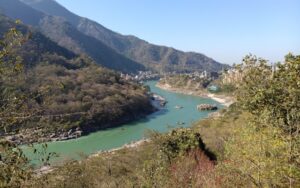
Despite years of effort and heavy public spending to clean the Ganga, a new audit has found that untreated sewage continues to flow into the river from its upper stretches in Uttarakhand. The findings raise serious questions about the effectiveness of sewage treatment infrastructure in a state that hosts some of the river’s most ecologically sensitive and spiritually significant locations. According to the latest audit by the Comptroller and Auditor General of India, gaps in planning, capacity and maintenance mean that a significant portion of sewage is still entering the river untreated, even after large investments meant to prevent exactly that.
Nearly one-third of treatment plants are failing to treat sewage
The audit found that 12 out of 44 sewage treatment plants, or roughly 32%, were discharging untreated wastewater into the Ganga and its tributaries. These failures were linked to a mix of inadequate treatment capacity, faulty connections and poor maintenance, all of which limited the ability of these plants to function as intended.
This is particularly concerning because sewage treatment plants are meant to act as the last barrier before waste enters the river. When they fail, untreated sewage flows directly into the Ganga, adding to pollution levels in stretches that are often considered relatively cleaner compared to downstream sections. The audit highlights that these problems are not isolated incidents but reflect deeper structural issues in how sewage infrastructure has been planned and managed in the state.
Spending of nearly Rs 1,000 crore shows limited results
Between 2018 and 2023, nearly Rs 1,000 crore was spent in Uttarakhand on sewage management and related infrastructure. However, the audit points to a clear gap between the scale of investment and the outcomes on the ground, with little visible improvement in how sewage is handled.
The report suggests that infrastructure alone is not enough if it is not supported by proper planning and execution. In several cases, treatment plants were either not functioning at full capacity or were unable to handle the volume of sewage being generated. This mismatch between design and reality has meant that even newly built systems are struggling to prevent pollution from reaching the river.
Ground inspections reveal operational lapses
Physical inspections carried out during the audit revealed multiple instances where treatment plants were either underperforming or failing. For example, a 7.50 million litres per day plant in Rishikesh was found releasing untreated sewage due to insufficient capacity, while a smaller 10 kilolitres per day plant in Kirti Nagar faced similar issues.
In another case, a surprise inspection found a contractor directly discharging untreated sewage into the Ganga. The audit noted that no legal action was taken against those responsible, pointing to gaps not just in infrastructure but also in enforcement and oversight. These findings indicate that the problem goes beyond technical failures and extends to how projects are monitored and regulated on the ground.
References:
Banner image: Photo by Ashish Lathar on Unsplash
Sections of this article may have been developed with the assistance of artificial intelligence tools to support research, drafting and language refinement. All information has been reviewed, edited and verified by the author/editor to ensure accuracy, context and editorial integrity. The responsibility for the final content, interpretations and conclusions rests solely with the publisher.