Physical Address
23,24,25 & 26, 2nd Floor, Software Technology Park India, Opp: Garware Stadium,MIDC, Chikalthana, Aurangabad, Maharashtra – 431001 India
Physical Address
23,24,25 & 26, 2nd Floor, Software Technology Park India, Opp: Garware Stadium,MIDC, Chikalthana, Aurangabad, Maharashtra – 431001 India

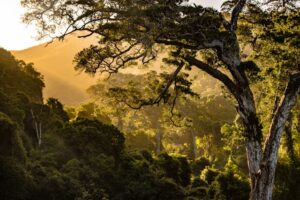
Forests have long been considered one of the most reliable natural systems for absorbing carbon dioxide and slowing the pace of climate change. Across Africa, vast tropical forests have played a key role in this process by storing carbon in trees and soil over long periods. However, new research suggests that this role may be changing. A recent study indicates that African forests may no longer be absorbing more carbon than they release, pointing to a shift that could have serious consequences for global climate balance and ongoing mitigation efforts.
Africa’s forests show a clear shift in carbon balance after 2010
A study reported by ScienceDaily, based on research from the University of Leicester, finds that Africa’s forests have undergone a noticeable transition since around 2010. Earlier, these forests functioned as a net carbon sink, meaning they absorbed more carbon dioxide than they emitted. The new findings suggest that this balance has reversed, with forests now acting as a net carbon source, releasing more carbon into the atmosphere than they store. This marks a significant change in how these ecosystems interact with the global carbon cycle.
The shift is not a minor fluctuation but reflects a broader trend observed over time. The researchers analysed data to understand changes in forest carbon storage and emissions. Their findings show that carbon losses have begun to exceed gains in recent years. This change challenges earlier assumptions that tropical forests would continue to offset a portion of human-driven emissions, and it raises concerns about how stable these natural carbon sinks remain under increasing environmental pressure.
Deforestation and biomass loss are driving the reversal
The study points to large-scale deforestation as the primary factor behind this reversal. As forests are cleared for agriculture, infrastructure, and other land uses, the carbon stored in trees is released into the atmosphere. At the same time, the capacity of these areas to absorb carbon in the future is reduced. This combination of immediate emissions and long-term loss of storage capacity is contributing to the overall shift in carbon balance.
In addition to deforestation, the study highlights widespread biomass loss across forested regions. Biomass refers to the total mass of living vegetation, which directly determines how much carbon a forest can hold. Even where forests are not fully cleared, degradation and thinning can reduce biomass and weaken carbon storage. While some regions show signs of regrowth, these gains are not keeping pace with losses. As a result, the overall carbon balance has tipped towards net emissions.
Implications for climate goals and the future of forest protection
The findings carry important implications for global climate strategies that depend on forests as natural carbon sinks. Many climate plans assume that forests will continue to absorb a significant share of emissions, helping to limit global warming. If large forest systems begin to release more carbon than they absorb, it could make it harder to meet these targets and increase reliance on emission reductions in other sectors.
The study also highlights the need for stronger conservation and land management efforts. Protecting existing forests becomes even more critical when their ability to recover and store carbon is under strain. The results suggest that forest regrowth alone may not be sufficient to restore balance if deforestation and degradation continue at current rates. A more focused approach prioritising preservation, sustainable land use, and long-term ecosystem health may be necessary to maintain forests’ role in climate mitigation.
References:
https://www.nature.com/articles/s41598-025-27462-3
https://www.sciencedaily.com/releases/2026/04/260413043135.htm
Banner image: Photo by redcharlie on Unsplash
Sections of this article may have been developed with the assistance of artificial intelligence tools to support research, drafting and language refinement. All information has been reviewed, edited and verified by the author/editor to ensure accuracy, context and editorial integrity. The responsibility for the final content, interpretations and conclusions rests solely with the publisher.