Physical Address
23,24,25 & 26, 2nd Floor, Software Technology Park India, Opp: Garware Stadium,MIDC, Chikalthana, Aurangabad, Maharashtra – 431001 India
Physical Address
23,24,25 & 26, 2nd Floor, Software Technology Park India, Opp: Garware Stadium,MIDC, Chikalthana, Aurangabad, Maharashtra – 431001 India

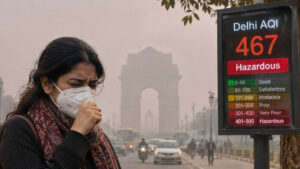
For years, the health effects of air pollution have been discussed mainly in terms of the lungs and the heart. But scientists are increasingly looking at another organ that may also be affected by the air we breathe: the brain.
A recent review by researchers at the University of Delhi brings together evidence from more than two decades of research linking particulate matter exposure to a range of neurological and cognitive outcomes. The findings add to a growing body of research suggesting that fine particles such as PM2.5 may affect the nervous system through several biological pathways. The questions are particularly important for countries like India, where millions of people live with high levels of particulate pollution for years at a time.
The science is still developing, and researchers are careful about what can and cannot be concluded. But recent studies from India and elsewhere are giving scientists more reasons to look beyond the respiratory and cardiovascular effects of polluted air.
How PM2.5 can reach the brain
PM2.5 refers to particles that are 2.5 micrometres or smaller in diameter. Because of their small size, these particles can travel deep into the respiratory system. They are produced by a range of sources, including vehicles, industries, coal-based power generation, construction activities, waste burning and the burning of solid fuels in homes. Scientists are now studying several ways in which particulate pollution could affect the brain. One route involves the lungs and bloodstream. After particles are inhaled, some components of particulate pollution may enter circulation or trigger inflammatory responses that affect other parts of the body, including the nervous system.
Another possible route is through the nose. Experimental research has suggested that very small particles may travel along the olfactory pathway, which connects the nasal cavity to the brain. Researchers are also examining the role of the gut and the gut-brain axis. These pathways are still being studied, and their relative importance in real-world human exposure remains an open question.
The effects may also depend on what the particles contain. PM2.5 is not a single substance. Fine particles can carry metals, organic compounds and other toxic substances, and their composition can vary depending on whether the pollution comes from traffic, industry, power generation, household fuel use or other sources. This is one reason why two places with similar PM2.5 concentrations may not necessarily have the same health risks.
This review of PM2.5 and cognitive impairment also described fine particulate matter as a carrier of airborne toxicants and found evidence linking exposure with a wide range of neurological and cognitive outcomes in both human and animal studies. At the same time, the review noted differences and uncertainties across studies, showing why the field still needs stronger and more consistent evidence.
From inflammation to cognitive decline
One of the main biological explanations being studied is inflammation. Exposure to particulate pollution can trigger inflammatory and oxidative processes in the body. In the brain, researchers are examining whether these processes can affect neurons, blood vessels and the cells that support normal brain function.
Oxidative stress, neuroinflammation, mitochondrial dysfunction and changes to the blood-brain barrier are among the mechanisms that have been identified in experimental and observational research. The blood-brain barrier acts as a protective system between the bloodstream and the brain. If that protection is disrupted, it could make the brain more vulnerable to harmful substances and inflammatory processes.
Explaining what the review found, Saiyami Bhardwaj, one of its authors, said, “Our review shows that PM2.5 exposure is associated with cognitive decline, changes in brain structure, and impaired cognitive development in children. Experimental studies suggest that inflammation, oxidative stress and damage to the brain’s protective barrier may contribute to these effects.”
The possible outcomes being studied range from changes in cognitive performance to stroke and neurodegenerative diseases such as dementia and Parkinson’s disease. A review published in The Lancet Planetary Health examined long-term outdoor air pollution exposure and the risk of developing dementia. It reflects how quickly research in this area has expanded in recent years, particularly around long-term exposure.
However, the evidence is not yet conclusive enough to establish the precise risks for individuals. Bhardwaj cautioned that “The evidence is growing, but much of the human research is observational, and laboratory findings cannot be translated directly into an individual’s disease risk.”
Dementia and other neurological diseases have many risk factors, including age, genetics, lifestyle and underlying health conditions. But the evidence is increasingly pushing air pollution into the conversation as a possible environmental risk factor that deserves closer attention.
The concern is not limited to older adults. Children may also be particularly vulnerable because their brains and bodies are still developing. Another systematic review examining air pollution and childhood brain outcomes identified evidence linking exposure to a range of structural and functional brain outcomes, while also stressing the need for stronger research and policy action to reduce children’s exposure.
India’s growing evidence of the risk
India is an important setting for this research because exposure levels can be extremely high and the sources of particulate pollution are varied. Yet neurological effects have received far less attention than the respiratory and cardiovascular burden of air pollution.
A study published in Environment International examined 5,699 older adults in India and looked at both total PM2.5 exposure and pollution from different emission sources. The researchers found that higher long-term PM2.5 exposure was associated with faster cognitive decline over time. The study also found that particulate pollution linked to residential combustion, energy production and industry was associated with steeper declines in cognitive function.
The findings point to the importance of looking beyond the total amount of PM2.5 in the air. The composition of these particles may also influence their effects on health. Bhardwaj said, “PM2.5 is a mixture, and its composition matters alongside its concentration. Particles can carry metals and organic pollutants that differ in their effects on the nervous system. This is particularly relevant to India, where pollution comes from varied sources, including traffic, industry and biomass burning.”
More recent research is also beginning to examine shorter-term effects. A study published in 2026 on Delhi looked at PM2.5 exposure, its chemical components and neuropsychiatric hospitalisations. It found an association between higher PM2.5 exposure and increased hospitalisations for neuropsychiatric disorders. Black carbon showed a particularly strong association among the components examined, while industrial sources were also linked with hospitalisation risk.
The need for more research in India remains particularly important. “Our review highlights the need for more Indian studies examining local pollution mixtures, because the effects of their individual components and combined exposures remain insufficiently understood,” she added.
Why exposure over decades matters
The neurological effects of air pollution may be especially difficult to study because they can take years to appear. Unlike an episode of coughing after a day of heavy smog, cognitive decline and neurodegenerative diseases develop over long periods and are influenced by many factors.
This makes long-term exposure particularly important. A person living for decades in an area with persistently high PM2.5 levels may experience a very different cumulative exposure from someone who encounters a short period of poor air quality. Researchers are therefore increasingly using long-term datasets to study how pollution exposure may relate to changes in cognitive function over time.
By following changes in cognitive performance and examining long-term pollution exposure, researchers found an association between higher PM2.5 concentrations and faster cognitive decline. Such studies cannot account for every factor that may influence brain health, but they can help researchers understand patterns that shorter studies might miss.
These findings do not mean that scientists can predict who will develop dementia or another neurological condition based on their PM2.5 exposure alone. But they add to concerns about what years of living with polluted air could mean for brain health, especially in countries where exposure remains consistently high. The review by Bhardwaj and her colleagues calls for more long-term and life-course studies, particularly in countries that carry a high burden of particulate pollution but remain poorly represented in neurological research.
There is still a lot that researchers do not know. They need better evidence on which components of particulate pollution are most harmful, how exposure affects people at different stages of life, and whether reducing pollution can lower the risk of neurological disease.
But the direction of research is clear. Air pollution is no longer being studied only as a problem of the lungs and heart. The brain is increasingly part of the conversation.
References:
https://www.sciencedirect.com/science/article/abs/pii/S0161813X25001810?via%3Dihub
Particulate Matter (PM) Basics | US EPA
From lungs to brain: Delhi’s pollution may have a deeper health cost
Banner image: AI Generated
Sections of this article may have been developed with the assistance of artificial intelligence tools to support research, drafting and language refinement. All information has been reviewed, edited and verified by the author/editor to ensure accuracy, context and editorial integrity. The responsibility for the final content, interpretations and conclusions rests solely with the publisher.