Physical Address
23,24,25 & 26, 2nd Floor, Software Technology Park India, Opp: Garware Stadium,MIDC, Chikalthana, Aurangabad, Maharashtra – 431001 India
Physical Address
23,24,25 & 26, 2nd Floor, Software Technology Park India, Opp: Garware Stadium,MIDC, Chikalthana, Aurangabad, Maharashtra – 431001 India

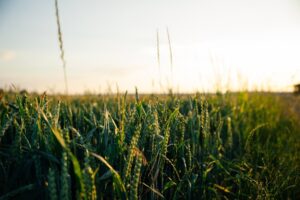
Climate change is usually measured in what disappears: hectares lost to flood, harvests shortened by drought, prices pushed beyond reach. A growing body of research points to a loss that leaves no visible trace on the field or the market, the slow erosion of the nutritional content of the food itself.
A global synthesis published in Agriculture in May 2026, reviewing 97 studies from two decades of research, finds that rising atmospheric carbon dioxide (CO₂), higher temperatures, prolonged drought, shifting rainfall and changing solar radiation can all alter the nutritional composition of food crops. The effects are not uniform across every nutrient, cultivar or growing system, but the direction is consistent: staple grains, pulses and vegetables tend to carry less protein, iron and zinc, and in some cases fewer B vitamins, than the same crops grown under earlier conditions. In field experiments across China and Japan, rice grown at the CO₂ levels expected later this century lost roughly 10 percent of its protein, 8 percent of its iron and 5 percent of its zinc, alongside declines in thiamine, riboflavin, pantothenic acid and folate. Yields, in many of these trials, held steady or rose. People could go on eating the same quantity of food while taking in measurably less of what that food is supposed to provide.
The implications for Sri Lanka are not abstract. Rice supplies about 45 percent of the country’s calories and 40 percent of its protein requirement, with fruits, vegetables and pulses filling much of the remaining gap. The Agriculture review identifies South Asia as one of the regions most exposed to climate-driven nutrient decline, precisely because diets there lean heavily on a narrow set of cereal staples and because existing micronutrient shortfalls leave little margin. Sri Lanka’s margin is already thin: 17.3 percent of children under five are stunted, 15.1 percent are wasted, a rate among the highest in the world, and 34.6 percent of women of reproductive age are anaemic, with no measurable progress against the anaemia target. Layer a gradual thinning of nutrient density onto that baseline and the country faces a version of what nutritionists call hidden hunger, a deficiency that spreads while the plates stay full.
To explore this overlooked dimension of climate change and its relevance to Sri Lanka, Climate Fact Checks interviewed Dr. Samantha Dissanayake, Senior Lecturer in the Department of Crop Science, Faculty of Agriculture, University of Peradeniya. In this interview, he explains the latest scientific understanding of how climate change may influence the nutritional quality of crops, the potential consequences for food security and public health, and the strategies that could help Sri Lanka safeguard both agricultural productivity and the nutritional value of its food in the years ahead.
1. Climate discussions in Sri Lanka usually focus on crop losses, food shortages, and rising food prices. Why is it equally important to consider the nutritional quality of food as part of the country’s climate adaptation agenda?
Climate change is often viewed through the lens of declining crop yields, food shortages, and rising food prices. While these are undoubtedly critical concerns, they represent only part of the challenge. An equally important but far less visible consequence is the gradual decline in the nutritional quality of food. Scientific evidence shows that elevated atmospheric carbon dioxide (CO₂), higher temperatures, prolonged droughts, and extreme rainfall can reduce the concentrations of protein, iron, zinc, magnesium, B vitamins, vitamin C, and natural antioxidants in many staple crops, including rice, wheat, maize, legumes, fruits, and vegetables. Higher CO₂ stimulates carbohydrate production, but nutrient accumulation does not increase proportionally, resulting in the well-known “nutrient dilution effect”. According to the Global Evidence Review Report, published by UNICEF in October 2025, if atmospheric CO₂ levels rise beyond 500 ppm, an estimated 150 million more people could suffer from protein deficiencies by 2050, bringing the global burden to about 1.4 billion people. This challenge is even more alarming considering that over 200 million people worldwide already lack sufficient dietary protein. This issue is particularly relevant for Sri Lanka, where rice forms the foundation of the daily diet and many households depend on a limited number of staple foods. Even modest reductions in nutrient concentrations could increase the risk of “hidden hunger,” where people consume enough calories but remain deficient in essential micronutrients. Therefore, climate adaptation should no longer focus solely on producing more food. It should also ensure that the food people eat remains nutritious.
2. Sri Lanka has experienced more frequent floods, droughts, heatwaves, and shifting rainfall patterns in recent years. How might these changes affect the nutritional quality of staple foods such as rice, vegetables, fruits, and pulses?
Rising temperatures accelerate crop growth and shorten the grain-filling period, leaving less time for rice and pulses to accumulate proteins and essential minerals. Prolonged droughts reduce soil moisture, limiting the uptake of nutrients by plant roots, while floods and intense rainfall cause nutrient leaching, waterlogging, and root damage, further reducing nutrient absorption. Higher atmospheric CO₂ adds another challenge. Although it often increases crop growth, it also causes the “nutrient dilution effect”, where plants accumulate more carbohydrates but proportionally lower concentrations of protein, iron, zinc, and other essential nutrients. As a result, rice grains may contain fewer nutrients despite maintaining or even increasing yield quantity under some conditions. Vegetables and fruits are also vulnerable. Heat and drought stress can reduce vitamin C, antioxidants, and other health-promoting compounds, while pulses may show lower protein and mineral concentrations. These changes could gradually reduce the nutritional quality of Sri Lankan diets, particularly because rice and plant-based foods provide a large share of daily nutrient intake.
3. Rice is the primary staple food for Sri Lankans. What does current scientific evidence suggest about the effects of elevated atmospheric CO₂ and climate change on the protein and micronutrient content of rice, particularly in South Asia?
Current scientific evidence indicates that elevated atmospheric CO₂ and climate change are likely to reduce the nutritional quality of rice, raising important concerns for countries such as Sri Lanka where rice is the primary staple food. Studies conducted under Free-Air CO₂ Enrichment (FACE) conditions have consistently shown that rice grown under projected future CO₂ concentrations contains lower levels of protein, iron, zinc, and several B vitamins. For example, research suggests that protein levels in crops such as rice, wheat, barley, and potatoes may decline by about 7–15 percent under elevated CO₂. For South Asia, where millions of people depend on rice as their main source of calories and protein, even small reductions in nutrient content could have major public health consequences. Scientists estimate that by 2050, around 600 million rice-dependent people could face a greater risk of micronutrient deficiencies because of declining nutritional quality.
4. Sri Lanka continues to face challenges such as child stunting, anaemia, and micronutrient deficiencies. Could climate-induced declines in food quality worsen these public health issues?
Climate-induced declines in food quality could further aggravate Sri Lanka’s existing nutrition
challenges. While people may continue to consume sufficient calories, reductions in protein, iron, zinc, and vitamins in staple foods can increase the risk of hidden hunger, a condition where diets provide enough energy but insufficient essential nutrients. This is particularly concerning because Sri Lanka already faces significant public health issues, including child stunting, anaemia, and micronutrient deficiencies, especially among children and women of reproductive age. Climate change has the potential to worsen these problems by reducing the nutritional quality of rice, vegetables, fruits, and pulses, which form the foundation of the Sri Lankan diet. The greatest risk is that these nutritional changes are largely invisible. Food may look the same and even harvests may remain stable, yet the nutritional value of diets can gradually decline. Although food fortification can help compensate for nutrient losses by adding essential vitamins and minerals to processed foods, it increases production costs, making fortified products less affordable for low-income households who are often the most vulnerable to malnutrition. A more sustainable and equitable solution is to protect the nutritional quality of food from the farm itself. Therefore, addressing climate change is not only an agricultural challenge but also a major public health priority, requiring coordinated efforts to safeguard both food production and human nutrition.
5. Which population groups in Sri Lanka are likely to be most vulnerable to this “hidden nutrition crisis,” and why?
The hidden nutrition crisis is likely to affect the entire population, but some groups could be considerably more vulnerable because of their higher nutritional needs and limited access to diverse, nutrient-rich diets. These include young children, pregnant and lactating women, elderly people, and low-income households, particularly those that rely heavily on rice and a few staple foods. Scientific evidence suggests that climate change could increase the number of children affected by protein and micronutrient deficiencies by hundreds of millions by 2050. Although young children are expected to be the most vulnerable, the impacts are likely to extend across all age groups, including school-aged children and adolescents, with potentially serious consequences for growth, cognitive development, and health. Pregnant and lactating women and elderly people could also be at risk. Low-income and rural communities may be the most affected because they often have limited dietary diversity and depend primarily on staple crops for their daily nutrition.
6. Sri Lanka is home to many traditional rice varieties and indigenous food crops. Could promoting these crops help improve resilience to climate change while maintaining nutritional quality?
Many traditional Sri Lankan rice varieties are naturally more tolerant of drought, flooding, salinity, and certain pests and diseases than some modern high-yielding varieties. Similarly, indigenous crops such as finger millet (kurakkan), foxtail millet (thanahal), cowpea, green gram, yams, and leafy vegetables are well adapted to local conditions and often contain higher levels of fibre, minerals, antioxidants, and other beneficial nutrients. Incorporating these crops into farming systems can reduce dependence on a single staple while improving dietary diversity. However, this does not mean replacing high-yielding rice varieties with traditional varieties. Instead, crop diversification, for example, growing mung-bean after the rice harvest in suitable areas as the third season crop can improve both nutrition and climate resilience. Furthermore, promoting traditional crops alone is not sufficient. Their cultivation should be supported through scientific evaluation of their nutritional quality under future climate conditions, breeding programmes that combine climate resilience with superior nutritional traits, and policies that strengthen seed systems, value chains, and consumer awareness.
7. Are there farming practices or agricultural innovations that could help Sri Lankan farmers preserve both crop yields and nutritional value under changing climatic conditions? What lessons can Sri Lanka learn from global experiences?
The foundation of nutritious food lies in healthy soils. Climate change disrupts soil moisture, temperature, and microbial activity, reducing the ability of plant roots to absorb essential nutrients. Therefore, practices that improve soil health such as incorporating compost and other organic amendments, maintaining soil organic matter, reducing soil erosion, and adopting conservation agriculture practices can enhance nutrient availability while improving crop resilience to climate shocks. Efficient irrigation techniques, rainwater harvesting, mulching, balanced fertilizer management, and integrated nutrient management help crops cope with water stress while maintaining nutrient uptake. Balanced fertilization is particularly critical because both nutrient deficiencies and excessive fertilizer application can compromise crop nutritional quality. Recent advances in precision agriculture also offer significant opportunities. Technologies such as drones, satellite remote sensing, artificial intelligence, and digital decision-support systems enable farmers to apply water and fertilizers more precisely, improving nutrient-use efficiency, reducing production costs, and minimizing environmental losses. In addition, research on beneficial soil microorganisms is opening new possibilities. These naturally occurring microbes enhance nutrient solubilization and uptake, strengthen root systems, and improve plant resilience to climate stress, offering an environmentally friendly strategy for sustaining both productivity and nutritional quality.
Another promising approach is the use of biofortified and climate-resilient crop varieties. Plant breeders are developing climate-resilient varieties of rice, wheat, maize, and other staple crops that maintain higher levels of iron, zinc, and other essential nutrients even under rising temperatures and elevated atmospheric CO₂. This approach, known as biofortification, the process of increasing the nutritional value of food crops through plant breeding or modern biotechnology, offers a sustainable way to improve nutrition. Successful examples already exist. Global initiatives such as the “HarvestPlus” programme have shown that biofortified crops can significantly reduce hidden hunger by providing more nutritious staple foods without requiring people to change their eating habits. These programmes have benefited millions of people, particularly in Africa and parts of Asia, demonstrating that biofortification can be an effective and cost-efficient strategy for improving public health.
8. What additional research is needed to better understand the relationship between climate change and food nutrition in Sri Lanka?
Although global research clearly demonstrates that climate change can reduce the nutritional quality of food crops, Sri Lanka currently has very limited country-specific evidence on the magnitude of these effects. Generating local scientific data should therefore be a national research priority, as climate, soils, cropping systems, and crop varieties differ considerably from those in other parts of the world. One of the most urgent needs is to quantify how rising temperatures, elevated atmospheric CO₂ and drought affect the nutritional composition of Sri Lanka’s major food crops, particularly rice, vegetables, pulses, fruits, and other staple foods. Long-term field-based experiments are equally important. Most of the available scientific evidence comes from controlled experiments conducted under carefully managed conditions. In reality, farmers must cope with several climate-related stresses at the same time, including high temperatures, drought, erratic rainfall, soil degradation, pest outbreaks, and nutrient limitations. Long-term monitoring across Sri Lanka’s different agroecological zones would provide more realistic information on how climate change influences both crop yield and nutritional quality under actual farming conditions. Ultimately, the goal of future research should not simply be to answer “How much food can we produce?” but also “How nutritious will that food be under future climatic conditions?
References
https://www.mdpi.com/2077-0472/16/11/1220
https://www.science.org/doi/10.1126/sciadv.aaq1012
https://globalnutritionreport.org/resources/nutrition-profiles/asia/southern-asia/sri-lanka
Banner Image: Photo by Glenn Carstens-Peters on Unsplash
Sections of this article may have been developed with the assistance of artificial intelligence tools to support research, drafting and language refinement. All information has been reviewed, edited and verified by the author/editor to ensure accuracy, context and editorial integrity. The responsibility for the final content, interpretations and conclusions rests solely with the publisher.