Physical Address
23,24,25 & 26, 2nd Floor, Software Technology Park India, Opp: Garware Stadium,MIDC, Chikalthana, Aurangabad, Maharashtra – 431001 India
Physical Address
23,24,25 & 26, 2nd Floor, Software Technology Park India, Opp: Garware Stadium,MIDC, Chikalthana, Aurangabad, Maharashtra – 431001 India

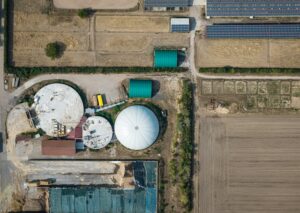
Blending compressed biogas (CBG) into compressed natural gas (CNG) could significantly reduce the carbon footprint of gas-powered vehicles in India, with a new study estimating that a 20% CBG share could make the CNG pathway carbon neutral on a life-cycle basis. The analysis by The Energy and Resources Institute (TERI) also argues that India’s transport transition will not have one technology that works equally well across all vehicle categories. Instead, the role of CNG, CBG, electric vehicles and liquefied natural gas will depend on factors such as vehicle use, infrastructure, cost and the stage of the transition.
CBG could make CNG a lower-carbon fuel
TERI’s Study on Comparative Assessment of Vehicular Fuels in India’s Energy Transition: A Multi-dimensional Approach compares petrol, diesel, CNG, electricity and LNG across two-wheelers, three-wheelers, private and commercial cars, light commercial vehicles and heavy-duty vehicles. It examines these technologies under current conditions as well as scenarios for 2030, 2040 and 2050.
The study found that no single fuel consistently performs best across technical, environmental, economic, social and geopolitical factors. CNG currently offers a relatively balanced option for several passenger and commercial vehicle categories, while EVs have an economic advantage in heavily used two- and three-wheelers because of their lower operating costs. CNG has relatively low life-cycle costs for passenger cars, taxis, buses and heavy-duty trucks, while LNG could be economically attractive for long-distance freight.
The report sees CBG as an opportunity to use India’s existing gas infrastructure while gradually reducing the carbon intensity of natural gas-based transport. India had more than 8,600 CNG stations by March 2026, compared with about 1,315 in March 2018. Over the same period, public EV charging stations increased from around 1,760 to more than 39,000.
Government scheme could support CBG expansion
The study comes as India is trying to increase domestic production and use of CBG. The GOBARdhan National Circular Bioenergy Scheme, approved in 2026 with an outlay of ₹23,731 crore, provides for assured CBG offtake through city gas distribution companies, pipeline connectivity and capital assistance for projects. The scheme also sets CBG blending obligations for the CNG transport and domestic piped natural gas segments at 3% in 2026-27, 4% in 2027-28 and 5% from 2028-29.
TERI estimates India’s total prognosticated CBG potential at around 70 million tonnes, compared with natural gas consumption of roughly 53 million tonnes. This suggests that domestically produced CBG could eventually become a much larger component of the country’s gas supply, while also reducing dependence on imported natural gas.
However, scaling up production will require more than building CBG plants. Feedstock collection remains a key challenge, particularly because agricultural and organic waste needs to be gathered and transported to processing facilities. Connecting plants to existing gas networks is another issue. The Petroleum and Natural Gas Regulatory Board has said city gas distribution companies have a mandate to connect CBG plants in their geographical areas to nearby points on the network.
CNG still faces supply and price pressures
While CBG could improve the environmental performance of gas-based mobility, CNG itself faces challenges linked to the availability and cost of natural gas. According to the Petroleum and Natural Gas Regulatory Board, declining domestic gas availability means India increasingly needs to rely on imported gas and LNG, making CNG prices sensitive to external supply conditions.
This is one reason the study places greater emphasis on a gradual shift towards domestically produced CBG. Higher CBG production could reduce exposure to international gas markets, create demand for agricultural and organic waste, and support rural economic activity.
TERI does not, however, present CNG and CBG as replacements for electric vehicles across all segments. EVs remain economically favourable for smaller, high-use vehicles, while larger vehicles face challenges linked to battery costs, charging infrastructure, payload requirements and dependence on imported components and critical minerals. For heavy-duty transport, the study finds that high upfront and financing costs remain a constraint for EV adoption despite their lower operating costs.
The findings therefore point towards a transport system where different technologies develop alongside one another, rather than one fuel replacing all others.
References:
Banner image: Photo by Bernd Dittrich on Unsplash
Sections of this article may have been developed with the assistance of artificial intelligence tools to support research, drafting, and language refinement. All information has been reviewed, edited, and verified by the author/editor to ensure accuracy, context, and editorial integrity. The responsibility for the final content, interpretations, and conclusions rests solely with the publisher.