Physical Address
23,24,25 & 26, 2nd Floor, Software Technology Park India, Opp: Garware Stadium,MIDC, Chikalthana, Aurangabad, Maharashtra – 431001 India
Physical Address
23,24,25 & 26, 2nd Floor, Software Technology Park India, Opp: Garware Stadium,MIDC, Chikalthana, Aurangabad, Maharashtra – 431001 India


India’s second consecutive weak phase of the southwest monsoon has pushed the Cauvery River to one of its lowest July flows in recent years, deepening water concerns across Karnataka and Tamil Nadu and reviving tensions over the sharing of the interstate river. With poor rainfall across much of the Cauvery basin, inflows into major reservoirs have dropped sharply, forcing authorities to prioritise drinking water while farmers worry about irrigation for the ongoing kharif season. IMD officials say subdued monsoon activity over southern peninsular India is likely to continue in the coming days, delaying any meaningful recovery in reservoir storage.
Weak monsoon sends Cauvery inflows to historic lows
The crisis has been triggered by a prolonged rainfall deficit across the Cauvery catchment, particularly in Kodagu, Mysuru, Mandya and other parts of southern Karnataka that feed the river system. According to reports, inflows into the Cauvery basin have fallen to around 1.5 thousand million cubic feet (TMC) per day, among the lowest recorded for this time of year. Water storage in Karnataka’s Cauvery reservoirs has also declined sharply, limiting the state’s ability to release water downstream.
The reduced inflows have affected major reservoirs, including Krishna Raja Sagar (KRS) and Kabini, which play a critical role in supplying irrigation and drinking water to Karnataka as well as meeting downstream obligations to Tamil Nadu. Officials say reservoir levels remain well below what is normally expected in mid-July because the monsoon has failed to revive after a brief spell of rain earlier this month.
The India Meteorological Department (IMD) has forecast subdued rainfall over much of south peninsular India during the next week, suggesting that inflows into the basin may remain weak in the near term. While enhanced rainfall is expected over eastern and northeastern India, southern river basins are unlikely to receive enough rain to significantly improve storage levels.
Water sharing concerns resurface
The sharp fall in river flow has once again brought the long-running Cauvery water dispute into focus. Under the Supreme Court’s 2018 verdict and the Cauvery Water Management Authority, Karnataka is required to release specified quantities of water to Tamil Nadu during the monsoon months. However, Karnataka has informed the Cauvery Water Regulation Committee that it is currently unable to release the required volumes because of extremely low inflows and limited storage.
The reduced availability of water has prompted concern in Tamil Nadu, where farmers depend on timely releases from the Mettur Dam for paddy cultivation in the Cauvery delta. Delays in water releases could affect transplanting and crop establishment if rainfall does not improve in the coming weeks.
Meanwhile, agricultural authorities in Mysuru and Chamarajanagar have advised farmers to avoid water-intensive crops and shift towards less water-demanding alternatives until rainfall conditions improve. Officials say conserving available water will be critical if the current dry spell continues.
Scientists warn climate variability could make shortages more frequent
The latest crisis comes amid growing evidence that climate variability is increasing pressure on the Cauvery basin. Earlier this year, researchers from IIT Gandhinagar projected that average streamflow in the basin could decline by around 3.5% between 2026 and 2050, even as rainfall becomes more erratic and extreme. They warned that longer dry spells, punctuated by short periods of intense rainfall, could make water management increasingly difficult.
Meteorologists say the developing El Niño and the current inactive phase of the monsoon are contributing to the weak rainfall over southern India. The IMD has already forecast below-normal rainfall over large parts of south peninsular India during July, increasing the risk of continued stress on reservoirs and irrigation systems.
For millions of people across Karnataka and Tamil Nadu, the Cauvery is more than a river. It is the main source of drinking water, irrigation and livelihoods. With the monsoon yet to regain strength, officials and farmers alike are hoping for a sustained spell of rain before the water crisis deepens further.
References:
https://www.pib.gov.in/PressReleasePage.aspx?PRID=2285323
https://agupubs.onlinelibrary.wiley.com/doi/10.1029/2025EF007928
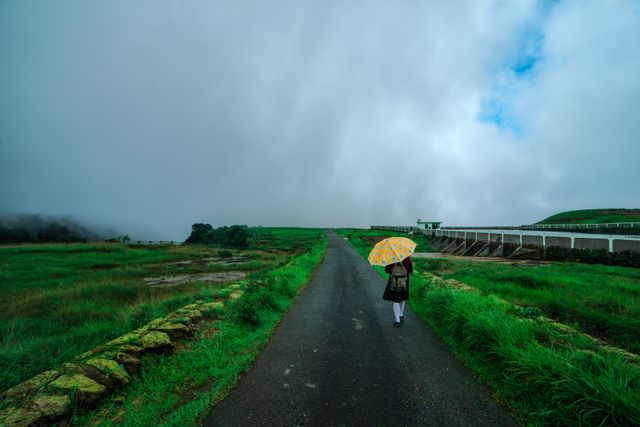
Banner image: Photo by Suhas Hanjar on Unsplash
Sections of this article may have been developed with the assistance of artificial intelligence tools to support research, drafting and language refinement. All information has been reviewed, edited and verified by the author/editor to ensure accuracy, context and editorial integrity. The responsibility for the final content, interpretations and conclusions rests solely with the publisher.