Physical Address
23,24,25 & 26, 2nd Floor, Software Technology Park India, Opp: Garware Stadium,MIDC, Chikalthana, Aurangabad, Maharashtra – 431001 India
Physical Address
23,24,25 & 26, 2nd Floor, Software Technology Park India, Opp: Garware Stadium,MIDC, Chikalthana, Aurangabad, Maharashtra – 431001 India

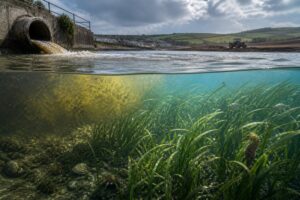
A growing environmental concern is unfolding beneath the surface of Britain’s rivers and coastal waters, where scientists say vital underwater forests are being quietly damaged by pollution. New research highlighted in recent reporting points to sewage and agricultural runoff as key drivers behind the decline of these fragile ecosystems, sparking warnings about long-term impacts on biodiversity and water health.
Hidden ecosystems under stress
Often overlooked, underwater forests, primarily seagrass meadows, play a crucial role in maintaining aquatic ecosystems. These dense plant systems act as nurseries for marine life, store carbon, and help stabilise sediments. However, scientists now say they are under alarming pressure due to excessive nutrients entering waterways.
The problem stems largely from human activity. Wastewater discharges, fertilisers, and manure introduce high levels of nitrogen and phosphorus into rivers and coastal zones. While these nutrients may seem harmless at first glance, their accumulation disrupts the delicate balance required for seagrass to thrive.
Researchers have found that such pollution does more than weaken plant health. It alters the entire food web. Small organisms that depend on seagrass habitats, crucial for sustaining fish populations, are also affected. In some cases, nutrient-rich environments reduce both the number and diversity of these species, weakening the ecosystem from the bottom up.
A wider sewage crisis
The findings come against the backdrop of a broader sewage pollution problem across the United Kingdom. The country’s ageing water infrastructure and combined sewer systems often struggle to cope, especially during heavy rainfall. In such situations, untreated or partially treated sewage is released into rivers and seas to prevent system overload.
While this practice is allowed under certain extreme conditions, critics argue it is happening far too often. Data in recent years has shown sewage discharges occurring hundreds of thousands of times annually, raising concerns about systemic gaps and insufficient investment in infrastructure.
Experts warn that even treated wastewater can carry enough nutrients to trigger ecological damage. In seagrass habitats, excess nutrients promote the rapid growth of algae, which blocks sunlight and deprives plants of the energy needed for photosynthesis. Over time, this can lead to large-scale die-offs of underwater vegetation. The consequences extend beyond environmental loss. Seagrass meadows are known to capture carbon more efficiently than many land-based forests, making them important in efforts to address climate change. Their decline could therefore have ripple effects that go far beyond local ecosystems.
Scientists and environmental groups are now calling for stronger measures to tackle pollution at its source. This includes upgrading wastewater treatment systems, reducing agricultural runoff, and improving how river catchments are managed. There is also a growing push for stricter regulation and enforcement. Past investigations have pointed to instances where sewage was discharged even during dry weather, when such releases are not permitted. This has further eroded public confidence in water management systems. Importantly, experts stress that restoring underwater forests is not just about planting seagrass. Unless pollution levels are reduced, restoration efforts are unlikely to succeed. Protecting these ecosystems must begin upstream, by controlling what flows into rivers and eventually reaches the sea.
References:
https://www.bbc.com/news/articles/cn0pl9j88gno
https://pmc.ncbi.nlm.nih.gov/articles/PMC12028879
https://www.sciencedirect.com/science/article/abs/pii/S0048969721046489
https://www.sciencedirect.com/science/article/pii/S0960982217300222
Banner Image: AI Generated
Sections of this article may have been developed with the assistance of artificial intelligence tools to support research, drafting, and language refinement. All information has been reviewed, edited, and verified by the author/editor to ensure accuracy, context, and editorial integrity. The responsibility for the final content, interpretations, and conclusions rests solely with the publisher.