Physical Address
23,24,25 & 26, 2nd Floor, Software Technology Park India, Opp: Garware Stadium,MIDC, Chikalthana, Aurangabad, Maharashtra – 431001 India
Physical Address
23,24,25 & 26, 2nd Floor, Software Technology Park India, Opp: Garware Stadium,MIDC, Chikalthana, Aurangabad, Maharashtra – 431001 India
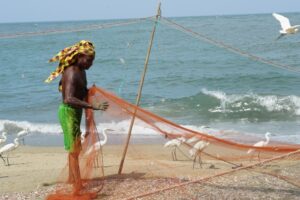
Being an island nation in the vast expanse of the Indian Ocean, Sri Lanka has had a long and intimate association with the sea. For hundreds of years, fishing has been more than just a job for coastal communities. It’s a way of life deeply embedded in their culture, traditions, and local economies. But the relationship is being radically transformed today. A quiet revolution is taking place beneath the waves, driven by the growing use of large, efficient, but ecologically hazardous fishing nets.
A Shift Toward Industrial Efficiency
Sri Lanka’s fisheries have shifted toward high-yield methods that rely on large nets. Purse seine nets are now widely used in coastal waters to encircle entire schools of pelagic fish before closing in.
A study published in a Sri Lankan academic journal (University of Sri Jayewardenepura, 2020) found that purse seine operations contribute significantly to small pelagic fish landings in several coastal regions. Their effectiveness has made them central to commercial fishing.
The same study notes that these nets are non-selective. They capture multiple species, including juvenile fish. Removing juveniles reduces future stock levels and weakens the reproductive base of fisheries.
Coastal Ecosystems Under Pressure
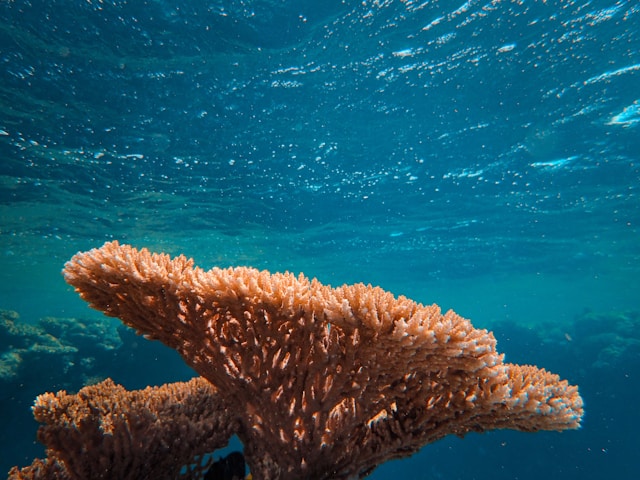
Sri Lanka’s coastal ecosystems, from coral reefs and seagrass beds to shallow lagoons, are biodiversity hotspots. These habitats serve as breeding and nursery grounds for marine species and are vital for ecological balance.
But these fragile systems are under growing pressure from large-scale fishing methods. Heavy gear is dragged across the seafloor by bottom trawling and other net-based activities, resulting in widespread damage. Environmental research has shown that such practices can flatten coral reefs and destroy seagrass habitats, which are critical for fish reproduction .More details can be read here
The damage is severe in shallow areas like Palk Bay where the low depth of the water makes the ecosystems vulnerable to disturbances. Once damaged, these habitats can take decades to recover – if they ever recover.
The Bycatch Problem: Collateral Damage in the Ocean
A major consequence of large-scale net fishing is bycatch, the unintentional capture of non-target species.
Research in Sri Lanka indicates that a high proportion of net catches may comprise non-commercial and benthic species, many of which are discarded. In more destructive methods such as trawling, it is estimated that juveniles and non-target species may comprise up to 50% of the catch.More details can be read here & here
This has serious ecological consequences. Many marine species like rays, turtles and juvenile fish are often caught and killed unnecessarily. Such removal of juvenile fish is especially damaging as it prevents the population from being replenished and accelerates the depletion of stocks.
“Ghost Nets”: The Invisible Killers
In addition to active fishing, an increasing threat is the build-up of abandoned or lost fishing gear, so-called “ghost nets”.
Such drifting nets go on trapping marine life years after they have been abandoned. In Sri Lankan waters, ghost nets have been found entangling turtles, dolphins, seabirds and fish, causing widespread mortality.More details can be read here
Marine conservation groups say dozens of sea turtles are affected every year in some coastal areas alone. These nets move with ocean currents, they are a constant, often invisible threat that leads to long term biodiversity loss.
Livelihood Conflicts: Tradition vs. Modernization
The issue of large-scale fishing nets is not only an environmental problem but also strongly linked to social and economic tensions.
In Sri Lanka, traditional fishing communities use small-scale methods, often managed by the community. These practices are mostly based in local ecological knowledge and are meant to guarantee long-term sustainability.
But the expansion of large net fishing has disturbed this balance. Intensive methods use up resources quickly, leaving less fish for others, according to small-scale fishermen. Tensions in fishing communities have risen as a result.
Evidence from Sri Lanka and the wider region shows that destructive fishing practices can drastically reduce the availability of fish, forcing fishers to put in a lot more effort to catch less fish.
Regulatory Challenges and Weak Enforcement
Sri Lanka has implemented regulations to curb harmful fishing practices, such as limiting trawling and restricting the use of certain nets in certain areas. For example, purse seine fishing is allowed only at certain distances from the coast in some zones .More details can be read here
But enforcement remains spotty. There are still reports of illegal fishing, often related to limited monitoring capacity and economic pressures on fishers.
Historically, even when bans have been enacted – such as on bottom trawling – implementation has been patchy, limiting their effectiveness.More details can be read here
Climate Change and Compounding Pressures
Sri Lanka’s marine ecosystems are already feeling the impact of climate change. Rising sea temperatures, coral bleaching and changing ocean conditions are impacting fish populations and habitats.
Combined with overfishing and destructive fishing methods, these pressures could create a vicious cycle. In degraded ecosystems fewer fish can live . This leads to more fishing and more damage to the ecosystem .
But marine conservation experts say protecting ocean ecosystems is not only about biodiversity, but also about securing long-term climate resilience.
Steps Toward Sustainable Solutions
A Defining Moment for Sri Lanka’s Oceans
Sri Lanka stands at a crossroads. The expansion of large fishing nets is bringing short-term economic benefits but endangering the health of marine ecosystems and the people who depend on them.
The challenge is not just to ban certain practices, but to strike a sustainable balance between protecting biodiversity and ensuring economic stability for fishing communities.
Today’s decisions will shape the future of Sri Lanka’s seas. With proper management, the country can develop a model of sustainable fisheries that protects both nature and livelihoods. If not, the quiet transformation under its waters could become an irreversible crisis.
References
https://journals.sjp.ac.lk/index.php/vjs/article/view/1164
Indian trawlers leave Sri Lankan small-scale fishers a ravaged, bereft sea
https://www.tandfonline.com/doi/abs/10.1080/17451000.2024.2399022
Indian trawlers leave Sri Lankan small-scale fishers a ravaged, bereft sea
https://news.coastguard.gov.lk/news/2024/07/28/202407310925
Banner Image: Photo by Sheila C on Unsplash
Sections of this article may have been developed with the assistance of artificial intelligence tools to support research, drafting and language refinement. All information has been reviewed, edited and verified by the author/editor to ensure accuracy, context and editorial integrity. The responsibility for the final content, interpretations and conclusions rests solely with the publisher.