Physical Address
23,24,25 & 26, 2nd Floor, Software Technology Park India, Opp: Garware Stadium,MIDC, Chikalthana, Aurangabad, Maharashtra – 431001 India
Physical Address
23,24,25 & 26, 2nd Floor, Software Technology Park India, Opp: Garware Stadium,MIDC, Chikalthana, Aurangabad, Maharashtra – 431001 India

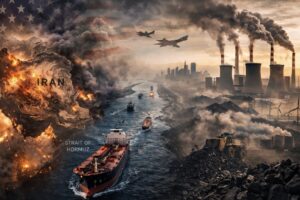
The war in Iran is now rippling far beyond the Gulf, pushing several Asian countries back toward some of the dirtiest fuels in the energy system. As disruptions to oil and liquefied natural gas supplies from the Middle East intensify, governments across Asia are scrambling to keep lights on and industries running. For people across the region, the impact may not stop at rising fuel prices or fears of power cuts. It could also mean more smoke in the air, a greater reliance on coal, and another blow to efforts to move away from fossil fuels, as governments turn to whatever energy sources can keep homes lit and factories running.
Energy shock is pushing Asia back toward coal
The immediate trigger is the severe supply disruption caused by the Iran war and the effective shutdown of the Strait of Hormuz, one of the world’s most important energy corridors. The region is a major supplier of both crude oil and LNG, and the interruption has forced energy importers across Asia to seek out any available alternatives as quickly as possible. Countries including South Korea, India, Bangladesh, Thailand and the Philippines have all turned to more polluting fuels to manage the shortfall.
The policy responses have been swift. South Korea has delayed the shutdown of coal power plants and lifted caps on coal-based generation. Thailand has increased output at its largest coal power station. The Philippines has declared a national energy emergency and plans to boost coal plant operations. In South Asia, India, which still gets nearly 75% of its electricity from coal, has asked coal plants to run at maximum capacity and avoid planned outages, while Bangladesh increased both coal-fired generation and coal imports in March.
A fossil fuel fix is colliding with climate goals
For governments facing blackouts, fuel shortages and rising costs, coal offers an immediate if deeply polluting fallback. It is often already embedded in national grids, easier to dispatch quickly than new energy infrastructure, and in some markets still cheaper than scarce imported gas during a crisis. But climate researchers say this response risks locking countries into a more carbon-intensive path just as many were trying to move away from coal.
The concern is not only about emissions. A return to dirtier fuels also means worsening local air pollution, greater public health risks and a deeper dependence on ageing fossil infrastructure. The crisis has revived a familiar pattern: when imported gas becomes scarce or expensive, countries often fall back on coal because it is the easiest fuel already sitting inside the system. That may help avoid immediate power shortages, but it pushes climate and health costs into the future.
The crisis is also exposing a deeper energy vulnerability
What this moment reveals is not simply a temporary fuel shortage, but a structural weakness in how many countries have built their energy systems. Heavy reliance on imported fossil fuels leaves economies exposed to wars, shipping disruptions and sudden price spikes. Experts described this as an “energy paradox” of the Iran conflict: the crisis is pushing some governments toward more fossil fuel use in the short term, even as it reinforces the long term case for faster clean energy deployment.
That is why analysts increasingly see the current shock as more than a geopolitical story. It is also a climate and energy security story. Renewables such as solar and wind cannot eliminate all short-term energy risks overnight, but they do reduce dependence on imported fuel routes that can be disrupted by conflict. For Asia, the current scramble for coal and other dirty fuels is a reminder that the clean energy transition is not just about cutting emissions. It is also about building systems that are less fragile when global crises hit.
References:
https://www.theguardian.com/world/2026/apr/01/iran-energy-crisis-asia-dirty-fuels-coal
Banner image: AI Generated
Sections of this article may have been developed with the assistance of artificial intelligence tools to support research, drafting and language refinement. All information has been reviewed, edited and verified by the author/editor to ensure accuracy, context and editorial integrity. The responsibility for the final content, interpretations and conclusions rests solely with the publisher.