Physical Address
23,24,25 & 26, 2nd Floor, Software Technology Park India, Opp: Garware Stadium,MIDC, Chikalthana, Aurangabad, Maharashtra – 431001 India
Physical Address
23,24,25 & 26, 2nd Floor, Software Technology Park India, Opp: Garware Stadium,MIDC, Chikalthana, Aurangabad, Maharashtra – 431001 India
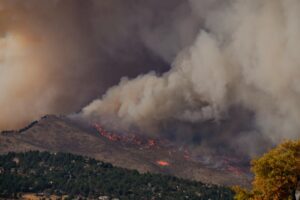
Wildfire smoke is becoming one of the most serious yet overlooked threats to human health. A new study has found that deaths linked to short-term exposure to smoke particles are nearly double earlier estimates, revealing the scale of danger posed by worsening fire seasons across Europe. The research shows that the tiny airborne particles released during fires are far more lethal than once believed, carrying serious consequences for public health even in areas far away from the flames.
A Clearer Picture of the Death Toll
The researchers examined wildfire smoke exposure and mortality records from 32 European countries between 2004 and 2022. Their analysis found an average of 535 deaths every year linked to fine particle pollution known as PM2.5 that came specifically from wildfires. In comparison, conventional methods that are commonly used in health risk assessments have estimated only 38 deaths annually.
This means that previous studies underestimated the impact by 93 per cent. The findings suggest that the actual health burden of wildfire smoke has been hidden in official statistics, leaving policymakers and the public unaware of the scale of the problem.
Why Smoke Is So Harmful
The danger lies in the tiny size of PM2.5 particles, which can penetrate deep into the lungs and even enter the bloodstream. According to the researchers, every additional microgram per cubic meter of wildfire-related PM2.5 was associated with a 0.7 per cent rise in overall death rates. The impact was especially pronounced on respiratory and cardiovascular health, which are among the leading causes of premature death in Europe.
Wildfire smoke is also chemically different from other forms of pollution. It contains a mix of gases and fine particles formed by burning vegetation and structures. Prof Cathryn Tonne, an environmental epidemiologist at the Barcelona Institute for Global Health (ISGlobal) and co-author of the study, explained that earlier research tended to treat wildfire particles as equally toxic as other types of fine particles. She noted that their findings provide evidence showing that even when exposure occurs less frequently, wildfire smoke has a more substantial impact on health than the same amount of pollution from other sources. This combination can make the smoke particularly toxic when compared to particles from sources like vehicle exhaust or industrial emissions.
Rising Risks in a Warming World
Scientists warn that climate change is making wildfires larger and more destructive across southern Europe. Countries such as Greece, Spain and Portugal have already seen record-breaking fire seasons, and smoke from these blazes often travels hundreds of kilometres beyond the immediate burn areas.
This means that people living far from active fire zones are still breathing in harmful particles without always realising it. As fires intensify in the coming years, the number of people exposed to dangerous levels of smoke is expected to grow significantly, putting extra pressure on health systems and communities.
References:
https://linkinghub.elsevier.com/retrieve/pii/S2542519625001743
Spain Sees Highest Wildfire Emissions Since 2003 As Iberian Peninsula Burns
Banner image:
Photo by Malachi Brooks on Unsplash