Physical Address
23,24,25 & 26, 2nd Floor, Software Technology Park India, Opp: Garware Stadium,MIDC, Chikalthana, Aurangabad, Maharashtra – 431001 India
Physical Address
23,24,25 & 26, 2nd Floor, Software Technology Park India, Opp: Garware Stadium,MIDC, Chikalthana, Aurangabad, Maharashtra – 431001 India


For the tens of millions of Indian farmers who plant their summer crops by the rhythm of the rains, the southwest monsoon’s arrival over Kerala is less a spectacle than a starting gun. This year, that gun has fired roughly on time but into a season clouded with worry. The India Meteorological Department (IMD) confirmed in a press release issued on June 4 that the monsoon had set in over Kerala, only a few days behind the normal June 1 arrival, and had pushed on into Lakshadweep, parts of Karnataka and Tamil Nadu and adjoining seas. Yet the bigger question for the countryside is not when the rain reaches the Malabar coast, but whether enough of it falls, in the right places, while the planting window for kharif crops stays open.
In the immediate term, the rain is arriving with force. The IMD has warned of isolated heavy to very heavy rainfall of 7 to 20 cm over Kerala and Karnataka over the seven days following onset, with conditions favourable for the monsoon to advance into Goa and parts of Maharashtra and Andhra Pradesh within two to three days. That is welcome moisture for early sowing, though intense bursts at onset can also wash out freshly planted seed and waterlog low-lying fields, a reminder that for farmers the timing and intensity of rain matter as much as the seasonal total.
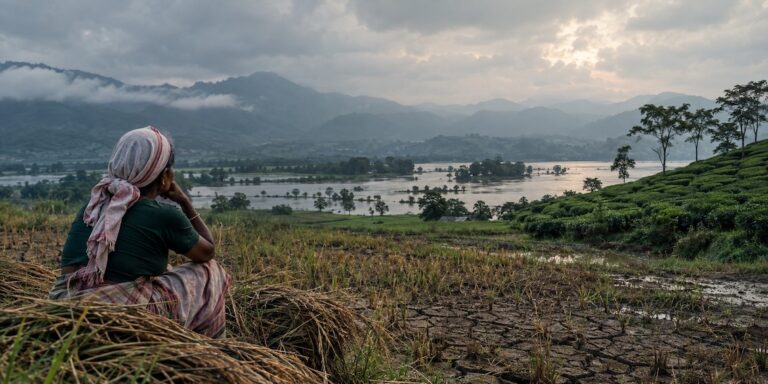
Kharif crops, the rice, pulses, oilseeds, cotton, maize and coarse cereals sown with the onset of the monsoon and harvested in autumn, depend almost entirely on the four-month rainy season for water. The stakes are structural: agriculture employs close to half of India’s workforce, and around 45 percent of the country’s net sown area still has no assured irrigation and relies directly on rainfall. For those farmers, a thin or poorly timed monsoon does not just dent yields; it shapes household incomes, debt repayment and the rural demand that ripples through the wider economy.
The forecast behind this year’s onset is what has farmers and economists uneasy. On May 29, the IMD cut its projection for June-to-September rainfall to 90 percent of the long-period average, down from an earlier estimate of 92 percent, and put the odds of a deficient season at 60 percent. The long-period average, the benchmark for a normal monsoon, sits at roughly 868.6 mm based on rainfall between 1971 and 2020; a season slips into deficient territory once it falls below 90 percent of that figure, placing the latest projection right at the edge. June itself, the critical sowing month, is expected to see particularly weak rainfall of below 92 percent of the average, potentially delaying planting for key crops.
Where the rain falls may matter even more than how much. Agricultural experts have warned that the uneven distribution of rainfall could pose a bigger challenge this kharif season than the headline deficit. Rain-fed regions across central, western and peninsular India, which grow a large share of the country’s pulses, oilseeds and coarse cereals, are the most exposed. A late or broken monsoon there can force farmers to delay sowing, shrink the area they plant, or switch to hardier, lower-value crops, with each choice feeding through to smaller harvests and tighter family budgets. Dry pre-monsoon soils compound the risk: when the topsoil enters June parched, the first rains are absorbed before they can sustain a germinating crop.
There are some cushions this year. Irrigation now covers a larger slice of farmland than a decade ago, and India’s major reservoirs entered the season comfortably above their ten-year average storage, offering a buffer for irrigated staples like rice and wheat. But that safety net does little for the rain-fed belt, where roughly a sixth of kharif output still hinges directly on the sky. Ratings agency ICRA has cautioned that sub-par rains could weigh on kharif sowing, and in turn on farm cash flows and food prices, with consumer inflation projected to run higher into the next financial year if yields disappoint.
The drivers behind the gloomier outlook are familiar to climate watchers. The IMD expects currently neutral conditions in the equatorial Pacific to tip toward El Nino during the season, a pattern historically associated with weaker Indian rainfall, while the Indian Ocean Dipole is forecast to stay neutral and offer little counterbalance. Scientists have also long warned that a warming climate is making the monsoon more erratic, concentrating rain into intense bursts separated by longer dry spells, exactly the kind of variability that punishes farmers timing their planting to the first reliable showers.
For now, the advice reaching the fields is to plan for uncertainty: follow district-level weather advisories rather than the national average, conserve soil moisture, and lean on drought-resilient seed varieties where the rains look shaky. A punctual onset in Kerala is a welcome headline, but for India’s rain-fed farmers the real verdict on 2026 will be written over the months ahead, in how the season’s rain is shared across the land that needs it most.
References
https://mausam.imd.gov.in/responsive/monsooninformation_onset.php
https://invezz.com/news/2026/05/29/india-cuts-monsoon-forecast-to-90-of-normal-raising-crop-worries
https://www.pib.gov.in/PressReleasePage.aspx?PRID=2266479®=3&lang=2
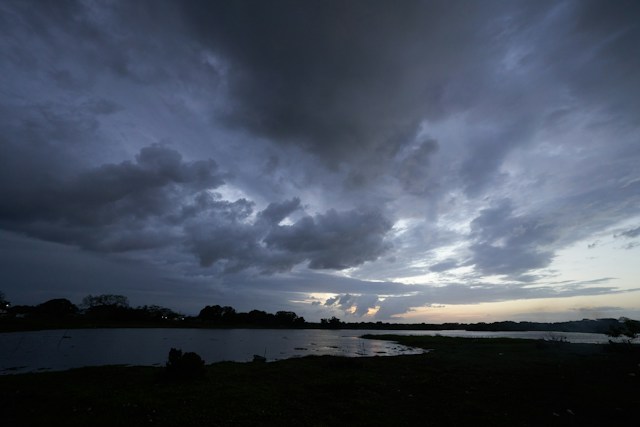
Banner Image: Photo by Sabeel Ahammed: https://www.pexels.com/photo/rainy-day-68357/
Sections of this article may have been developed with the assistance of artificial intelligence tools to support research, drafting and language refinement. All information has been reviewed, edited and verified by the author/editor to ensure accuracy, context and editorial integrity. The responsibility for the final content, interpretations and conclusions rests solely with the publisher.