Physical Address
23,24,25 & 26, 2nd Floor, Software Technology Park India, Opp: Garware Stadium,MIDC, Chikalthana, Aurangabad, Maharashtra – 431001 India
Physical Address
23,24,25 & 26, 2nd Floor, Software Technology Park India, Opp: Garware Stadium,MIDC, Chikalthana, Aurangabad, Maharashtra – 431001 India

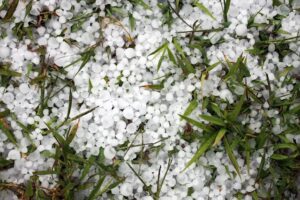
Large hailstones are becoming a growing concern in a warming world, with new research suggesting that climate change could make some of the most damaging hailstorms significantly more common by the end of the century. A study published in Nature found that storms producing hailstones larger than a marble could increase by 38 to 47% globally by 2100, depending on future greenhouse gas emissions. Scientists say warmer temperatures are creating a more energetic atmosphere, allowing hailstones to grow larger before falling to the ground. While much of the research has focused on the United States, experts warn that Europe is also likely to see an increase in large, destructive hail events in the decades ahead.
Bigger hailstones could become more common as the planet warms
Hail forms inside powerful thunderstorms when strong updrafts repeatedly lift water droplets into freezing layers of the atmosphere, allowing them to accumulate layers of ice. Researchers say climate change is making conditions more favourable for this process. As temperatures rise, the atmosphere can hold about 7% more moisture for every 1°C of warming, increasing the energy available to fuel severe storms and stronger updrafts.
Using advanced climate simulations, the study found that while storms producing smaller hail may decline by 4 to 8%, the frequency of storms generating large hailstones is projected to rise sharply. These larger hailstones are particularly damaging because they fall faster and strike with greater force, posing risks to homes, vehicles, crops, solar panels and other infrastructure.
Researchers say warming temperatures create a paradox. Higher temperatures can cause smaller hailstones to melt before reaching the ground, but larger hailstones are more likely to survive because stronger storm updrafts allow them to grow bigger before falling. The result is fewer small hail events but potentially more destructive ones.
Europe is already seeing the economic toll of severe hail
Although floods, hurricanes and wildfires often overshadow hail, it is among the costliest weather hazards globally. According to study co-author John Allen of Central Michigan University, hail currently causes around $80 billion in damages worldwide each year, including about $10 billion annually in the United States alone.
Europe is not immune to these losses. Data cited by Euronews shows that hailstorms across the continent have increased by 267% over the past five years, rising from 3,217 recorded events in 2019-20. A separate analysis found that the hail seasons of 2022 and 2023 each caused more than €5 billion in losses, making them among the costliest on record.
In France, insurers reported €2.2 billion in hail-related damages in 2025, the second-highest annual total since records began. More than 23,000 municipalities experienced hail at least once during the year, while some areas were struck repeatedly. Researchers there have observed an increasing number of hailstones exceeding 2 cm in diameter, the threshold at which damage to buildings, vehicles and crops becomes much more likely.
Scientists warn the risks extend beyond the United States
For years, much of the research on hail focused on North America, where some of the world’s largest hailstorms occur. However, scientists now believe regions including Europe, Canada and Argentina could experience some of the largest increases in damaging hail under future warming scenarios.
Research suggests Europe may already be moving in that direction. A study examining future supercell thunderstorms, the storm type most commonly associated with giant hail, projected an average 11% increase in supercell occurrence across Europe in a warmer climate, with particularly strong increases expected in central and eastern parts of the continent.
Scientists caution that hail remains one of the least understood forms of extreme weather because it is highly localised and difficult to capture in climate models. Even so, the growing body of evidence points to a future in which some hailstorms become less frequent but significantly more destructive. As temperatures continue to rise, researchers say communities may need to rethink building standards, infrastructure design and disaster preparedness to cope with a hazard that has often been overlooked in climate discussions.
References:
https://www.nature.com/articles/s41586-026-10543
https://www.science.org/doi/10.1126/sciadv.adx0513
Banner image: Photo by David Trinks on Unsplash
Sections of this article may have been developed with the assistance of artificial intelligence tools to support research, drafting and language refinement. All information has been reviewed, edited and verified by the author/editor to ensure accuracy, context and editorial integrity. The responsibility for the final content, interpretations and conclusions rests solely with the publisher.