Physical Address
23,24,25 & 26, 2nd Floor, Software Technology Park India, Opp: Garware Stadium,MIDC, Chikalthana, Aurangabad, Maharashtra – 431001 India
Physical Address
23,24,25 & 26, 2nd Floor, Software Technology Park India, Opp: Garware Stadium,MIDC, Chikalthana, Aurangabad, Maharashtra – 431001 India

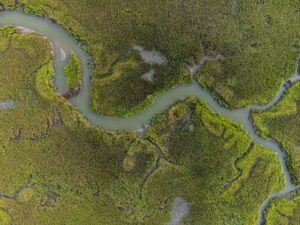
River deltas have always been seen as some of the most fertile and densely populated landscapes on Earth. But new research suggests many of them are quietly sinking, and in many places, they are going down faster than the sea is rising. A study has found that dozens of major river deltas are subsiding at alarming rates, putting hundreds of millions of people at risk of flooding and land loss. Scientists say this is not just a story of climate change-driven sea level rise. It is also a story of how human activity is reshaping the ground beneath some of the world’s most vulnerable regions.
Land is sinking faster than the seas are rising in many deltas
The study, led by researchers at Virginia Tech and published in Nature, analysed 40 major river deltas across five continents using high-resolution satellite radar data. The results show that in many of these deltas, land subsidence is happening at a pace that exceeds current rates of global sea level rise.
In fact, the research found that at least some portion of nearly every delta studied is sinking faster than the sea is rising, with 18 out of 40 deltas already seeing subsidence outpace local sea level rise. This means the risk of flooding in these regions is increasing more quickly than expected, because water levels are effectively rising from both directions, as seas rise and land drops.
Scientists say this combination creates a “double burden” for delta regions, where even modest increases in sea level can translate into much larger real-world impacts when the land itself is also sinking.
Human activity is driving much of the problem
While sea level rise is often linked to global warming, the study points to human activity as a major driver of land subsidence in delta regions. Key factors include groundwater extraction, reduced sediment flow from rivers, and rapid urban expansion. Groundwater pumping is particularly important. When large amounts of water are removed from underground aquifers, the soil above can compact and sink. At the same time, dams and river management systems reduce the flow of sediment that would otherwise help rebuild and stabilise the delta land.
Urban growth adds another layer of pressure, as heavy infrastructure compresses already fragile ground. The result is a steady loss of elevation that often goes unnoticed until its effects begin to show in the form of flooding, erosion or saltwater intrusion. Researchers say this makes subsidence a hidden but rapidly growing risk in many coastal regions.
Hundreds of millions face rising flood risks
River deltas are home to some of the most densely populated regions in the world, and the study warns that around 236 million people are currently living in areas at risk from sinking land and rising seas. This combination of subsidence and sea level rise is increasing the likelihood of flooding, land loss and displacement across many delta regions.
Most of the deltas are in regions such as South and Southeast Asia, where large populations depend on delta systems for farming, fisheries and livelihoods. In places like the Ganga, Brahmaputra, Mekong and Nile deltas, vast areas are already experiencing subsidence, increasing the likelihood of flooding, land loss and displacement.
Scientists say the challenge is not just environmental but also social and economic. As flood risks rise, communities may face repeated damage to homes, crops and infrastructure, while governments will have to invest more in flood protection and adaptation. The findings suggest that tackling delta subsidence will require more than just managing sea level rise. It will also mean rethinking how water, land and urban growth are managed in some of the world’s most critical landscapes.
References:
https://doi.org/10.1038/s41586-025-09928-6
https://www.sciencedaily.com/releases/2026/04/260420014750.htm
Banner image: Photo by Matt Benson on Unsplash
Sections of this article may have been developed with the assistance of artificial intelligence tools to support research, drafting and language refinement. All information has been reviewed, edited and verified by the author/editor to ensure accuracy, context and editorial integrity. The responsibility for the final content, interpretations and conclusions rests solely with the publisher.