Physical Address
23,24,25 & 26, 2nd Floor, Software Technology Park India, Opp: Garware Stadium,MIDC, Chikalthana, Aurangabad, Maharashtra – 431001 India
Physical Address
23,24,25 & 26, 2nd Floor, Software Technology Park India, Opp: Garware Stadium,MIDC, Chikalthana, Aurangabad, Maharashtra – 431001 India
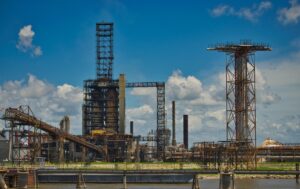
In a ruling that could have far-reaching implications for environmental litigation in the United States, the US Supreme Court has sided with major oil and gas companies in a long-running dispute over coastal damage in Louisiana. The unanimous 8-0 decision, delivered on 17 April, does not decide whether the companies are responsible for environmental harm. Instead, it determines where the legal battle will unfold: shifting it from state courts to federal courts.
A dispute decades in the making
The case stems from a series of lawsuits filed in 2013 by local authorities in Louisiana. These lawsuits accused major oil companies, including Chevron, of violating state environmental laws. The allegations focus on decades of oil and gas operations such as canal dredging, drilling, and waste disposal that are believed to have contributed significantly to the erosion of Louisiana’s coastline.
The lawsuits argue that companies failed to restore the land after completing their operations, as required under state regulations. Over time, this neglect has been linked to severe environmental degradation, including the loss of wetlands that act as natural barriers against storms and flooding.
The legal turning point
A key moment in the dispute came when a Louisiana state court ordered Chevron to pay more than $740 million in damages for environmental restoration. However, the oil companies challenged such rulings, arguing that many of their activities were carried out under federal contracts particularly during wartime periods when energy production was considered a national priority.
Accepting this argument, the Supreme Court ruled that the companies had demonstrated a sufficient connection to federal authority. Writing for the majority, Clarence Thomas stated that this link allows the cases to be heard in federal courts rather than state courts.
Why the venue matters
At first glance, the decision may appear procedural, but legal experts say it could significantly affect the outcome of the case. Federal courts are often perceived as more favorable to corporate defendants, which raises concerns among environmental groups and local communities.
For Louisiana, the stakes are particularly high. The state has lost more than 2,000 square miles of coastal land over the past century. Scientists attribute a substantial portion of this loss to oil and gas infrastructure, which has disrupted natural sediment flows and weakened coastal ecosystems.
Environmental advocates argue that holding companies accountable is essential not only for restoring damaged land but also for protecting communities that are increasingly vulnerable to hurricanes and rising sea levels.
Oil and gas companies, however, maintain that the lawsuits are unfair. They argue that many of the activities in question took place before modern environmental regulations were in place and were legal at the time. From their perspective, moving the cases to federal court ensures a more consistent and historically grounded legal framework.
On the other hand, supporters of the lawsuits believe that state courts are better suited to interpret Louisiana’s specific environmental laws. They also argue that companies should take responsibility for long-term environmental damage, regardless of when it occurred.
What comes next?
The ruling does not end the litigation but shifts its trajectory. Dozens of related cases are still pending, and this decision is expected to influence how they proceed not only in Louisiana but potentially across the country.
Notably, Samuel Alito did not participate in the case due to a conflict of interest, while Ketanji Brown Jackson agreed with the outcome but expressed a narrower interpretation of the legal reasoning.
As the cases move to federal courts, the central question remains unresolved: should oil companies be held financially responsible for the environmental damage linked to their operations? The answer could shape the future of environmental accountability and corporate responsibility in the United States.
References:
https://www.theguardian.com/us-news/2026/apr/17/supreme-court-oil-and-gas-louisiana
Photo by McRonny on Pixabay
Sections of this article may have been developed with the assistance of artificial intelligence tools to support research, drafting, and language refinement. All information has been reviewed, edited, and verified by the author/editor to ensure accuracy, context, and editorial integrity. The responsibility for the final content, interpretations, and conclusions rests solely with the publisher.