Physical Address
23,24,25 & 26, 2nd Floor, Software Technology Park India, Opp: Garware Stadium,MIDC, Chikalthana, Aurangabad, Maharashtra – 431001 India
Physical Address
23,24,25 & 26, 2nd Floor, Software Technology Park India, Opp: Garware Stadium,MIDC, Chikalthana, Aurangabad, Maharashtra – 431001 India

India is heading into what could be its coldest and longest winter in decades, with the first signs already showing up across the northern plains and hill states. According to the India Meteorological Department (IMD), temperatures are likely to dip earlier and fall below average across much of the country this season — and the main culprit is La Niña, the cooler counterpart of the better-known El Niño phenomenon.
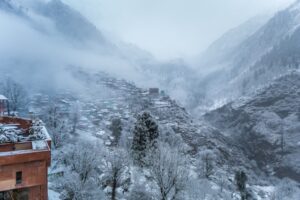
Over the past few weeks, regions that usually enjoy a mild October are already experiencing sharp drops in temperature. Himachal Pradesh saw unexpected snowfalls early in the month, with white blankets covering high-altitude passes weeks before usual. Cities like Delhi and Jaipur have also reported a sudden nip in the air, far ahead of schedule. “It feels like winter has arrived early,” residents say — and science suggests they’re right.
What Is La Niña — and Why It Matters
To understand why India is bracing for a harsher winter, one needs to look at what’s happening thousands of kilometres away — in the Pacific Ocean.
La Niña is a natural climate pattern that occurs when surface waters in the central and eastern Pacific Ocean become cooler than usual. This change, though subtle in appearance, sets off a chain reaction in the atmosphere. Winds strengthen, ocean currents shift, and global weather patterns are disrupted.
While its opposite, El Niño, tends to warm the planet and bring dry spells and heatwaves, La Niña usually cools global temperatures and enhances rainfall and cold spells in many regions. For India, this typically means colder winters and stronger monsoons. The last time La Niña dominated — between 2020 and 2022 — India recorded an exceptionally wet monsoon and a series of cold winters. Scientists now warn that the return of La Niña conditions this year could intensify the chill even more.
Signs of an Early Winter
Weather watchers have already noticed the shift. In Himachal Pradesh and Uttarakhand, early snowfall has blanketed tourist towns like Manali and Auli since the first week of October — an event that usually occurs in November. In Delhi, the minimum temperature recently dipped below 16°C, the lowest for this time of year in several seasons.
Meteorologists believe India could be entering its longest winter in years, potentially stretching well into March 2026. Even coastal cities like Mumbai and Chennai — usually insulated from sharp cold waves — are expected to feel a chillier December and January. Bengaluru, Pune, and Hyderabad could also record lower-than-normal night temperatures.
Meteorologists attribute this to strengthened northerly winds that are now bringing cold air masses from the Himalayas deep into central and southern India. The early Himalayan snowfall is amplifying the cooling process by lowering regional surface temperatures.
A Cold Wave in the Making
If the current trend continues, IMD forecasts that January 2026 could be one of the coldest months in more than a century. Some long-range models suggest temperatures could fall two to three degrees below average across much of North and Central India, particularly in Punjab, Haryana, Uttar Pradesh, and Madhya Pradesh.
Mountain states could see record-breaking snowfall, posing travel and supply challenges but also offering a boost for tourism in hill destinations. Meanwhile, the Indo-Gangetic plains — home to millions — could face extended fog spells and poor air quality as cold air traps pollutants closer to the ground.
What This Means for Daily Life
For ordinary people, a stronger La Niña means longer nights, heavier woollens, and greater energy needs. Power consumption typically rises in cold spells, while agricultural patterns can shift as winter crops like wheat and mustard respond to lower soil temperatures.
Farmers could see both benefits and challenges. Colder winters can improve the yield of some crops, but unseasonal cold waves or frost can harm vegetables and orchards. Meanwhile, urban populations may face higher heating costs and worsening winter smog, especially in landlocked cities like Delhi and Lucknow.
Health experts also warn of an increase in seasonal illnesses — from respiratory infections to influenza — as people spend more time indoors. Vulnerable groups like the elderly, children, and the homeless could be particularly affected.
References:
What is the La Niña effect? How is it different from El Niño?
October Turns Cold: Is India Entering Its Longest Winter in Years?
Banner Image: Photo by Nilotpal Kalita on Unsplash