Physical Address
23,24,25 & 26, 2nd Floor, Software Technology Park India, Opp: Garware Stadium,MIDC, Chikalthana, Aurangabad, Maharashtra – 431001 India
Physical Address
23,24,25 & 26, 2nd Floor, Software Technology Park India, Opp: Garware Stadium,MIDC, Chikalthana, Aurangabad, Maharashtra – 431001 India

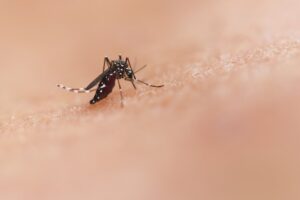
Dengue fever, once a seasonal disease confined to the monsoon months, is increasingly becoming a year-round public health threat across South Asia. Health officials have warned that changing weather patterns are creating ideal breeding grounds for disease-carrying mosquitoes, driving up infections in Sri Lanka, India, Bangladesh, Nepal and Pakistan. Scientists now regard climate change as one of the main drivers of the region’s growing dengue burden.
Sri Lanka Faces Another Major Dengue Wave
Sri Lanka is in the grip of a major dengue outbreak. By mid-June 2026, health authorities had recorded more than 41,000 cases and 22 deaths, with nearly half of all infections concentrated in the Western Province. Colombo, Gampaha and Kalutara remain among the worst-affected districts, and rising hospital admissions have put additional pressure on healthcare facilities.
The National Dengue Control Unit has classified dozens of Medical Officer of Health (MOH) divisions as high risk. Heavy southwest monsoon rains, periodic flooding and recent weather disturbances have created numerous mosquito breeding sites, while poor waste management and the accumulation of stagnant water have been cited as major contributing factors. Authorities have also pointed to the circulation of a dengue virus strain to which population immunity is low, which raises the risk of further outbreaks.
Dengue Is No Longer a Seasonal Disease
Sri Lanka has traditionally seen dengue spikes during the southwest and northeast monsoon seasons. In recent years, however, transmission has become increasingly continuous. Health experts attribute the longer breeding seasons to prolonged spells of rain, irregular weather patterns, urbanisation and rising temperatures. Rather than one or two outbreaks a year, transmission now persists for much longer periods, a pattern unfolding across South Asia.
A Regional Problem Across the Indian Subcontinent
South Asia is one of the world’s dengue hotspots. Research published in 2026 estimated that South Asian countries account for about 6.5 percent of the world’s dengue cases and more than 11 percent of dengue-related deaths. Compared with the 2000 to 2010 period, mean annual cases have risen roughly eleven-fold, and the same study projects a further 40 percent increase in cases and a 61 percent increase in deaths across the region by 2033.
In India, the geographical spread of transmission has widened, and a disease once concentrated in the monsoon months now occurs throughout the year.
Studies cited by regional health reporting show that mosquitoes breed and transmit the virus most effectively at temperatures above 27 degrees Celsius, humidity between 60 and 78 percent, and moderate rainfall, conditions that shifting rainfall and rising temperatures are making more common. Bangladesh has suffered devastating outbreaks in recent years, including record case numbers in 2023, as warmer temperatures and longer rainy seasons let mosquitoes survive longer and reach new areas. Nepal, once too cool for sustained transmission, now sees Aedes mosquitoes spreading to higher elevations and regular outbreaks in previously low-risk areas. Pakistan faces recurrent outbreaks after heavy monsoon rains and flooding, worsened by urban overcrowding and shifting weather patterns.
How a Warming Climate Fuels the Surge
Two mosquito species drive dengue transmission, Aedes aegypti and Aedes albopictus, and both are acutely sensitive to environmental conditions. Because mosquitoes are cold-blooded, they are more active in warm weather, and the virus replicates inside them faster. Scientists call this the extrinsic incubation period: when it is hot, mosquitoes become infectious sooner. The optimum range for transmission is roughly 27 to 32 degrees Celsius, temperatures that much of South Asia now experiences for extended periods. Warmer weather also lengthens mosquito lifespans, giving the insects more chances to bite and infect, since females need repeated blood meals to produce eggs.
Climate change is reshaping rainfall too. Many areas no longer receive predictable seasonal rains, but instead swing between torrential downpours, flooding, long dry spells and prolonged monsoons. The water that pools afterwards offers ideal breeding sites for Aedes mosquitoes, most commonly in:
High humidity compounds the problem by reducing dehydration and keeping mosquitoes active, and the current Sri Lankan outbreak has been closely linked to recent rains and flooding. Extreme weather events such as cyclones and floods make matters worse still: in their aftermath, households store more water, garbage collection and sanitation break down, and people crowd into shelters, all of which give mosquito breeding ample room to surge.
Urbanisation and a Year-Round Threat
Climate is only part of the story. Rapid urbanisation across South Asia has created conditions tailor-made for Aedes mosquitoes, with cities such as Chennai, Karachi, Dhaka, Mumbai and Colombo combining dense populations and abundant artificial water containers. Poor waste disposal, clogged drains and unreliable water supply often force residents to store water, multiplying breeding opportunities, and Sri Lankan medical groups have blamed weak environmental management for worsening transmission. Higher temperatures are also pushing the disease into territory once considered inhospitable: to higher altitudes in Nepal, into cooler regions of India and across subtropical zones, exposing populations with little prior immunity.
The seasonal rhythm has broken down as well. Dengue epidemics once subsided after the monsoons, but warmer temperatures and irregular rainfall now stretch transmission across the calendar, and mosquito populations no longer vanish during dry spells. The result is more protracted outbreaks, longer transmission windows and a higher likelihood of multiple waves in a single year. Experts increasingly describe dengue as a year-round disease rather than a seasonal one, and one of the clearest examples of how climate change affects human health.
A Warming World, a Wider Threat
What is unfolding in Sri Lanka is not simply a story about mosquitoes and rain. It is the product of a larger interplay between rising temperatures, shifting monsoons, extreme weather, urbanisation, poor waste management and evolving viral strains. Dengue is spilling beyond its traditional limits across the Indian subcontinent, as warming expands mosquito habitats, lengthens transmission seasons and raises the risk of epidemics. Scientists warn that without deeper cuts to greenhouse gas emissions and stronger climate adaptation, South Asia could face even larger outbreaks in the decades ahead. The challenge is no longer just controlling mosquitoes; it is learning how to protect public health in a warming world.
References:
https://www.themorning.lk/articles/af6v7USNom1fpxDLzWQB
https://www.themorning.lk/articles/nFQJSRuNlPueYOvfZJzW
https://www.traveldoctor.com.au/health-alerts/dengue-surges-sri-lanka
https://pmc.ncbi.nlm.nih.gov/articles/PMC12964148
Hospitals filling up due to rising dengue cases
Banner Image: Photo by National Institute of Allergy and Infectious Diseases on Unsplash
Sections of this article may have been developed with the assistance of artificial intelligence tools to support research, drafting and language refinement. All information has been reviewed, edited and verified by the author and editor to ensure accuracy, context and editorial integrity. Responsibility for the final content, interpretations and conclusions rests solely with the publisher.