Physical Address
23,24,25 & 26, 2nd Floor, Software Technology Park India, Opp: Garware Stadium,MIDC, Chikalthana, Aurangabad, Maharashtra – 431001 India
Physical Address
23,24,25 & 26, 2nd Floor, Software Technology Park India, Opp: Garware Stadium,MIDC, Chikalthana, Aurangabad, Maharashtra – 431001 India

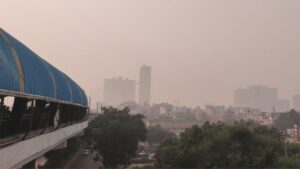
Four times in a single fortnight this June, residents of the national capital watched the afternoon light drain out of the sky as walls of dust rolled in ahead of the rain. Each time, a familiar question surfaced online before the dust had even settled: is this what climate change looks like? It is a fair question, and the honest answer is more layered than either the alarmed posts or the dismissive ones suggest.
Delhi did see a string of genuine dust storm events in the pre-monsoon stretch of 2026. On 15 June, winds touched 92 kmph and the India Meteorological Department issued a red alert, with the storm followed by thunderstorms and heavy rain across the NCR. Days earlier, on 12 June, a dust storm cut visibility at Indira Gandhi International Airport and disrupted flights; and on 9 June, a severe thunderstorm with a massive dust storm prompted another red alert, with gusts at Palam reportedly among the strongest recorded there in nearly 25 years.
First, sort the storm from the source
Pre-monsoon dust storms are not new to north India. They are a recurring feature of the hot months between March and June, when intense surface heat, dry soil and strong westerly winds lift dust from the arid regions of Rajasthan and the Thar Desert. Standing between that desert and the densely populated plains is the Aravalli range, which acts as a natural barrier that slows hot desert winds and traps sand before it reaches urban centres. The physical evidence for that role is long-standing: obstacle dunes on the desert side of the hills show that the range has slowed and shed windborne sand over geological time.
That shield is weakening. A study identified gaps in the range that have widened with forest loss and inadequate vegetation cover, and decades of mining, quarrying and encroachment have left dust moving through the hills more freely. So the chain has four distinct links: the Thar is the source of the dust, the weather is the trigger, the degraded Aravallis are a weakened filter, and climate change, as we will see, sits in the background as an amplifier of the heat. Collapsing these into a single cause is where most viral claims go wrong.
Where the climate link is strong, and where it is not
Strong: the heat that powers the storms
The cleanest connection to climate change is not the dust but the energy behind these events. Pre-monsoon dust storms and thunderstorms feed on extreme surface heat, peaking in the March to May window when temperatures can reach 45 degrees Celsius. Heatwaves in north India are growing more frequent and more intense, and that warming is firmly attributable to climate change. As a NASA Earth Observatory account of an earlier severe dust episode noted, the imprint of global warming on India is visible in the rising frequency and intensity of most extreme weather events. The defensible framing, then, is that climate change is loading the dice on the heat and instability that power these storms, rather than directly manufacturing the dust.
Plausible, but expert opinion: rising intensity
Meteorologists have said on record that these events may grow more intense. Skymet’s Mahesh Palawat has argued that such weather activity is increasing due to climate change and global warming, alongside ecological disorder and green-cover depletion. This is a reasonable expert judgement and worth citing as such, but it is informed opinion rather than a measured long-term trend.
Weak: a proven rise in how often dust storms occur
This is the claim to handle with care. There is no robust long-term dataset establishing that dust storms are becoming more frequent. The IMD’s own leadership has noted that detecting a genuine trend would need 30 to 40 years of focused data, and that dust storms have been studied far less than cyclones or the monsoon. Cutting the other way, a study found a decrease in pre-monsoon dust over the Thar and the Indo-Gangetic plains. A statement such as “climate change is making Delhi’s dust storms more frequent” therefore runs ahead of the evidence and is open to rebuttal.
The bottom line
Climate change belongs in the story of Delhi’s June dust storms, but as an amplifier of the heat and atmospheric instability that drive them, not as a proven cause of their number. The Thar supplies the dust, the weather pulls the trigger, the degraded Aravallis let more of it through, and a warming climate raises the temperature of the whole system. Claims that lean on the heat and intensity angle stand on firm ground. Claims that assert a measured rise in frequency, or that pin one specific storm on hill-cutting alone, stretch past what the data can currently support.
For readers, the useful takeaway is the same one fact-checkers apply: the direction of the claim matters as much as its subject. “A hotter climate is intensifying the conditions behind these storms” is supportable. “Climate change caused this dust storm” is not, at least not yet.
References
Delhi dust storm brings 92 kmph winds as IMD issues red alert
https://www.republicworld.com/india/heavy-rain-lashes-parts-of-delhi-ncr-2026-06-15-128353
Shrinking Aravallis, rising dust pollution
Aravalli Range: India’s Weakening Dust Shield and Its Environmental Impact
https://thewire.in/environment/delhi-air-pollution-summer-aravalli-natural-barrier-mining-activities
Climate change could be intensifying dust storms in India, experts say
Dust storms may increase in India due to climate change
Banner Image: Canva