Physical Address
23,24,25 & 26, 2nd Floor, Software Technology Park India, Opp: Garware Stadium,MIDC, Chikalthana, Aurangabad, Maharashtra – 431001 India
Physical Address
23,24,25 & 26, 2nd Floor, Software Technology Park India, Opp: Garware Stadium,MIDC, Chikalthana, Aurangabad, Maharashtra – 431001 India

Russia’s invasion of Ukraine in February 2022 reshaped global energy markets almost overnight. Europe, which had long depended on Russian natural gas, suddenly faced soaring fuel prices and supply uncertainty, prompting governments and households alike to rethink how they consumed energy. A new study published in the Journal of Geophysical Research: Atmospheres suggests that in parts of northern Italy, rising energy costs prompted some households to rely more on firewood for heating. This shift coincided with changes in local air pollution. Although the findings are limited to specific locations rather than the entire region, they offer an important reminder that energy affordability can influence not only household budgets but also the air people breathe. At a time when countries are trying to balance energy security, climate goals and public health, the study highlights a connection that often receives little attention.
What the Italy study reveals about the link between fuel prices and air pollution
Northern Italy offered researchers a unique opportunity to examine how an energy crisis can influence household behaviour. The country imports about 95% of its natural gas, making it particularly vulnerable to supply disruptions and price volatility. Using Eurostat data, the researchers found that residential natural gas consumption fell by around 10.5% in 2022, with December alone recording an 18% decline. After accounting for warmer weather, nearly seven percentage points of that reduction could not be explained by temperature, suggesting that higher prices and supply shortages encouraged households to reduce gas consumption.
To investigate whether people switched to firewood, the researchers analysed air pollution data from 63 monitoring stations across the Po Valley and Alpine regions. Instead of looking only at particulate matter, they focused on a cancer-causing pollutant commonly released during wood burning, which scientists use as a reliable indicator of residential biomass combustion. Five monitoring stations recorded significant increases in this pollutant, while four showed declines and most others changed very little. After examining weather conditions, the researchers concluded that colder temperatures alone could not explain the increases seen at several locations. At the same time, they caution against assuming that wood burning increased across the whole region. The changes were localised, reflecting differences in household heating practices and fuel availability.
The study also explored what could happen if a much larger number of households abandoned natural gas altogether. Using an atmospheric model, the researchers simulated a scenario in which the entire reduction in residential gas consumption was replaced by wood burning. The results pointed to higher concentrations of particulate matter, poorer visibility and a rise in short-term mortality linked to air pollution. While this was a hypothetical exercise rather than a reconstruction of events in 2022, it illustrates how future energy crises could create unintended environmental and health consequences if cleaner fuels become financially out of reach.
Why rising energy costs are pushing households back to dirtier fuels
The connection between fuel prices and household energy choices is not unique to Italy. During Greece’s financial crisis, rising heating oil prices pushed many households back to wood burning, contributing to a 30% increase in winter PM2.5 concentrations. Although the Italian study observed a much smaller and more localised response, both cases show how households often prioritise affordability over environmental concerns when deciding how to heat their homes.
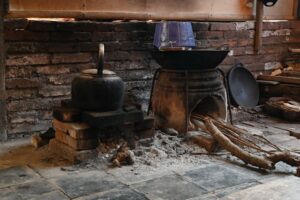
For many households, switching to firewood requires little adjustment because wood-burning stoves and fireplaces are already part of the home, particularly in rural and mountainous regions. Yet burning biomass releases fine particulate matter and several toxic compounds that increase the risk of respiratory and cardiovascular diseases. According to the World Health Organisation, air pollution contributes to around 7 million premature deaths every year through both household and outdoor exposure. The Italian study therefore points to a broader challenge. Energy systems must not only remain secure but also affordable. Without that balance, temporary fuel price shocks can influence household choices in ways that affect air quality and public health.
How energy poverty is becoming a public health challenge
The Italian study points to a much broader issue than a temporary rise in wood burning. It highlights how energy poverty can influence public health. The term refers to a household’s inability to access adequate energy services at an affordable cost. When cleaner fuels become expensive, families often switch to cheaper alternatives that produce more pollution. This pattern has been documented across different regions and economic crises, showing that household fuel choices are shaped as much by affordability as by availability.
The challenge extends well beyond Europe. According to the latest Tracking SDG 7: The Energy Progress Report 2025, nearly two billion people worldwide still rely on polluting fuels such as firewood, charcoal, crop residue and animal dung for cooking. Although electricity access has expanded considerably over the past decade, progress towards universal access to clean cooking remains slow. The report warns that volatile fuel prices and limited affordability continue to slow the transition to cleaner household energy in many low and middle-income countries.
The health consequences are substantial. The WHO estimates that household air pollution from cooking and heating with solid fuels causes around 3.2 million premature deaths every year. Smoke from biomass combustion has been linked to stroke, heart disease, chronic obstructive pulmonary disease, lung cancer and childhood pneumonia. Women and children are often the most affected because they spend longer periods near cooking and heating areas. Although Italy and countries such as India have very different energy systems, the underlying message remains the same. When households are forced to choose fuels based on cost rather than cleanliness, public health inevitably becomes part of the discussion.
What Italy’s energy crisis means for India’s clean energy transition
India’s circumstances differ from Europe’s, but the Italian experience offers useful lessons. Over the past decade, programmes such as the Pradhan Mantri Ujjwala Yojana (PMUY) have expanded access to LPG, providing more than 10.5 crore free LPG connections to women from economically weaker households. The initiative has reduced dependence on traditional biomass in many regions, but researchers have consistently noted that access alone does not guarantee sustained use. The affordability of LPG refills continues to influence how households meet their daily cooking needs.
Many rural families continue to practise fuel stacking, using LPG alongside firewood, crop residue or dung cakes instead of relying entirely on cleaner fuels. A study by the Council on Energy, Environment and Water (CEEW) shows that refill costs, seasonal incomes and local fuel availability remain important factors shaping household decisions. As a result, cleaner cooking programmes need continued financial and policy support if they are to deliver lasting improvements in health and air quality.
India’s broader air pollution burden makes these lessons particularly relevant. According to the State of Global Air 2024, air pollution contributed to more than 2 million deaths in India in 2021, with household air pollution still accounting for a significant share despite notable progress in clean cooking access. The report notes that reducing emissions from homes complements efforts to tackle pollution from transport, industry and power generation, making household energy an important part of cleaner air strategies.
The Italian study does not suggest that every energy crisis will inevitably lead to worsening air pollution. In fact, its findings show that changes in wood burning were limited to certain locations rather than the entire region. Even so, the research highlights an important policy lesson. Energy security, clean air and public health cannot be treated as separate challenges. When cleaner fuels become unaffordable, households adapt in ways that can affect local air quality. Ensuring that clean energy remains both accessible and affordable will therefore be just as important as expanding renewable energy or strengthening fuel supplies. As countries navigate an increasingly uncertain energy future, keeping homes warm should not come at the cost of the air people breathe.
References:
https://agupubs.onlinelibrary.wiley.com/doi/10.1029/2025JD045033
https://www.sciencedirect.com/science/article/pii/S0140988326003178
https://unstats.un.org/unsd/energystats/pubs/documents/sdg_7.pdf
https://www.who.int/news-room/fact-sheets/detail/household-air-pollution-and-health
https://www.pib.gov.in/PressNoteDetails.aspx?id=158809&NoteId=158809&ModuleId=3®=48&lang=2
https://www.cleanairfund.org/geography/india
Banner image: Photo by ochimax studio on Unsplash
Sections of this article may have been developed with the assistance of artificial intelligence tools to support research, drafting and language refinement. All information has been reviewed, edited and verified by the author/editor to ensure accuracy, context and editorial integrity. The responsibility for the final content, interpretations and conclusions rests solely with the publisher.