Physical Address
23,24,25 & 26, 2nd Floor, Software Technology Park India, Opp: Garware Stadium,MIDC, Chikalthana, Aurangabad, Maharashtra – 431001 India
Physical Address
23,24,25 & 26, 2nd Floor, Software Technology Park India, Opp: Garware Stadium,MIDC, Chikalthana, Aurangabad, Maharashtra – 431001 India

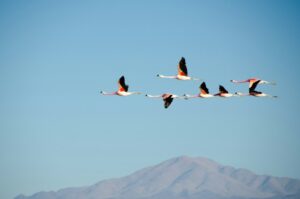
The State of the World’s Birds report finds widespread migratory bird declines. Explore how habitat loss is disrupting flyways and what can help.
Nearly half of the world’s migratory bird species are now in decline, with habitat loss, intensive agriculture, climate change, invasive species and unsustainable hunting putting growing pressure on the routes they depend on to survive. A new report by BirdLife International found that 45% of migratory bird species are declining and one in nine is threatened with extinction. The report, State of the World’s Birds, is the first edition of the organisation’s flagship assessment to focus entirely on migratory birds and the flyways connecting their breeding and non-breeding grounds. It warns that the threats do not stop at national borders, making coordinated conservation across entire migration routes increasingly critical.
Habitat Loss Is Leaving Migratory Birds With Fewer Places to Stop
Migratory birds depend on a chain of habitats spread across countries and continents. Wetlands, coastal areas, forests, grasslands and other sites provide food and shelter at different stages of their journeys. Damage to even individual sites can therefore affect birds far beyond the location where the habitat is lost.
The report found that 58% of 1,099 Key Biodiversity Areas important for migratory birds are in poor or very poor condition, based on scientific monitoring during the past decade. Species dependent on marine environments, forests and coastal wetlands are particularly vulnerable, with seabirds and shorebirds among the groups facing the greatest pressure. Agricultural expansion and intensification are major drivers, alongside infrastructure development, pollution and other forms of habitat degradation.
The pressure is also visible in the number of birds being illegally killed. An estimated 13.1 million to 42.7 million migratory birds are illegally killed or taken each year across Europe, the Mediterranean, the Caucasus and the Arabian Peninsula. Songbirds are among those caught for consumption, while other species face threats from unsustainable hunting and trapping along their migration routes.
Climate Change Adds Pressure Along Entire Migration Routes
Migratory birds have to cope with environmental changes at multiple points along their journeys, making them particularly exposed to disruptions across continents. Climate change is one of the major human-driven pressures identified by the report, alongside invasive species, agricultural expansion and intensification, and unsustainable hunting.
The decline has already resulted in permanent losses. The slender-billed curlew was officially declared extinct in 2025, after its last confirmed record in Morocco in February 1995. BirdLife says this was the first global bird extinction in mainland Eurasia and Africa in recent centuries. Six other migratory bird species have also been confirmed or are suspected to have disappeared during the past 150 years.
But the report also shows that declines are not inevitable. Conservation efforts that operate across an entire flyway can help species recover. Multi-country action for the Egyptian vulture, for example, has halted the decline of its Balkan breeding population. On Australia’s Macquarie Island, removing introduced rabbits, cats, rodents and the weka bird has helped seabird populations recover. In China, removing invasive smooth cordgrass restored 37,553 hectares of coastal habitat in its first year, reopening important feeding areas for shorebirds.
Countries Commit to Protecting Birds Across Borders
The report was launched at the Global Flyways Summit in Nairobi, where governments, conservation organisations, scientists and financial institutions backed the Nairobi Flyways Declaration. The declaration recognises that migratory birds move through interconnected networks of habitats rather than isolated protected areas and calls for stronger cooperation across national borders.
Development banks have already committed substantial funding to conservation along these routes. More than $6 billion in conservation finance has been mobilised by development banks since 2021, according to BirdLife. The Asian Development Bank plans to mobilise $3 billion over the next decade to protect at least 50 priority wetlands along the East Asian-Australasian flyway, while the Development Bank of Latin America and the Caribbean plans to mobilise between $3 billion and $5 billion through 2050 for priority landscapes and seascapes.
The findings underline a central problem facing migratory species: protecting birds at one location cannot compensate for the destruction of habitats elsewhere along their routes. BirdLife’s assessment argues that conservation needs to operate at the scale of entire flyways, linking countries and habitats across seasons. The evidence also offers a reason for optimism, showing that coordinated action can stop declines and restore populations when threats are addressed across the full journey.
References:
https://slender-billed-curlew.cms.int/news/press-releases
Banner image: Photo by Shwetha Shankar on Unsplash
Sections of this article may have been developed with the assistance of artificial intelligence tools to support research, drafting, and language refinement. All information has been reviewed, edited, and verified by the author/editor to ensure accuracy, context, and editorial integrity. The responsibility for the final content, interpretations, and conclusions rests solely with the publisher.