Physical Address
23,24,25 & 26, 2nd Floor, Software Technology Park India, Opp: Garware Stadium,MIDC, Chikalthana, Aurangabad, Maharashtra – 431001 India
Physical Address
23,24,25 & 26, 2nd Floor, Software Technology Park India, Opp: Garware Stadium,MIDC, Chikalthana, Aurangabad, Maharashtra – 431001 India
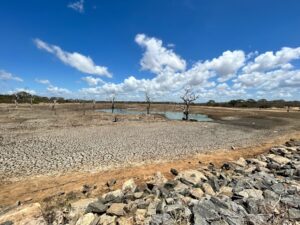
In seven of Sri Lanka’s 25 districts, the water bowser has become the rhythm of the week. Roughly 75 litres per family, every two or three days, trucked in from parts of the island that still have water to spare. It is enough for drinking and sanitation, and not much else.
The Disaster Management Centre puts the scale of the dry spell at 81,765 people from 25,628 families across seven districts. Drinking water distribution has been launched in 20 divisional secretariat divisions and has so far reached 72,053 people from 23,048 families, according to the centre. Monaragala is the worst affected district, with 33,023 people from 10,264 families hit. The others are Ampara, Badulla, Batticaloa, Polonnaruwa, Ratnapura and Hambantota, a spread that takes in the Uva, Eastern, North Central, Sabaragamuwa and Southern provinces rather than any single dry-zone belt.
Environment Minister Dammika Patabendi set out the government’s position at a media briefing at the Department of Government Information in Colombo on August 20. The government had expected this year’s El Niño to peak around November, he said, but now believes the peak will arrive sooner. Current measures are planned up to the third week of September, and he told reporters that the response would be revised and extended as necessary. That is a planning horizon rather than a forecast of when the dry weather ends.
The government has described this year’s impact as potentially the worst in decades. Water levels in hundreds of small tanks have fallen to about 10 per cent of capacity, and coconut and vegetable crops are under stress. Rs 4.8 billion, around $14 million, has been allocated from the budget for water distribution. Separately, the Ministry of Defence issued a circular on August 6, which Patabendi said amends existing rules so that authorities can move faster to supply water to drought-affected communities.
Water for wildlife, pumped by solar
The response is not confined to human settlements. Wildlife parks are also receiving water, Yala National Park most prominently, where L. Marasinghe, Director General of the Department of Wildlife Conservation, said solar power is being used to pump it in. Yala holds the country’s largest population of the endemic Sri Lankan leopard.
Artificial water points matter during long dry spells for reasons that go beyond thirst. When natural waterholes shrink, animals range further to find water, which raises the risk of dehydration among the weakest, concentrates competition at the few remaining sources, and pushes wildlife towards village tanks and cultivated land, where encounters with people turn dangerous for both.
From drought to downpour
The sharper risk sits at the other end of the year. Patabendi has said the current dry conditions are expected to give way to heavy rain from late September through December, with a prolonged drought returning early in 2027. He has put the most severe stretch of that drought between January and April, and told reporters in Colombo the government is preparing for what he called the island’s worst El Niño.
Intense October to December rain would fall on ground with a recent and violent history. Cyclone Ditwah made landfall on the eastern coast on November 28, 2025, triggering floods and hundreds of landslides across all 25 districts, with the hill country worst hit. The official death toll reached roughly 640 with close to 200 people missing, according to research analysing the response. The World Bank’s rapid damage assessment put direct physical damage at $4.1 billion, about 4 per cent of GDP, with Kandy district alone accounting for $689 million. The United Nations estimated that around 1.8 million people, some 8 per cent of the population, remained affected a month later. Slopes loosened by that event are the ones now facing a possible return of very heavy rain.
Agriculture is being reorganised around the same forecast. Rice farmers have been urged to begin the main planting season in early October, roughly two weeks ahead of the usual schedule, so the crop can use the expected early rains rather than the uncertain water that would otherwise have to come out of depleted tanks.
How strong, and how soon
El Niño is the warm phase of a natural Pacific cycle, marked by unusually high sea surface temperatures in the central and eastern tropical Pacific, and its effects reorganise rainfall and temperature patterns far from the ocean itself. Ajith Wijemanna, Director General of the Department of Meteorology, has said the current event could become extremely strong, having strengthened from a weak state towards a moderate one. Sri Lanka’s last El Niño episode was in 2015 and 2016.
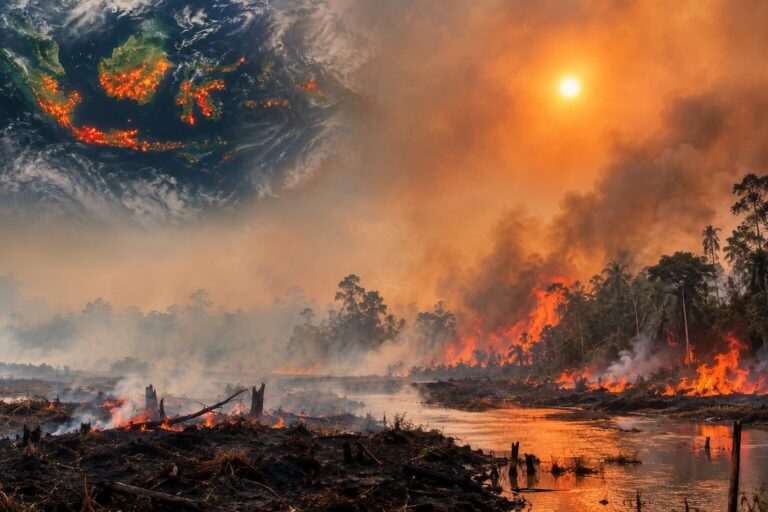
The phenomenon does not deliver the same weather everywhere, and within Sri Lanka its influence varies by season and by region, which is why one part of the island can be trucking in drinking water while another is being told to prepare for floods. The global picture this year carries the same signature: fires across more than 200,000 hectares in Indonesia since January, and a drought alert covering 80 per cent of Honduras.
A preparedness test, not just a water shortage
The drought is functioning as an audit of systems built after the last disaster. A parliamentary committee reviewing the country’s readiness found that the Disaster Management Fund, created by an act of parliament, has not yet been fully operationalised. Circulars can shorten procurement timelines, and bowsers can reach a divisional secretariat within days, but neither substitutes for standing capacity.
For families in Monaragala and Badulla, the immediate measure of success is simpler than any of this: whether the truck arrives, and whether the 75 litres lasts until it does. The coming weeks will show whether the current distribution network holds through the dry period, and whether the same institutions can pivot from managing scarcity to managing excess without being caught short at either end.
References
https://cyprus-mail.com/2026/08/20/sri-lanka-delivers-water-to-72000-people-suffering-drought
https://buzzer.lk/people-across-seven-districts-affected-due-to-dry-weather
https://buzzer.lk/el-nino-linked-dry-weather-affects-over-81000-people-in-seven-districts
https://adaderana.lk/news/cms79vcv9000b356phspg1o8m
https://news.un.org/en/story/2025/12/1166671
https://www.lboro.ac.uk/media-centre/press-releases/2026/february/cyclone-ditwah
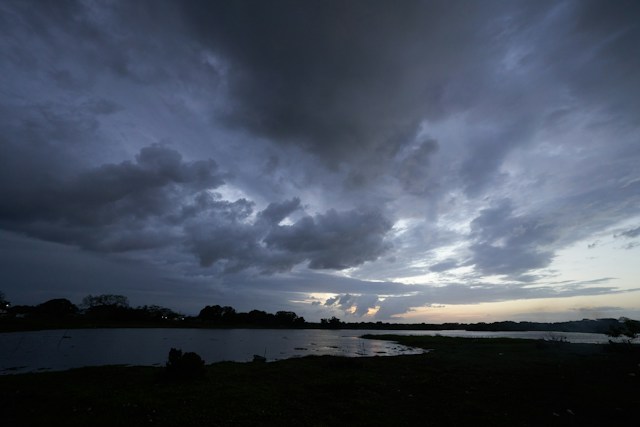
Banner Image: Representative Image. Photo by Chamika Jayasri on Unsplash
Sections of this article may have been developed with the assistance of artificial intelligence tools to support research, drafting and language refinement. All information has been reviewed, edited and verified by the author/editor to ensure accuracy, context and editorial integrity. The responsibility for the final content, interpretations and conclusions rests solely with the publisher.