Physical Address
23,24,25 & 26, 2nd Floor, Software Technology Park India, Opp: Garware Stadium,MIDC, Chikalthana, Aurangabad, Maharashtra – 431001 India
Physical Address
23,24,25 & 26, 2nd Floor, Software Technology Park India, Opp: Garware Stadium,MIDC, Chikalthana, Aurangabad, Maharashtra – 431001 India

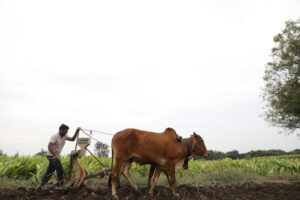
India’s kharif crops could face renewed pressure this year, as scientists warn that El Niño conditions have historically led to sharp declines in agricultural output across several states. A new study by researchers from the ICAR Indian Institute of Farming Systems Research found that during past El Niño years, production of major monsoon crops such as paddy and maize dropped by more than 10% across dozens of districts in India. The findings come at a time when weather agencies are again warning of the possible return of El Niño conditions, which are typically associated with weaker monsoon rainfall over the Indian subcontinent. Researchers say the combination of climate variability and rising temperatures is increasing risks for India’s monsoon-dependent farm economy.
Paddy and maize saw major losses during El Niño years
The study analysed three recent El Niño years: 2002, 2004 and 2009, to examine how changes in monsoon rainfall affected district-level crop productivity across India. Researchers found that paddy output declined by more than 10% in 77 districts, while maize yields dropped similarly in 65 districts during those years. Significant declines were also recorded for sorghum and pearl millet, with yields falling by over 10% in 36 districts each.
The impact was especially visible in major agricultural states, including Andhra Pradesh, Bihar, Chhattisgarh, Madhya Pradesh, Maharashtra, Uttar Pradesh, Jharkhand and Odisha, where rainfall variability linked to El Niño disrupted kharif production. Scientists say crops such as rice and maize are highly sensitive to changes in monsoon timing and rainfall distribution, particularly during sowing and grain formation stages.
According to the research, El Niño years increase “spatial and temporal variability” in the Indian summer monsoon, meaning rainfall becomes more uneven across regions and time periods. That often results in prolonged dry spells, delayed sowing and lower soil moisture during critical crop growth phases.
Why El Niño remains a major concern for India
El Niño refers to the periodic warming of sea surface temperatures in the central and eastern tropical Pacific Ocean. Though it develops far from India, it has a strong influence on the Indian monsoon system and is commonly associated with below normal rainfall. Since nearly half of India’s farmland still depends directly on rainfall, weak monsoon conditions can quickly affect crop output, rural incomes and food prices.
Scientists involved in the study warn that the risks could return this year if El Niño conditions strengthen further. Lead researcher Subash N Pillai said, “The study revealed that El Niño years cause significant spatial and temporal variability in Indian summer monsoon rainfall, leading to substantial reductions in the productivity of major kharif crops.”
Pillai, who currently heads the Division of Agricultural Physics at the Indian Agricultural Research Institute, said policymakers should strengthen contingency planning through drought-tolerant crop varieties, efficient water management and weather-based advisory systems to reduce losses.
The concerns come amid broader warnings about India’s agricultural outlook this year. Recent reports by agencies such as ICRA and market analysts have already flagged the possibility of a weaker monsoon, rising fertiliser costs and growing climate uncertainty affecting rural demand and food inflation.
Climate variability is making farming more uncertain
Researchers say the findings highlight how climate-linked weather variability is increasingly affecting India’s farm economy. While technological improvements have helped raise long-term crop productivity over the years, extreme climate events continue to create sharp regional losses. The study noted that maize yields have generally improved over time due to better farming practices, yet districts exposed to El Niño-linked rainfall disruptions still experienced severe declines.
Scientists also warn that climate change may intensify the effects of future El Niño events. Warmer temperatures increase evaporation and can worsen moisture stress during weak monsoon periods, particularly in already drought-prone regions. At the same time, rising weather variability is making rainfall patterns more erratic, increasing uncertainty for farmers who rely heavily on seasonal forecasts.
For India, where agriculture still supports a large share of livelihoods and remains closely tied to the monsoon cycle, repeated climate shocks can have consequences far beyond the farm sector. Lower kharif output can influence food inflation, rural spending and national economic growth, making monsoon-linked climate risks an increasingly important policy concern.
References:
https://doi.org/10.1016/j.cliser.2023.100370
Banner image: Photo by amol sonar onUnsplash
Sections of this article may have been developed with the assistance of artificial intelligence tools to support research, drafting and language refinement. All information has been reviewed, edited and verified by the author/editor to ensure accuracy, context and editorial integrity. The responsibility for the final content, interpretations and conclusions rests solely with the publisher.