Physical Address
23,24,25 & 26, 2nd Floor, Software Technology Park India, Opp: Garware Stadium,MIDC, Chikalthana, Aurangabad, Maharashtra – 431001 India
Physical Address
23,24,25 & 26, 2nd Floor, Software Technology Park India, Opp: Garware Stadium,MIDC, Chikalthana, Aurangabad, Maharashtra – 431001 India
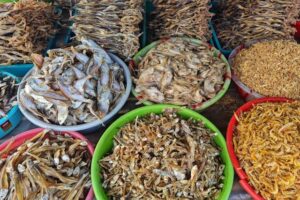
India’s marine fish production registered a slight decline in 2024, dropping by around 2% compared to the previous year. The total catch stood at approximately 3.47 million tonnes, down from 3.53 million tonnes in 2023. According to data compiled by the Central Marine Fisheries Research Institute (CMFRI), the fall in production is primarily linked to climate‑related disruptions, including multiple cyclones and rising sea surface temperatures.
State-Wise Performance: Gujarat Leads, East Coast Shows Gains
Gujarat continued to hold the top position in marine fish production, recording about 7.54 lakh tonnes. Tamil Nadu followed with 6.79 lakh tonnes, and Kerala came in third with 6.10 lakh tonnes.
The western coast—comprising states such as Kerala, Karnataka, Goa, and the union territories of Daman & Diu—experienced an overall dip in catch. In contrast, the east coast recorded significant growth in several states. Maharashtra saw an exceptional 47% jump in landings, while West Bengal, Tamil Nadu, and Odisha recorded increases of 35%, 20%, and 18% respectively. Andhra Pradesh was an exception on the east coast, with a decline similar to western states.
Species Trends: Changing Composition of the Catch
The year saw declines in the landings of several commercially valuable species such as Indian mackerel, threadfin breams, oil sardine, ribbonfish, non‑penaeid shrimps, and cephalopods. However, there was a rise in catches of lesser sardines, penaeid shrimps, anchovies, and tunas, indicating a shift in species composition, possibly due to changing ocean conditions.
In Kerala, marine fish production fell by about 4% from the previous year. Indian mackerel landings reduced by 16%, while Indian oil sardine catch increased by 7.6%, making it the most dominant species in the state’s harvest at 1.49 lakh tonnes. Penaeid shrimps, anchovies, and threadfin breams were also significant contributors.
The state experienced unusual price swings for oil sardine—scarcity in the early months of the year drove prices to ₹350–₹400 per kilogram, but by the final quarter, with landings exceeding one lakh tonnes, prices plunged to ₹20–₹30 per kilogram. Northern districts such as Malappuram to Kasaragod reported improved catches compared to southern districts like Thiruvananthapuram to Ernakulam, which saw reductions.
Climate Events and Their Impact
CMFRI attributed much of the production decline to a series of cyclonic storms—Dana, Fengal, Remal, and Asna—which disrupted fishing operations, particularly along the west coast. In addition, prolonged heatwave days in Andhra Pradesh and Kerala affected fishing schedules and lowered productivity during key fishing periods.
A recent global survey involving experts from 19 countries highlighted that rising sea surface temperatures, extreme weather events, plastic pollution, and overfishing are increasingly threatening marine biodiversity. Alarmingly, studies indicate that about 5% of coastal fish catches now contain plastic waste, which poses serious risks to ecosystems and livelihoods. In the Indian Ocean, warming waters are driving shifts in species distribution and altering the productivity of important fish stocks.
Beyond Climate: Other Pressures on Marine Fisheries
While climate variability is a major driver of change, overfishing, destructive fishing methods, coastal habitat degradation, and weak governance are compounding the stress on marine ecosystems. Shifting monsoon patterns and ocean acidification are further disrupting plankton populations, which form the base of the marine food chain.
To address these challenges, CMFRI has implemented measures under the National Innovations on Climate Resilient Agriculture (NICRA) programme. Initiatives include modelling the impact of rising sea surface temperatures on fish biomass, promoting climate‑smart coastal villages, and providing fishermen with mobile applications and e‑commerce platforms to help them market their catch more effectively. These steps aim to enhance resilience and support the livelihoods of fishing communities.
The Way Forward: Policy and Community Action
The decline in marine fish landings is a reminder of the growing vulnerability of India’s fisheries sector to climate variability. The livelihoods of millions of coastal residents, especially small‑scale and artisanal fishers, are directly at risk.
Addressing these challenges will require a combination of immediate and long‑term actions:
Conclusion
The 2% drop in India’s marine fish catch in 2024 mirrors global trends where climate change is reshaping the dynamics of fisheries. Without decisive action, the combined effects of warming oceans, extreme weather, and unsustainable practices could further strain the sector. However, with coordinated policy, community participation, and science‑driven management, India can safeguard its marine resources while ensuring the long‑term well‑being of its coastal communities.
References:
https://link.springer.com/chapter/10.1007/978-3-031-81276-7_20
https://eprints.cmfri.org.in/18344/1/Marine%20Fish%20Landings%20in%20India_2023.pdf
https://www.mdpi.com/2071-1050/13/17/9963
Banner Image: Photo by Dibakar Roy on Pexels
https://www.pexels.com/photo/assorted-dry-seafood-display-in-digha-market-30112816

Comments are closed.





2maalp
Slot game d?i thu?ng [url=https://gkwinviet.company/#]Rut ti?n nhanh GK88[/url] Ca cu?c tr?c tuy?n GK88
Yuks?k RTP slotlar: Kazino bonuslar? 2025 Az?rbaycan – Qeydiyyat bonusu Pinco casino
Pinco casino mobil t?tbiq: Yuks?k RTP slotlar – Pinco il? real pul qazan