Physical Address
23,24,25 & 26, 2nd Floor, Software Technology Park India, Opp: Garware Stadium,MIDC, Chikalthana, Aurangabad, Maharashtra – 431001 India
Physical Address
23,24,25 & 26, 2nd Floor, Software Technology Park India, Opp: Garware Stadium,MIDC, Chikalthana, Aurangabad, Maharashtra – 431001 India

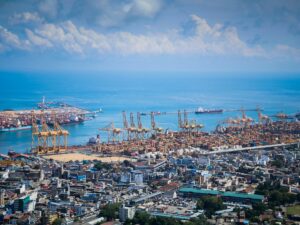
Sri Lanka’s ports have long been the lifeblood of its economy, making it easier to trade across the Indian Ocean and making the island a key maritime hub. Today, these same ports are at the forefront of a different kind of change: a move toward being environmentally friendly and carbon neutral. Sri Lanka’s container terminals are starting to change the way they work, not just as places where goods are shipped, but also as leaders in the move toward a greener economy.
A National Commitment Meets a Global Imperative
Sri Lanka has officially promised to reach net-zero carbon emissions by 2050, which is in line with the Paris Agreement’s global climate goals. This promise is not just a symbol; it means that major sectors like energy, transportation, and industry need to change their structures.
Ports and container terminals are where these two areas meet. They use a lot of energy, run on diesel-powered machines, and are part of global logistics networks that produce a lot of carbon. Because of this, many people now believe that making port operations less carbon-intensive is necessary to reach national climate goals.
At the same time, shipping and logistics companies around the world are being told to cut down on emissions in all parts of their supply chains. This has made port operators all over the world, even in Sri Lanka, use cleaner technologies and more environmentally friendly methods.
The Carbon Footprint of Container Terminals
Container terminals use a lot of energy. There are emissions from both direct fuel use and electricity use in cranes, yard equipment, refrigerated containers, and vessel operations.
The port industry around the world is now moving from broad promises of sustainability to specific plans for cutting carbon emissions. These plans focus on efficiency, electrification, and using more renewable energy. Sri Lanka’s terminals are moving in this direction more and more.
Technology at the Core of Decarbonization
The electrification and hybridization of port equipment is one of the biggest changes that is happening right now.
Operators like South Asia Gateway Terminals (SAGT) have already put hybrid Rubber Tyred Gantry (RTG) cranes at the Port of Colombo. These cranes use a lot less diesel. These improvements have saved more than 50% of the fuel used by each machine, which is good for the environment and for business.
More cuts to emissions have been made through:
These kinds of changes saved millions of liters of diesel and thousands of metric tonnes of carbon emissions. This shows how real technological upgrades can be.
Shore Power and the Next Frontier
“Cold ironing” is another new idea that is gaining popularity. It means giving ships electricity while they are docked. This lets ships turn off their engines, which cuts down on emissions at port by a lot.
Sri Lankan terminals are looking into this technology as part of their larger efforts to meet the International Maritime Organization’s (IMO) goals for reducing carbon emissions.
If used on a large scale, shore power could turn ports from places where a lot of pollution happens into cleaner places to work, especially in coastal areas with a lot of people.
Renewable Energy Integration
The journey to net-zero starts with changing energy. Sri Lanka has a lot of potential for renewable energy, especially solar and wind, but not everyone is using it yet.
Container terminals are starting to come together:
These programs not only cut down on emissions, but they also make energy more secure, which is important for a country that relies heavily on imported fossil fuels.
Private Sector Leadership and Global Alignment
Private terminal operators have been some of the most active in pushing sustainability initiatives. Their ability to get money, use global best practices, and respond to pressures from the international market has sped up progress.
For example, global terminal operators including ICTSI have committed to achieving net-zero emissions by 2050, with interim goals including reducing emissions intensity per container move by 2030.
Sri Lanka’s integration into the global shipping network would mean that local terminals would have to adhere to such standards to remain competitive.
Challenges on the Path to Net Zero
Despite encouraging progress, several challenges remain:
1. High Upfront Costs
Transitioning to green technologies requires a significant amount of investment, which can be a barrier, particularly in developing economies.
2. Institutional and policy gaps
Lack of coordination and consistent policy support are a key barrier in reaching net-zero goals in Sri Lanka, research suggests.
3. Dependence on energy
Sri Lanka’s dependence on imported fossil fuels makes it difficult to fully decarbonise port operations.
4. Data and Monitoring Constraints
Real-time emissions data is not readily available, making it difficult to track progress and develop effective interventions.
More details can be read here
From Compliance to Competitiveness
What was once a matter of regulation is now a matter of competitive advantage. Shipping lines around the world are more and more choosing ports with lower carbon footprints, more efficient operations, and more environmentally friendly credentials.
This is an opportunity for Sri Lanka to enhance its position as a regional maritime hub, promoting itself as a green port destination
A Blueprint for the Future
The transition of Sri Lanka’s container terminals reflects a broader shift in how infrastructure is conceptualized. Ports are no longer just transit points; they are becoming active participants in climate solutions.
Achieving net zero by 2050 will require:
Conclusion
Sri Lanka’s container terminals are at the dawn of the decarbonization journey but the way forward is clear. Slowly they are evolving into low-carbon logistics hubs, with innovation, investment and alignment internationally.
By doing so, they are not only supporting national climate pledges but also transforming the future of maritime trade in the region.
The road to net zero is complex and challenging – but for Sri Lanka’s ports, it is also an opportunity to lead.
References
https://www.climatechange.lk/CarbonNetZero2050.pdf
https://www.sciencedirect.com/science/article/abs/pii/S0301421519302940
https://www.sciencedirect.com/science/article/pii/S2772783124000207?
https://www.ft.lk/Special-Editions/SAGT-strides-towards-carbon-net-zero/10569-751886?
Banner Image: Photo by Mohamed Ansaf: https://www.pexels.com/photo/aerial-view-of-colombo-port-and-cityscape-34883126/
Sections of this article may have been developed with the assistance of artificial intelligence tools to support research, drafting and language refinement. All information has been reviewed, edited and verified by the author/editor to ensure accuracy, context and editorial integrity. The responsibility for the final content, interpretations and conclusions rests solely with the publisher.