Physical Address
23,24,25 & 26, 2nd Floor, Software Technology Park India, Opp: Garware Stadium,MIDC, Chikalthana, Aurangabad, Maharashtra – 431001 India
Physical Address
23,24,25 & 26, 2nd Floor, Software Technology Park India, Opp: Garware Stadium,MIDC, Chikalthana, Aurangabad, Maharashtra – 431001 India

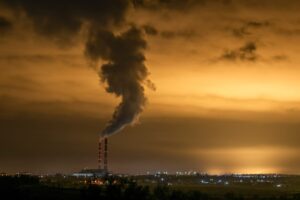
The world is on a dangerous trajectory of fossil fuel expansion that could push climate targets far out of reach, according to the latest Production Gap Report 2025. The analysis reveals that governments’ planned levels of coal, oil and gas production would far exceed the limits needed to keep global warming within safe boundaries. If these plans are carried forward, the global temperature goals of the Paris Agreement will become nearly impossible to achieve. The findings underscore a significant disparity between climate pledges and energy policies. Even as countries commit to reducing emissions on the global stage, many are simultaneously preparing for a future with increased fossil fuel production. This contradiction threatens to undo years of climate diplomacy and adds immense pressure on the planet’s fragile climate system.
Production Plans Overshoot Climate Pathways
The report indicates that by 2030, governments are expected to produce more than double the fossil fuels that would be consistent with limiting global warming to 1.5 degrees Celsius. In numerical terms, global plans would exceed this limit by around 120%. Even the less ambitious goal of keeping warming below 2 degrees would be overshot by nearly 77%.
Coal emerges as the most misaligned fuel in this projection. Production is expected to be nearly five times higher than what climate science allows for the 1.5-degree target. Even under the 2-degree scenario, planned coal output is more than triple the safe levels. Oil and gas are also far above aligned pathways, with oil production projected to be 31% higher and gas nearly 92% higher than what would be compatible with a 1.5-degree world.
Countries Driving Expansion
Several governments are actively moving to increase extraction, despite the urgent need to cut down. Nigeria, for instance, has doubled its oil production targets for 2030, while Brazil is planning a nearly 50% increase in output over the same period. Major producers, such as China and India, are slowing the pace of coal decline, with state-owned companies scaling back earlier plans to reduce their reliance on the fuel.
These policies, if implemented, will add to a dangerous lock-in effect. Building new coal plants, oil fields or gas pipelines creates infrastructure that typically lasts decades. Once built, these assets are costly to retire early, making it more challenging to transition to clean energy on time. The longer countries invest in fossil fuel expansion, the more difficult it becomes to avoid severe climate impacts and stranded investments.
What Needs to Change
Neil Grant, report co-author and senior expert at Climate Analytics, noted, “Ten years after Paris, renewables are way out in front of the pack. Instead of getting in the race, governments are blundering backwards towards our fossil past. While it’s frustrating seeing public money squandered on what will inevitably become stranded assets, it’s intolerably unjust to think about the human and environmental costs of these fossil expansion plans, especially for the most vulnerable,” said
The report emphasises that rapid policy shifts are necessary. To remain in line with the 1.5 degree pathway, coal needs to be nearly phased out by 2040, while oil and gas production must decline by around three-quarters by mid-century compared to 2020 levels. Without such action, the world risks locking itself into a trajectory of dangerous warming.
A key part of the problem is that subsidies and financial support for fossil fuels remain widespread. Despite repeated commitments to reduce such support, subsidies stay at near-record levels in many countries. Redirecting these funds to renewable energy and clean infrastructure could play a decisive role in closing the gap between climate goals and production plans. Equally important is ensuring a just transition for workers and communities who rely on fossil industries, so that the shift to clean energy is both fair and sustainable.
References:
https://productiongap.org/wp-content/uploads/2025/09/PGR2025_full_web.pdf
https://productiongap.org/2025report
Banner image:
Photo by Roman Khripkov on Unsplash