Physical Address
23,24,25 & 26, 2nd Floor, Software Technology Park India, Opp: Garware Stadium,MIDC, Chikalthana, Aurangabad, Maharashtra – 431001 India
Physical Address
23,24,25 & 26, 2nd Floor, Software Technology Park India, Opp: Garware Stadium,MIDC, Chikalthana, Aurangabad, Maharashtra – 431001 India

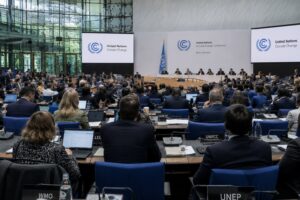
The Bonn Climate Conference 2026 witnessed a strong intervention from India as global climate negotiations intensified over fossil fuels, climate finance, and future responsibilities of nations. During the opening sessions of the conference, India firmly opposed the inclusion of any new climate obligations for developing countries, arguing that developed nations must first fulfil their existing commitments under the United Nations Framework Convention on Climate Change (UNFCCC) and the Paris Agreement.
The conference, held in Bonn, Germany, serves as a preparatory meeting for COP31 and has brought together negotiators from across the world to discuss the future course of climate action. While several countries and advocacy groups pushed for stronger commitments on fossil fuel phase-out and enhanced climate ambition, India emphasised that the focus should remain on implementing previously agreed commitments rather than creating additional responsibilities for developing economies.
India’s position reflects growing concerns among developing nations that climate negotiations are increasingly shifting attention away from the historical responsibilities of developed countries and towards new expectations from countries that are still pursuing economic growth and poverty alleviation.
Climate Finance Remains the Central Concern
A major theme of India’s intervention at Bonn was the issue of climate finance. Indian negotiators highlighted that financial support from developed countries remains inadequate despite repeated commitments made under international climate agreements. According to India, “insufficient finance remains one of the biggest obstacles preventing developing countries from accelerating climate action.”
Developing nations face mounting costs associated with climate adaptation, disaster resilience, renewable energy deployment, and infrastructure transformation. However, many of these countries continue to struggle with limited financial resources and competing development priorities. India argued that before introducing new commitments, the international community must address the persistent gap between climate finance promises and actual delivery.
The country specifically called attention to the obligations of developed nations under the Paris Agreement to provide financial resources for mitigation and adaptation efforts in developing countries. India maintained that discussions on climate action cannot be separated from discussions on finance, technology transfer, and capacity building.
In addition to financial support, India stressed the importance of ensuring access to affordable clean technologies. Many developing countries possess the willingness to pursue low-carbon development pathways but lack the technological and institutional capacities required for rapid transitions. Strengthening international cooperation in these areas, India argued, is essential for achieving meaningful progress on global climate goals.
Fossil Fuel Debate Highlights Questions of Climate Equity
Another key point of contention at the Bonn Conference was the growing push for stronger action on fossil fuels. Several countries and climate advocacy groups called for accelerated efforts to phase down fossil fuel use, arguing that such measures are necessary to limit global warming and meet international climate targets.
India acknowledged the urgency of addressing climate change but cautioned against approaches that overlook developmental realities. For countries with large populations, expanding economies, and rising energy demands, energy security remains a critical concern. India maintained that the global energy transition must be fair, inclusive, and supportive of national development priorities.
At the centre of India’s argument is the principle of “Common but Differentiated Responsibilities and Respective Capabilities” (CBDR-RC), a cornerstone of international climate negotiations. This principle recognises that while all countries share responsibility for addressing climate change, developed nations bear a greater obligation because of their historical contribution to greenhouse gas emissions and their greater financial and technological capabilities.
India argued that attempts to introduce new obligations without adequately addressing historical responsibility risk undermining the principles of equity that have guided climate negotiations for decades. The country emphasised that climate ambition should not come at the cost of development opportunities for nations that continue to face challenges related to poverty reduction, industrialisation, and energy access.
The discussions in Bonn also reflected broader geopolitical and economic realities. Energy market uncertainties, economic pressures, and competing national priorities have made climate negotiations increasingly complex. As countries seek pathways towards cleaner energy systems, disagreements persist over how responsibilities and costs should be shared.
By insisting on the fulfilment of existing commitments before the introduction of new obligations, India reinforced its long-standing position that effective climate action must be accompanied by fairness, equity, and adequate support for developing nations.
References:
https://unfccc.int/sb64
https://www.sciencedirect.com/science/article/pii/S1674927824000285
Common but differentiated responsibilities and respective capabilities (CBDRRC)
Banner image: AI-generated.
Sections of this article may have been developed with the assistance of artificial intelligence tools to support research, drafting, and language refinement. All information has been reviewed, edited, and verified by the author/editor to ensure accuracy, context, and editorial integrity. The responsibility for the final content, interpretations, and conclusions rests solely with the publisher.